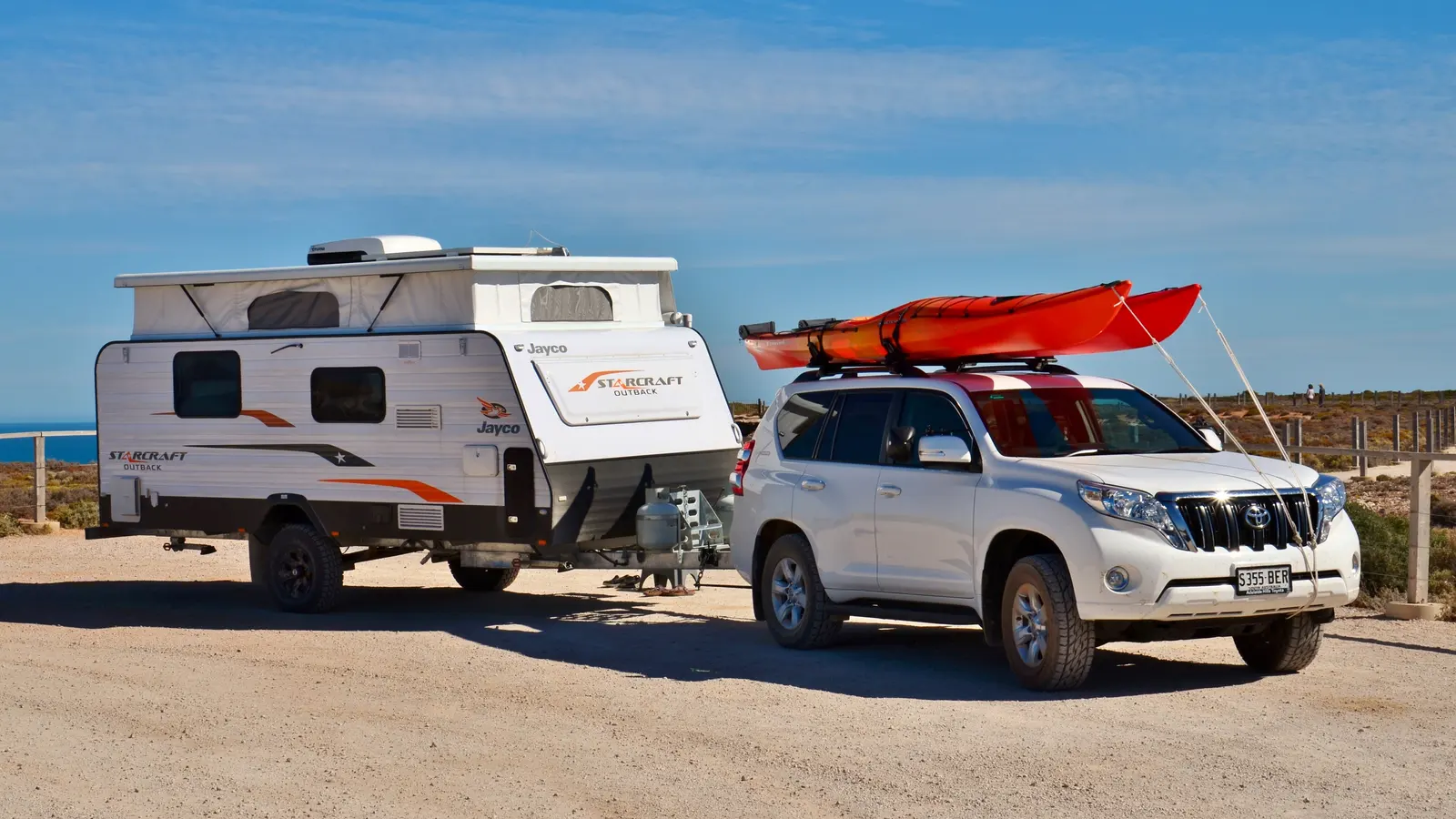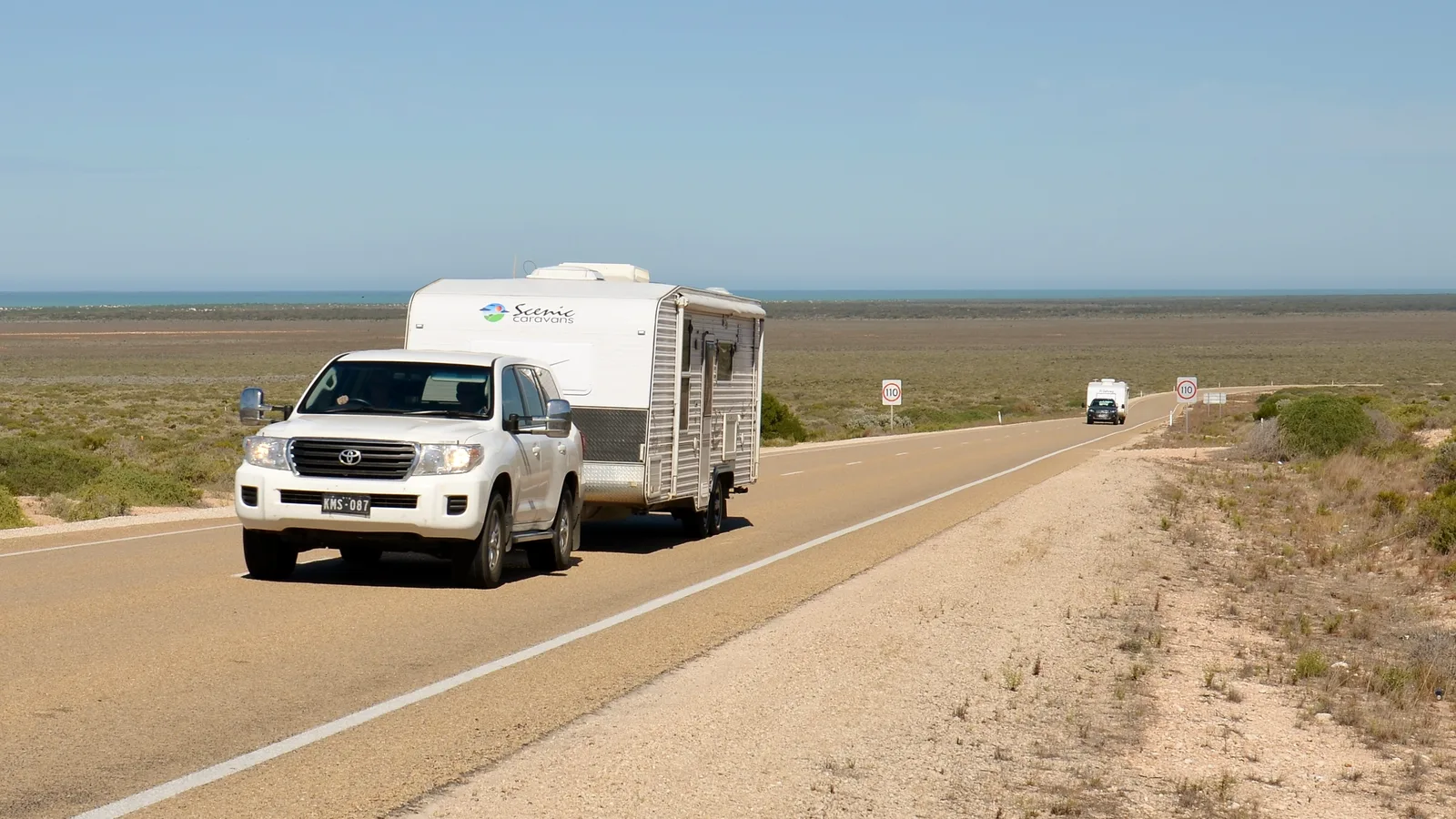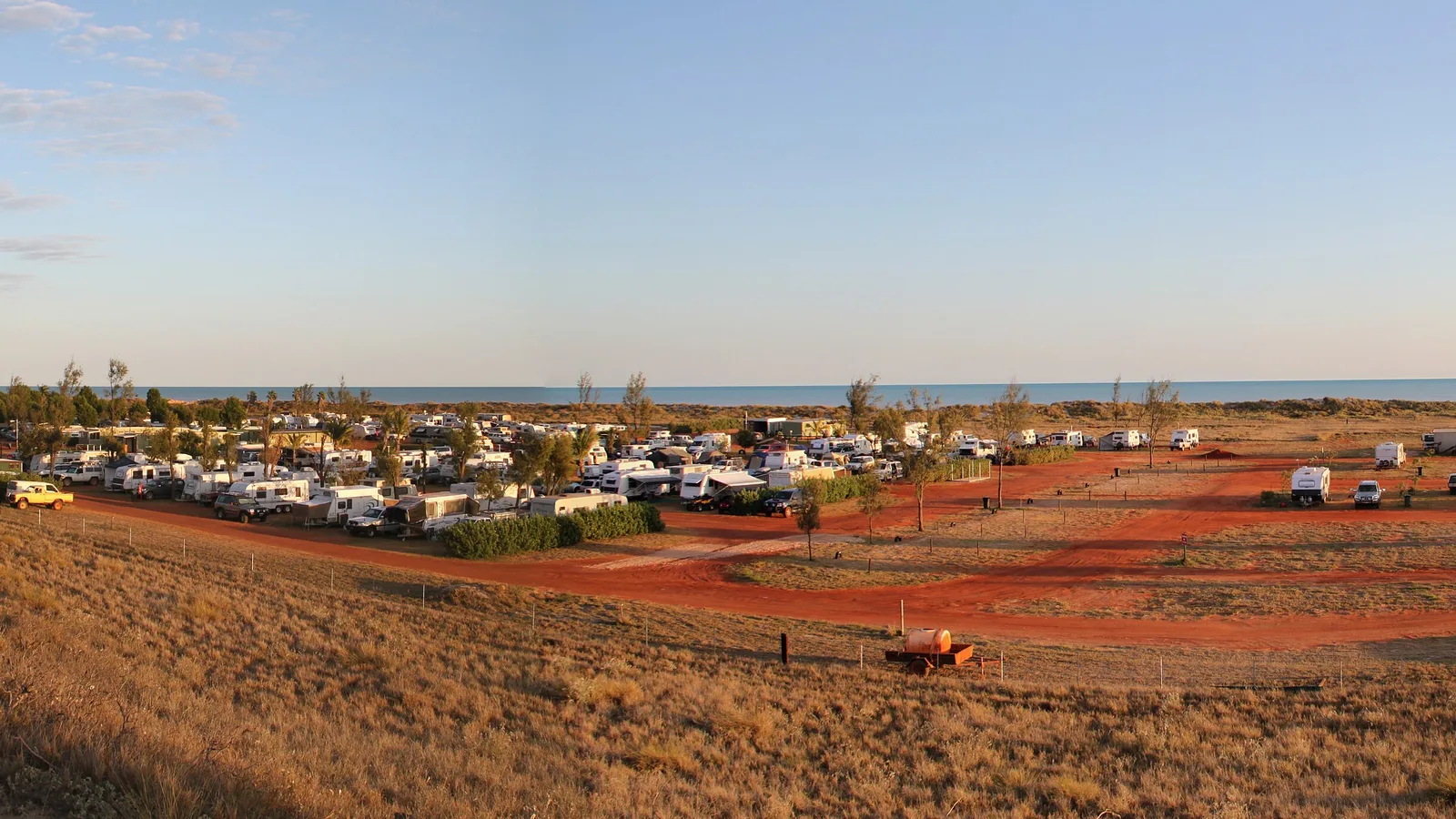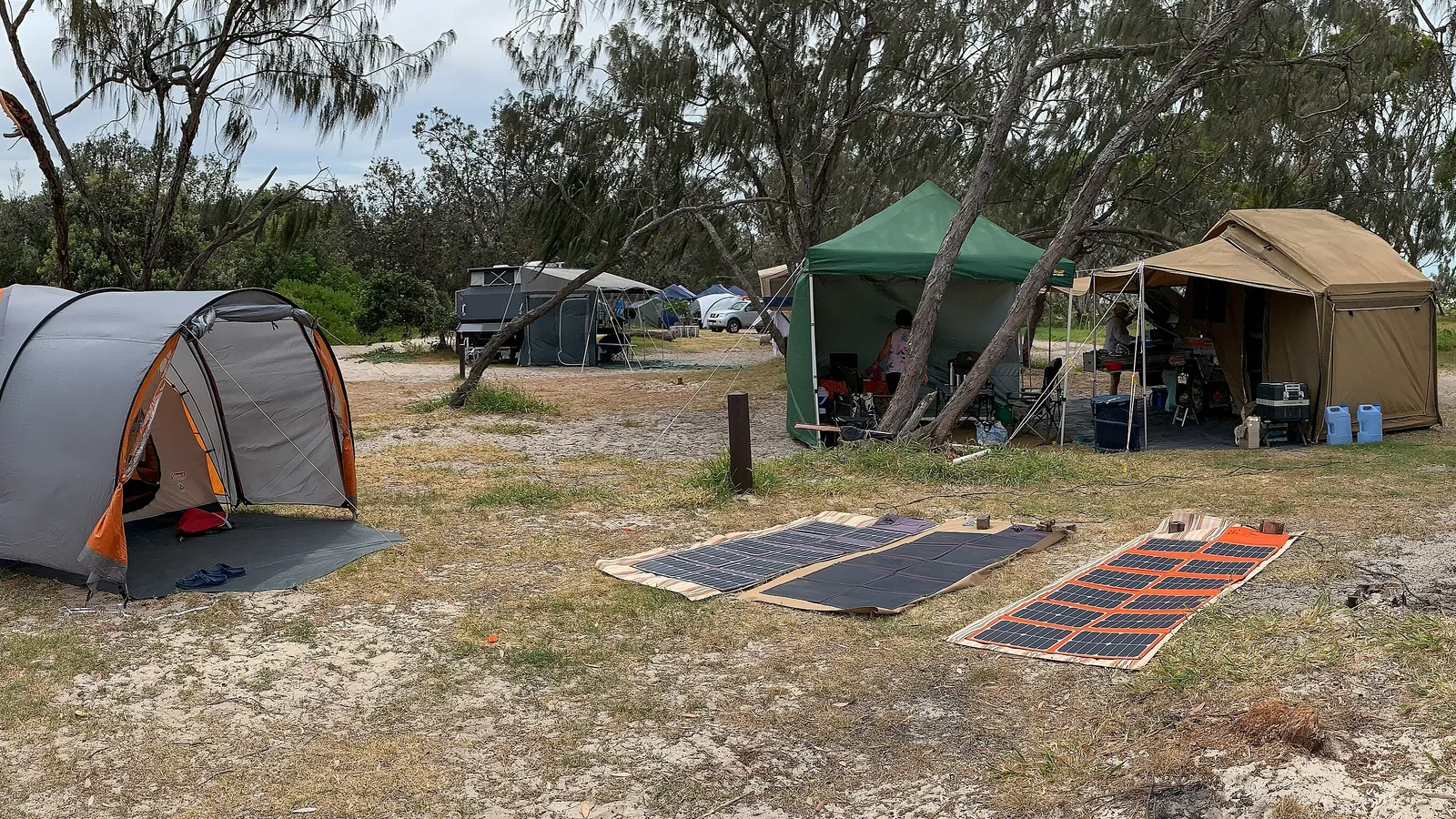
A camper trailer folds out into a bed and a tent-style living space, tows low behind a car or 4WD, and sets up in minutes. It sits between a tent and a caravan in price, weight and comfort, and it goes more places than a caravan because it is smaller and, on an off-road model, built for rough tracks. Below are the types, the towing basics, how to set up at camp and where a camper trailer is welcome in Australia.
Types of camper trailer
Soft-floor camper trailers have a canvas tent on a fold-out frame and are the cheapest and lightest. Hard-floor models fold out from a rigid base, usually with a kitchen at the back or the side, and are more comfortable and quicker to set up. Hybrid and hard-top models are the most weatherproof and the most expensive.
Off-road camper trailers have a stronger chassis, longer travel suspension and a narrower body, so they follow a 4WD along a rough track. A standard on-road camper trailer is cheaper and does well on sealed roads and graded tracks. Pick the type that matches where you plan to go, not the most capable one.
- Soft floor, hard floor or hybrid
- Off-road models suit rough tracks
- Match the trailer to the trip
Towing basics
Check your vehicle's rated towing capacity and the trailer's gross trailer mass, the mass of the trailer fully loaded, and stay under both. A common guide for the load on the tow ball is around 10% of the trailer's loaded mass, and a trailer that sits level behind the car tows more steadily.
Brakes depend on the trailer's gross mass. New South Wales requires none up to 750 kg, brakes on at least one axle from 751 to 2,000 kg, and brakes on all wheels above that, with a breakaway system over 2,000 kg. Other states have their own limits, so check your road authority.
Check the safety chains, the lights, the plug, the tyres and the coupling before every drive. The towing laws guide covers licence, weight and speed rules, and the first trip is a good time for a practice in an empty car park, because reversing a trailer takes a few tries to learn.
- Stay under the towing limits
- Tow ball load about 10%
- Check chains, lights and tyres
Setting up camp
Pick a level spot with room to open the trailer, chock the wheels and put the handbrake on before you unhitch. Level the trailer with the jacks or the legs, unlatch it and open it out in the order the manual says, and check that guy ropes and pegs are secure if the wind is up.
Most models set up in 10 to 30 minutes, and it gets quicker with practice. Do a dry run at home first, so the first time you open the trailer is not in the dark at a campground. Pack down dry where you can, or air the canvas as soon as you can, because damp canvas grows mould.
- Level, chock and handbrake
- Practise setting up at home
- Dry the canvas before storing
Where you can take a camper trailer
Caravan parks and holiday parks take camper trailers on powered and unpowered sites, and many have a drive-through or a slab for the trailer. Powered sites are handy for a fridge and lights, and the powered versus unpowered guide explains the difference.
Many national park campgrounds suit a camper trailer, and some are designed for them. Others limit trailers because of narrow tracks, steep access, soft sand or tight sites, and some beach and 4WD tracks do not allow trailers at all. Free camps and rest areas depend on the land manager and the council, with stay limits and size rules that vary.
Check the place before you go, because arriving with a trailer at a camp that cannot take it is a long reverse.
- Caravan parks take them
- Check national park access
- Some tracks and beaches say no
Camper trailer or something else
A camper trailer is cheaper than most caravans and campervans, stores in a garage and keeps the tow vehicle free to unhitch and explore. The trade-off is setup time, which a campervan avoids, and less weather protection than a hard-sided caravan.
If you are visiting on a working holiday, a campervan is simpler because it is one vehicle to buy, register and sell. The campervan versus caravan guide compares the options on licence, registration and where each suits.
- Cheaper than a caravan
- Setup takes time
- Visitors often find a campervan simpler
Check each place's vehicle details in AussieCamps
AussieCamps lists 1,838 campgrounds and 745 national parks from the state park agencies, plus 5,552 rest areas from road authorities. A place page shows facilities and a Vehicles and RVs section, such as a car park or caravan sites, as the agency publishes it, so you can see what a place says about your setup before you drive there.
You can save places and build a trip with ordered stops, dates, notes and route distance. The app does not tell you a trailer's size limits for a given road, so read the agency's page.
- Read the Vehicles and RVs section
- Save places for your setup
- Check size limits on the agency page
Places along the way
Check before you go
Rules and conditions change. Recheck the official source and the page for your exact park or campground before departure.
Common questions
What is a camper trailer?+
A camper trailer is a trailer that folds out into a bed and a tent-style living space. It tows low behind a car or 4WD, goes up in minutes and is lighter and cheaper than most caravans, so it suits couples and families who want more comfort than a tent.
Can I tow a camper trailer on a car licence in Australia?+
Generally yes, within the limits of your licence and your vehicle. Check your tow vehicle's rated towing capacity and the trailer's gross mass, and read the road authority's rules for your state, especially if you hold a learner or provisional licence.
Does a camper trailer need brakes?+
It depends on its weight. New South Wales requires no brakes up to 750 kg gross trailer mass, brakes on at least one axle from 751 to 2,000 kg, and brakes on all wheels above that, with a breakaway system over 2,000 kg. Other states have their own limits, so check yours.
Can I take a camper trailer to a national park campground?+
Often yes, but not everywhere. Many national park campgrounds take camper trailers, while small bush camps, steep tracks and some beaches are unsuitable or restricted. Check the park agency's page for the specific campground before you go.
Take it on the road
Save the stops. Plan the whole trip.
Build an ordered route from saved places, calculate the distance and keep dates, notes and to-dos attached.