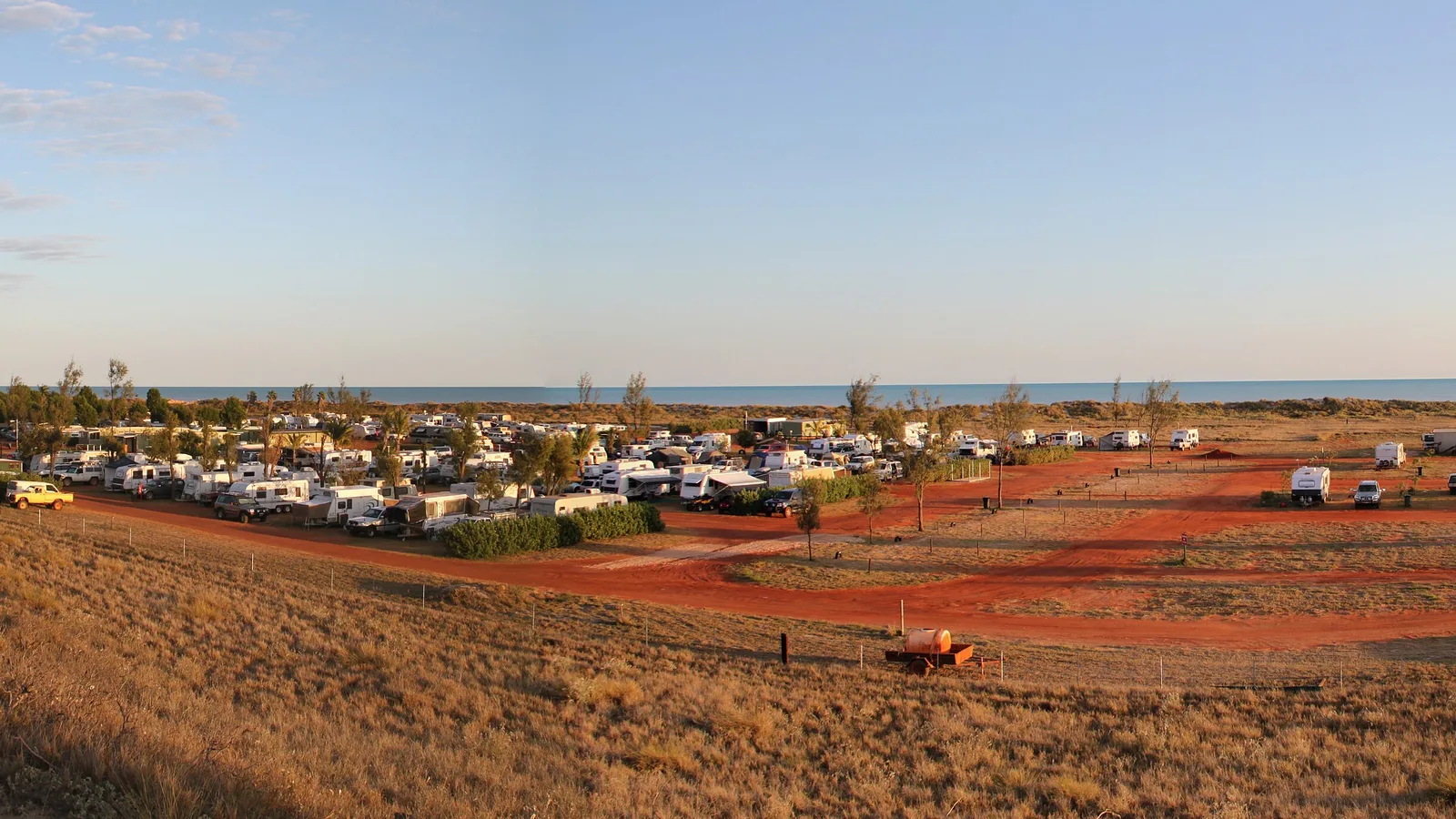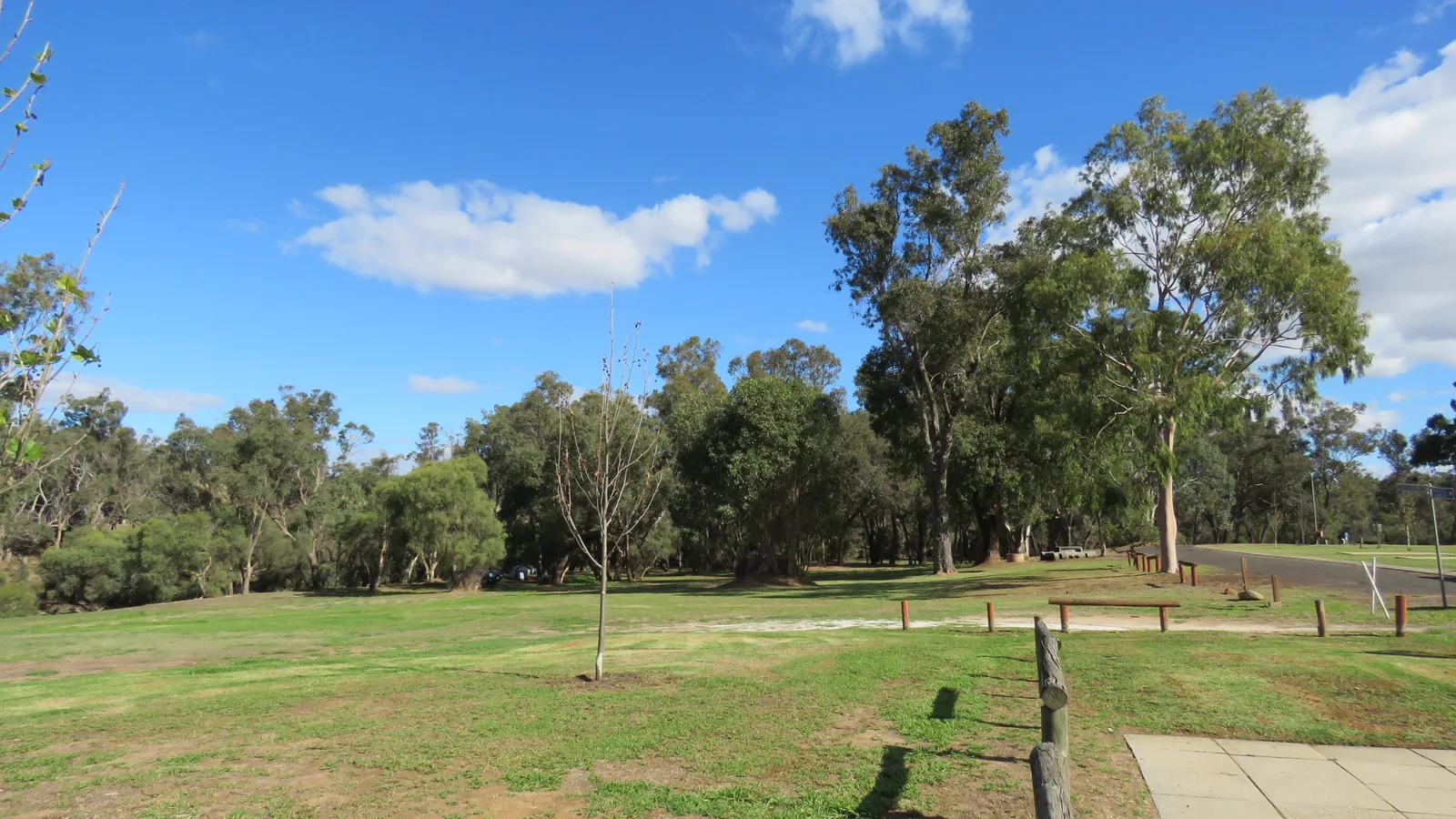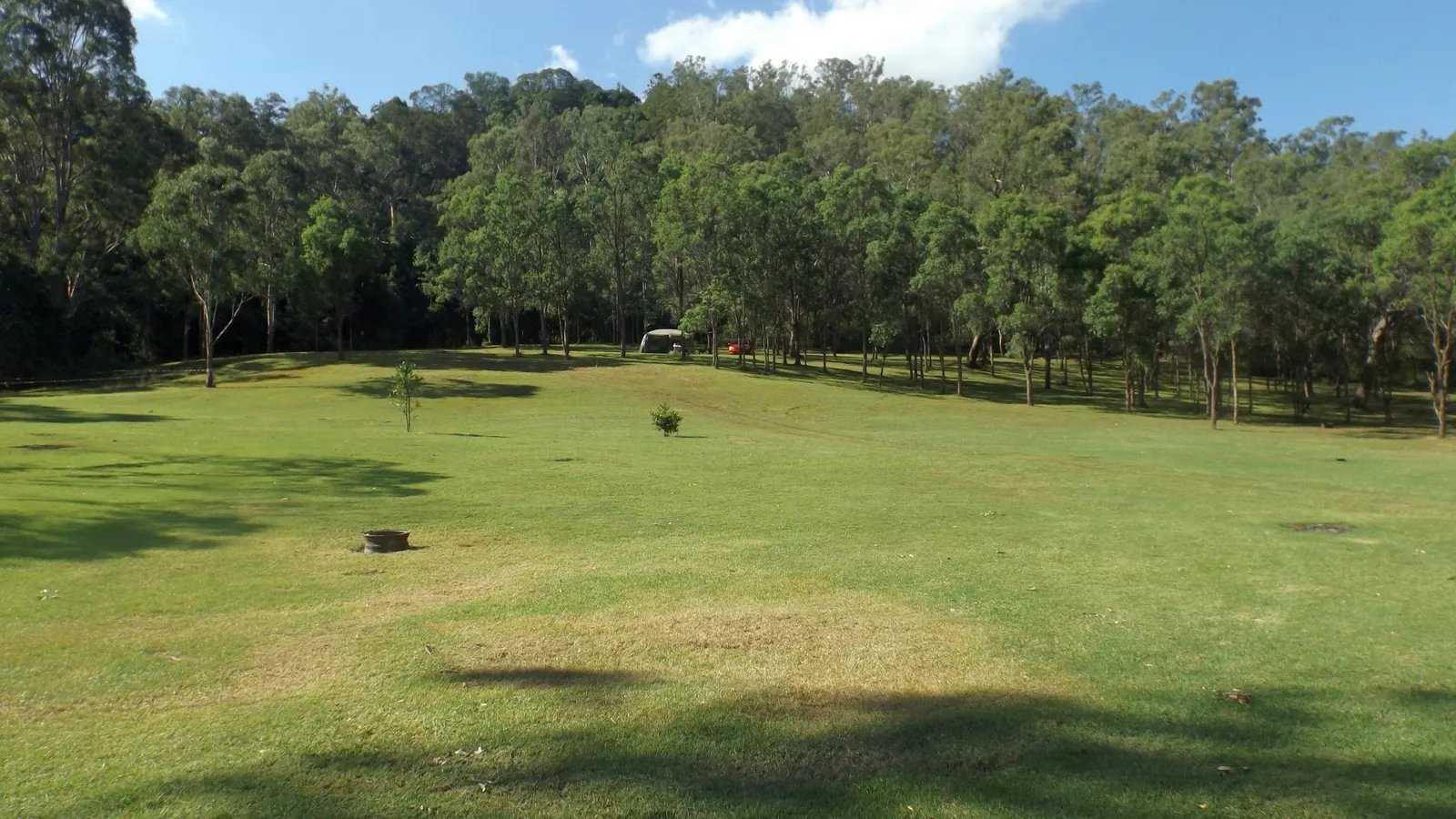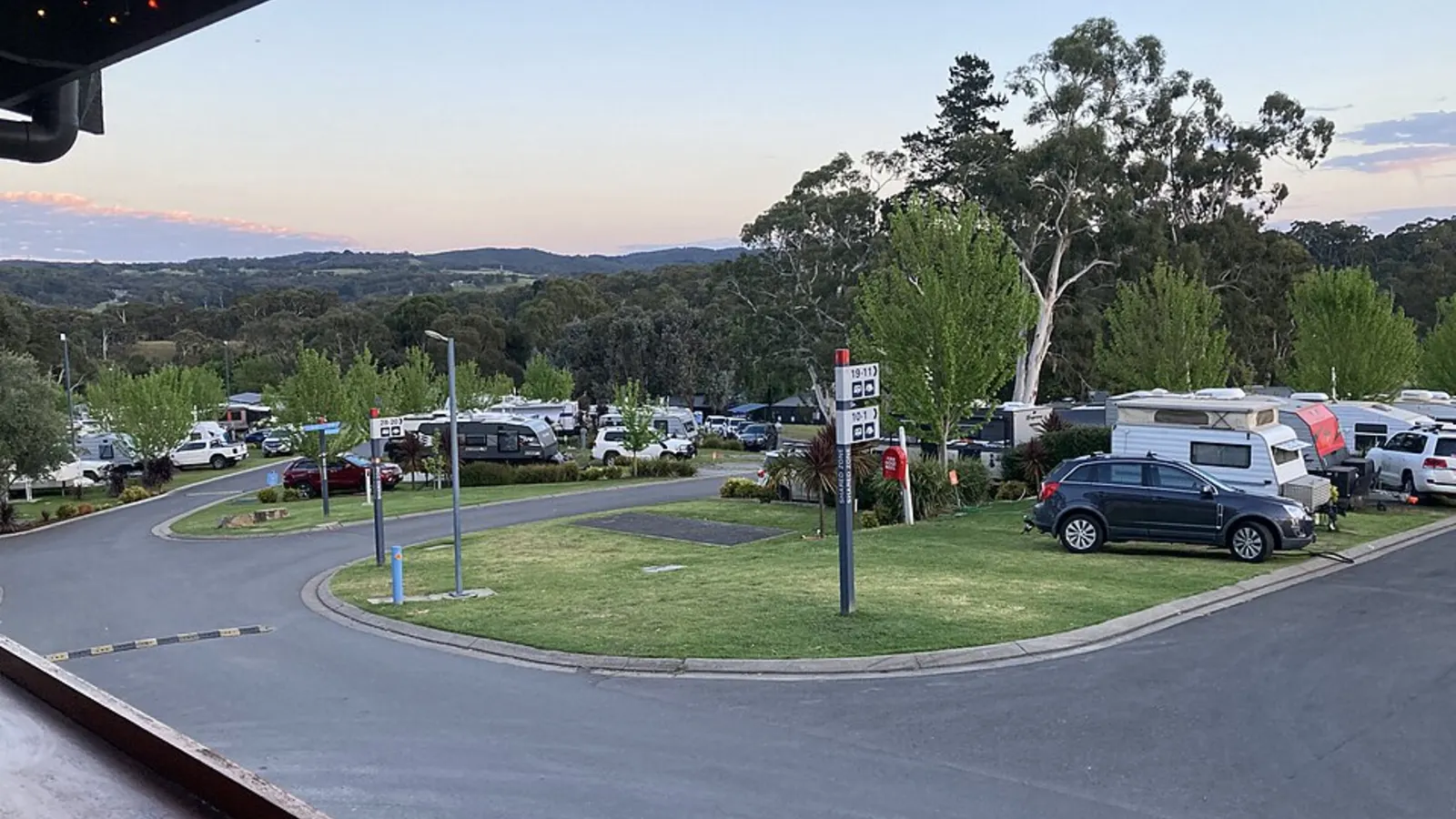
A caravan park and a holiday park are much the same thing: commercial parks with powered sites, amenities and usually cabins, with holiday parks leaning towards pools, playgrounds and family facilities. A campground in a national park or state forest trades those services for the setting and a lower fee or none. Match the stay to what the trip needs that night rather than using one type for the whole route.
Caravan park or holiday park: what the names mean
The two names overlap and operators use them loosely. Both describe a commercial park with powered and unpowered sites, amenities blocks and usually cabins; holiday park tends to signal more family facilities such as a pool, a playground or activities, and often more cabins.
The bigger difference is between commercial parks and public campgrounds. Parks sell services, power and convenience, while national park and forest campgrounds sell the location and leave most of the services to you.
| Stay type | Who runs it | What you usually get | Booking | In AussieCamps |
|---|---|---|---|---|
| Holiday park | Commercial operator | Powered sites, cabins, amenities, often a pool and playground | Book ahead; minimum stays in peak periods | Partner parks free to browse and book |
| Caravan park | Commercial operator or council | Powered and unpowered sites, amenities, laundry, often cabins | Book ahead in peak periods | Partner parks free to browse and book |
| National park campground | State parks agency | Toilets at most sites; water or showers at some; rarely power | Booking or permit in most states | Needs the Pass |
| State forest campground | State forest agency | Basic facilities or none | Often first come, first served; Queensland state forests need a booked permit | Needs the Pass |
| Roadside rest area | Road authority | Parking, toilets at some | No booking; time limits apply | Needs the Pass |
Bush campgrounds
National park and forest campgrounds trade services for location. Toilets may be basic, water may be untreated or absent, power is rare and generators are often restricted.
They also cost less. In 2026 Queensland charges $7.75 per person a night, Western Australian parks $10 to $20 per adult, and Victoria's bookable sites start from $16 a night, while camping in most NSW state forests is free. Check road access and booking before driving in.
- Power needed?
- Drinking water?
- Showers or laundry?
- Vehicle length?
Use a mixed strategy
A simple bush camp followed by a powered holiday park makes laundry, charging and water refills easier. Roofed accommodation can rescue a route during severe weather.
Budget for a few service nights instead of expecting every camp to provide everything.
Judge by specification, not label
What matters is the specification rather than the name: whether sites are powered, how modern the amenities are, and whether there is a camp kitchen, laundry, pool or dump point, plus the site dimensions for your rig.
Some park chains sell paid memberships with discounts on nightly rates. Work out whether the saving covers the fee for the number of nights you will actually spend in that chain's parks before buying one.
- Judge by specification, not label
- Check site size for your rig
- Do the membership arithmetic
Where each type earns its place
A commercial park is worth paying for after several nights of free camping, before an early start, in bad weather, or when laundry, hot showers, charging and water all need attention at once. Counted against the jobs it replaces it is usually good value.
National park and forest campgrounds cost less and give you the setting, at the price of self-sufficiency and usually no power. Rest areas cost nothing and provide little beyond a place to stop for a limited time.
A common pattern on long trips is two or three low-cost nights followed by one serviced night that resets everything. That balance keeps both the budget and the vehicle workable.
- Serviced night resets the whole vehicle
- National parks give setting, not services
- Two or three cheap nights, then one paid
Booking and peak season
Coastal parks in school holidays, at Easter and over Christmas book out months ahead, often impose minimum stays and charge peak rates. Book as soon as your dates are fixed.
Declare your vehicle length accurately, because sites are allocated by size and under-declaring produces an awkward conversation at check-in. Say if you need drive-through access or are towing.
Ask about late arrival when booking. Many parks close reception in the evening and leave an envelope with a gate code, but you need that information before standing at a locked boom gate.
- Coastal parks book months ahead
- Declare vehicle length accurately
- Ask the late arrival procedure
Shared space and the amenities
Quiet hours are enforced and parks are dense environments where sound carries. Keep to your site boundary, supervise children around internal roads and pools, and check the pet policy before arriving with a dog.
Use the camp kitchen and laundry deliberately, because they are what you are paying for. A single evening can clear a week of washing, charge everything and refill water while emptying waste in the right order.
Never fill drinking water from a tap near the dump point, and ask which taps are potable. Not all of them are, and the signage is not always obvious.
- Quiet hours are enforced
- Check pet policy before arriving
- Ask which taps are potable
Reading reviews usefully
Review scores tell you less than the specific complaints. Repeated mentions of amenity cleanliness, road noise, site size or management attitude are the signals worth acting on.
Photographs from guests are more reliable than the park's own. Look for the site type you are booking rather than the pool and the playground, which every park photographs well.
Ask about a powered site's amperage if you intend to run air conditioning, because some older parks supply less than a modern van draws.
- Read complaints, not scores
- Guest photos beat marketing shots
- Look for your site type specifically
Places along the way
Check before you go
Rules and conditions change. Recheck the official source and the page for your exact park or campground before departure.
Common questions
What is the difference between a caravan park and a holiday park?+
Very little in practice: both are commercial parks with powered and unpowered sites, amenities and usually cabins. Holiday park usually signals more family facilities such as a pool, playground or activities, and often more cabins.
When is a caravan park worth the money?+
When you need power, hot showers, laundry and a resupply at once, or when the free and low-cost options nearby are full. Many long-trip travellers book one serviced night after two or three nights of bush camping.
Take it on the road
Save the stops. Plan the whole trip.
Build an ordered route from saved places, calculate the distance and keep dates, notes and to-dos attached.