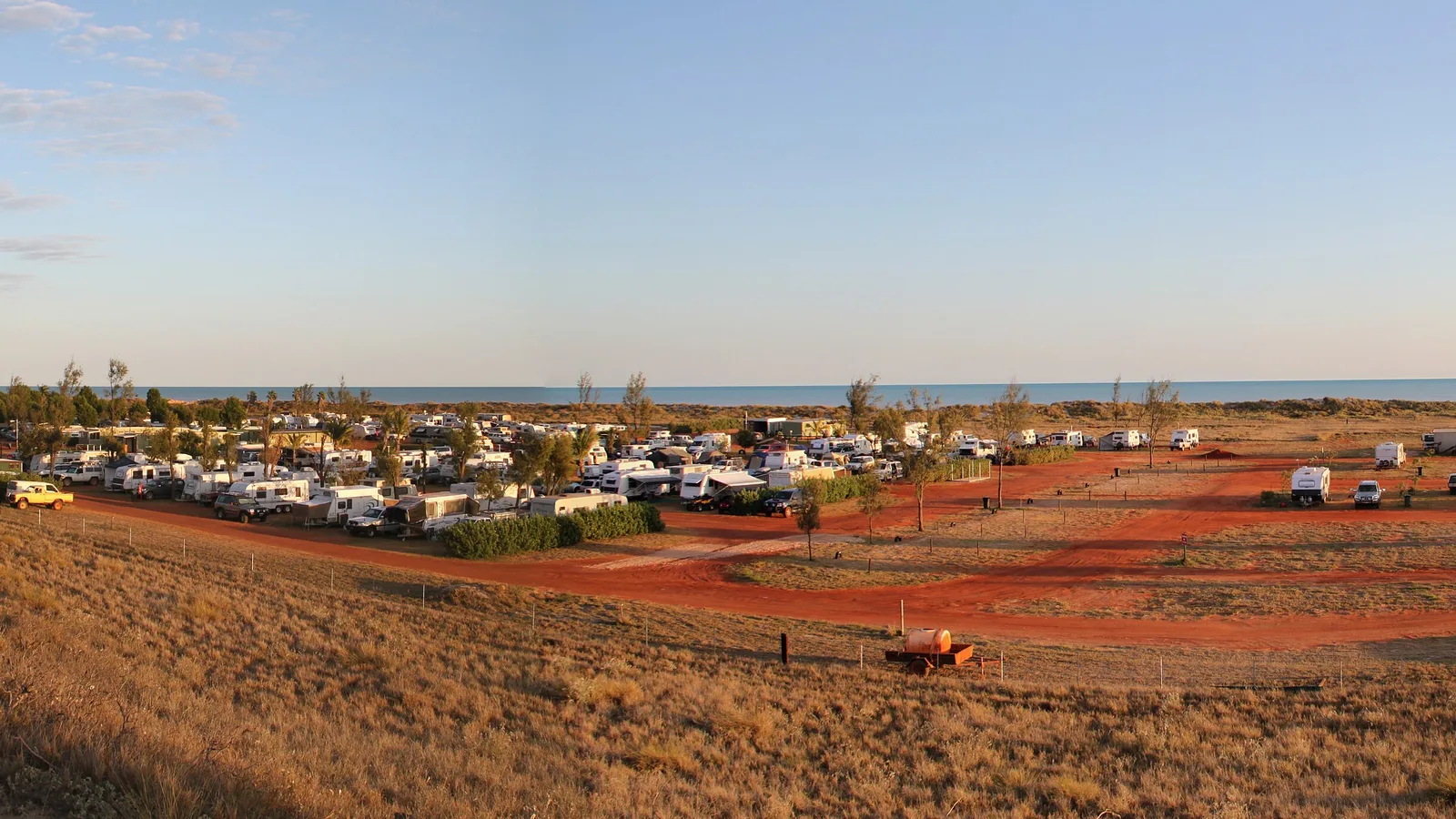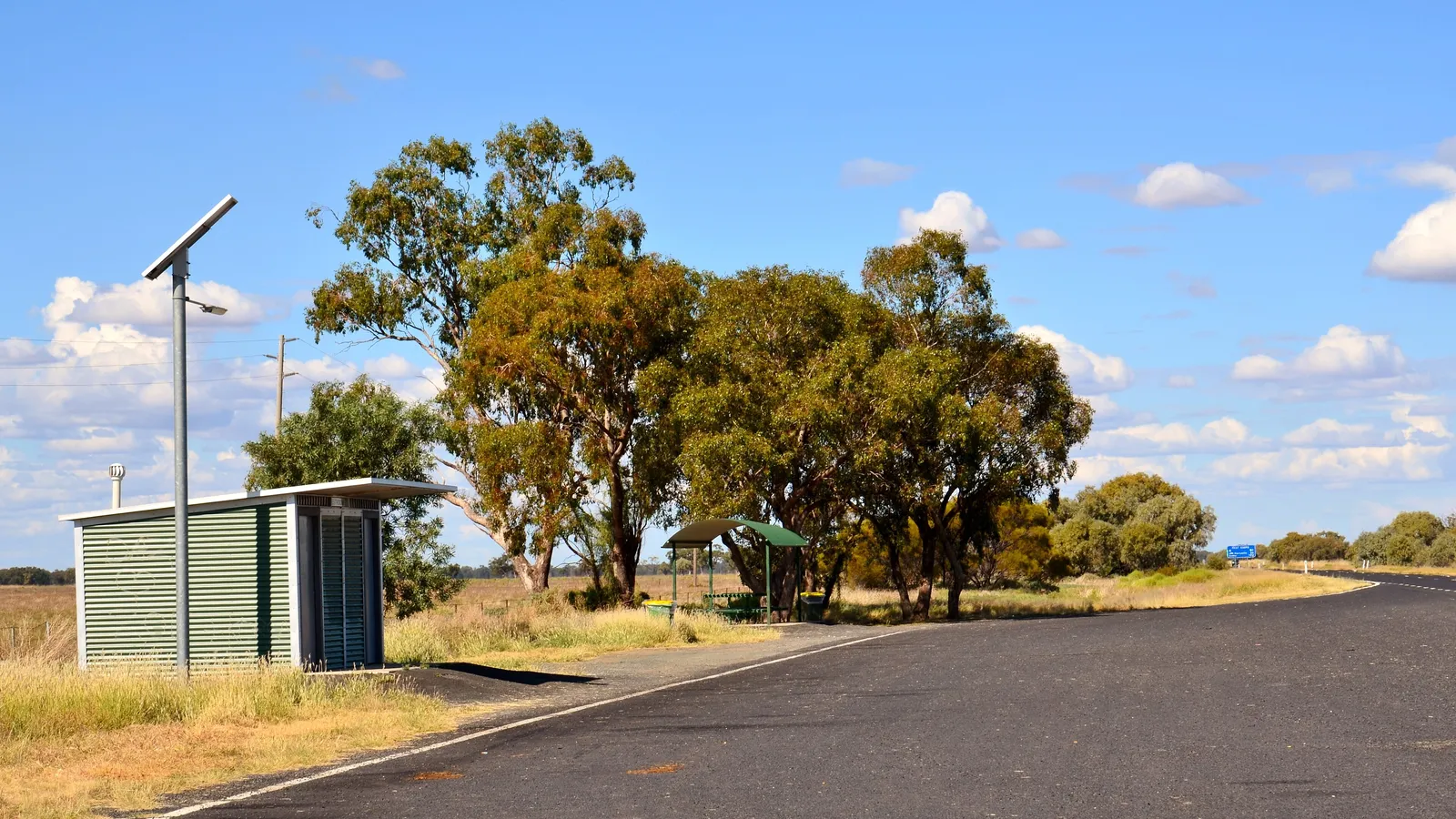
Empty a caravan or campervan toilet only at a dump point. They sit at caravan parks, showgrounds, rest areas and visitor centres, and the Australian Government's National Public Toilet Map records public ones with their facilities. AussieCamps maps 347 in New South Wales but only 23 in the Northern Territory, so on remote legs plan the next dump point as carefully as the next fuel stop.
Dump points by state
The counts below are public dump points from the National Public Toilet Map that AussieCamps carries, by state. Caravan parks often have their own dump point too, but those are private and not counted here.
A washout is a tap for rinsing the cassette or hose after emptying, and only about one dump point in six has one. Carry your own rinse water rather than counting on it.
| State | Public dump points | With a washout tap |
|---|---|---|
| New South Wales | 347 | 56 |
| Queensland | 324 | 42 |
| Western Australia | 238 | 36 |
| South Australia | 199 | 38 |
| Victoria | 181 | 40 |
| Tasmania | 80 | 14 |
| Northern Territory | 23 | 4 |
| ACT | 1 | 0 |
Finding one before you need it
The habit that prevents problems is knowing where the next dump point is before the tank is nearly full. Check access hours, vehicle clearance and whether a key, code or fee is needed, because some are locked overnight.
In the north and the outback the gaps are long, and a dump point can be closed for maintenance. Keep a second option on every remote leg, and ask at caravan park reception whether non-guests can use theirs.
- Find the next one in advance
- Check hours, keys and fees
- Keep a backup on remote legs
Carry the right kit
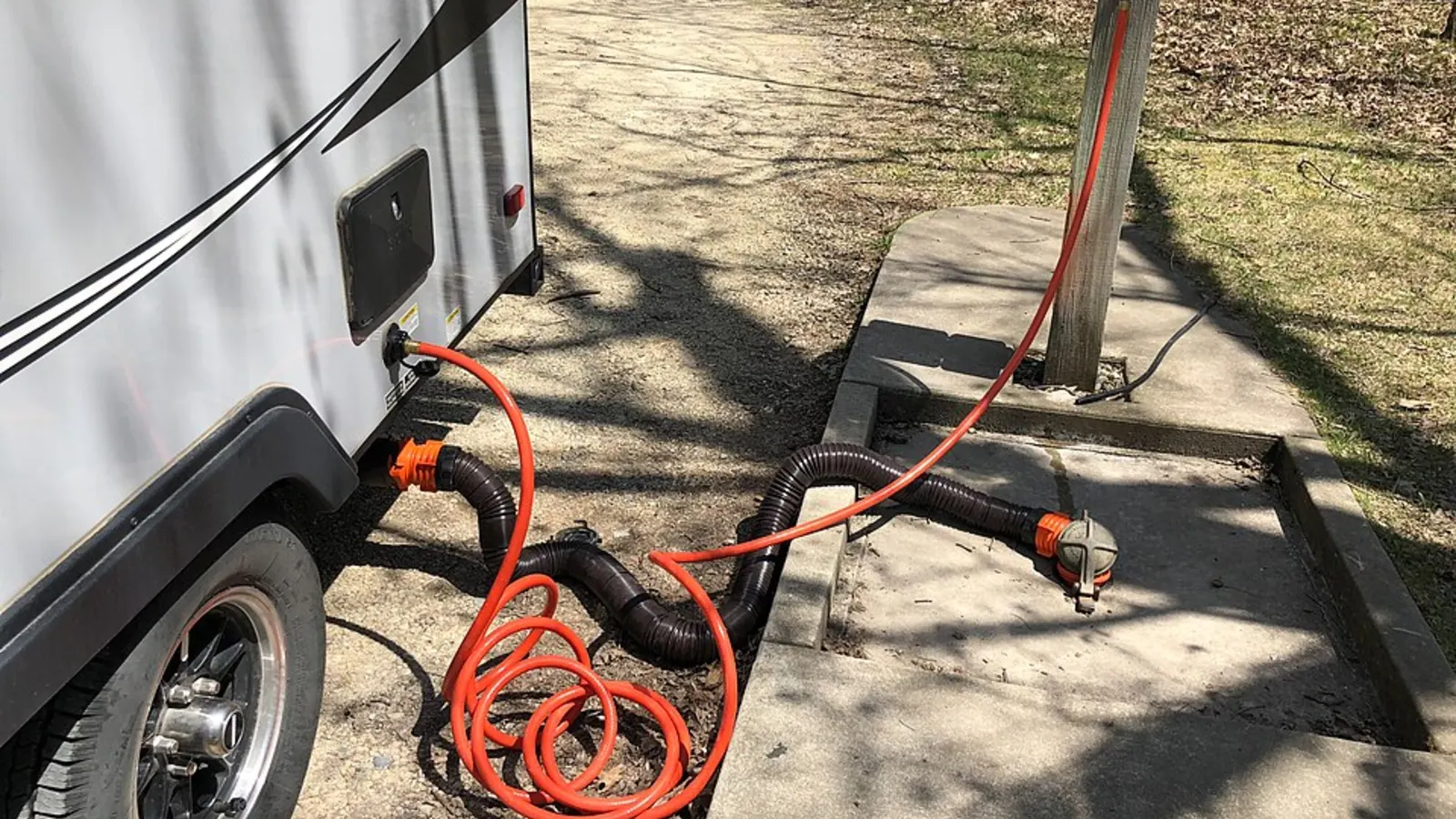
Use a secure hose and fittings that match the vehicle, wear gloves, and keep drinking-water equipment completely separate. Never use a drinking-water tap to rinse a waste hose.
Carry disposable gloves and hand sanitiser with the waste gear, because handwashing facilities at dump points are not guaranteed.
- Waste hose and fittings
- Gloves and sanitiser
- A separate rinse hose
Using one correctly
Park so other vehicles can pass, because many dump points sit on a single access lane. Empty black water first, rinse, then grey water, and rinse the area afterwards rather than leaving it for the next person.
Never fill fresh water from a tap at a dump point unless it is clearly marked as drinking water, and wash your hands before touching anything in the vehicle.
Use toilet chemicals the receiving system can handle. Some rural dump points feed septic systems, and harsh chemicals can damage the biological process that makes them work.
- Black water first, then grey
- Never fill drinking water there
- Use septic-safe chemicals
Cassette or fixed tank
A cassette toilet can be carried to the dump point, so you can empty it without moving the vehicle. Some dump points are built into public toilet blocks and shown on the Toilet Map, but only empty a cassette into a toilet or dump point signed for that use.
A fixed black tank means driving to a dump point and positioning over it, which matters at busy facilities and in towns with tight access.
If your setup allows it, a spare cassette roughly doubles how long you can stay away from a dump point on a remote leg.
- Cassettes travel to the point
- Fixed tanks need the vehicle there
- Never use an ordinary toilet
Grey water
Grey water from showers and sinks goes into a dump point or wherever the campground directs, not onto the ground beside the van. Rules differ by land manager, so read the campground page.
Where you camp without facilities, Victoria's state forest rules show the standard: tip washing-up water at least 50 metres from rivers and creeks, and dig toilet holes at least 30 cm deep and 100 metres from any waterway.
- Follow the campground's rule
- Wash water 50 m from creeks
- Never drain onto beaches
What not to do and the penalties
Stormwater drains run straight to waterways with no treatment, and dumping onto the ground or into the bush is a pollution offence under state environment law.
New South Wales strengthened its illegal dumping penalties in April 2024, including a specific offence for dumping more than 50 litres of waste in a public place, with heavier penalties on sensitive land such as national parks and beaches.
Illegal dumping also gets free camping areas closed. Residents report it, councils act on it, and the site closes for everyone.
- Drains go straight to waterways
- Over 50 litres is a specific offence in NSW
- Dumping closes free camps
Building it into the routine
Many travellers empty on a schedule, usually whenever they pass a dump point with tanks more than half full, rather than when the gauge forces them.
Know your capacity in days rather than litres: how long the fresh water lasts, when the grey tank needs attention and how many days the toilet supports for your group. Those numbers set how far off grid you can go.
- Empty on schedule, not on demand
- Know capacity in days
- Half full is the trigger
Places along the way
Check before you go
Rules and conditions change. Recheck the official source and the page for your exact park or campground before departure.
Common questions
Where can you empty a caravan toilet in Australia?+
At a dump point. Public ones sit at showgrounds, rest areas, visitor centres and roadhouses and are listed on the National Public Toilet Map, and many caravan parks have their own. Never use a drain or the ground, and use a toilet only where it is signed for cassette disposal.
Can you empty grey water on the ground in Australia?+
Not as a rule. Grey water goes into a dump point or wherever the campground directs, and where there are no facilities the Victorian state forest standard is to tip washing-up water at least 50 metres from waterways.
Take it on the road
Save the stops. Plan the whole trip.
Build an ordered route from saved places, calculate the distance and keep dates, notes and to-dos attached.