A campervan is one vehicle you drive on a car licence, up to 4.5 tonnes gross vehicle mass, while a caravan needs a tow vehicle and brings brake, mass and mirror rules of its own. For a working holiday that makes a campervan simpler to buy, register and sell, and a caravan better when you stay put and want to drive a car. The rules below were read on 21 October 2026, mostly from New South Wales and Queensland, and other states differ.
Campervan vs caravan side by side
The table sets out what the road authorities say on the points that decide the choice. Fuel, price and setup time vary with the vehicle you choose, so the table leaves them out and the sections below cover how to compare them.
Rules marked New South Wales or Queensland are from those states' pages, and other states can differ.
| Point | Campervan | Caravan and tow vehicle |
|---|---|---|
| Licence | A car licence covers a vehicle up to 4.5 tonnes GVM seating up to 12 people, including the driver | A car licence can tow, but brake rules rise with the trailer's mass; in New South Wales learners cannot tow |
| Registration and inspection | One vehicle; in New South Wales most light vehicles over 5 years old need a yearly inspection report | Two vehicles to register; New South Wales also requires the inspection for a caravan up to 4.5 tonnes ATM, except a tare under 411 kg |
| Duty and insurance | Queensland charges duty on light vehicles by cylinder count, and a green slip is required to register in New South Wales | Queensland charges no duty on caravans, and New South Wales green slips exclude trailers and caravans |
| Gas fittings | Queensland requires a gas certificate under 3 months old at transfer, and motorhomes are not exempt | Queensland requires the same, and caravans are not exempt |
| Length and width | One vehicle; in New South Wales its load must not make the width exceed 2.5 m | In New South Wales the vehicle, trailer and load together must not exceed 19 m, and the load must not make the width exceed 2.5 m |
- Campervan: one vehicle
- Caravan: two vehicles
- Rules differ by state
Licence and towing rules
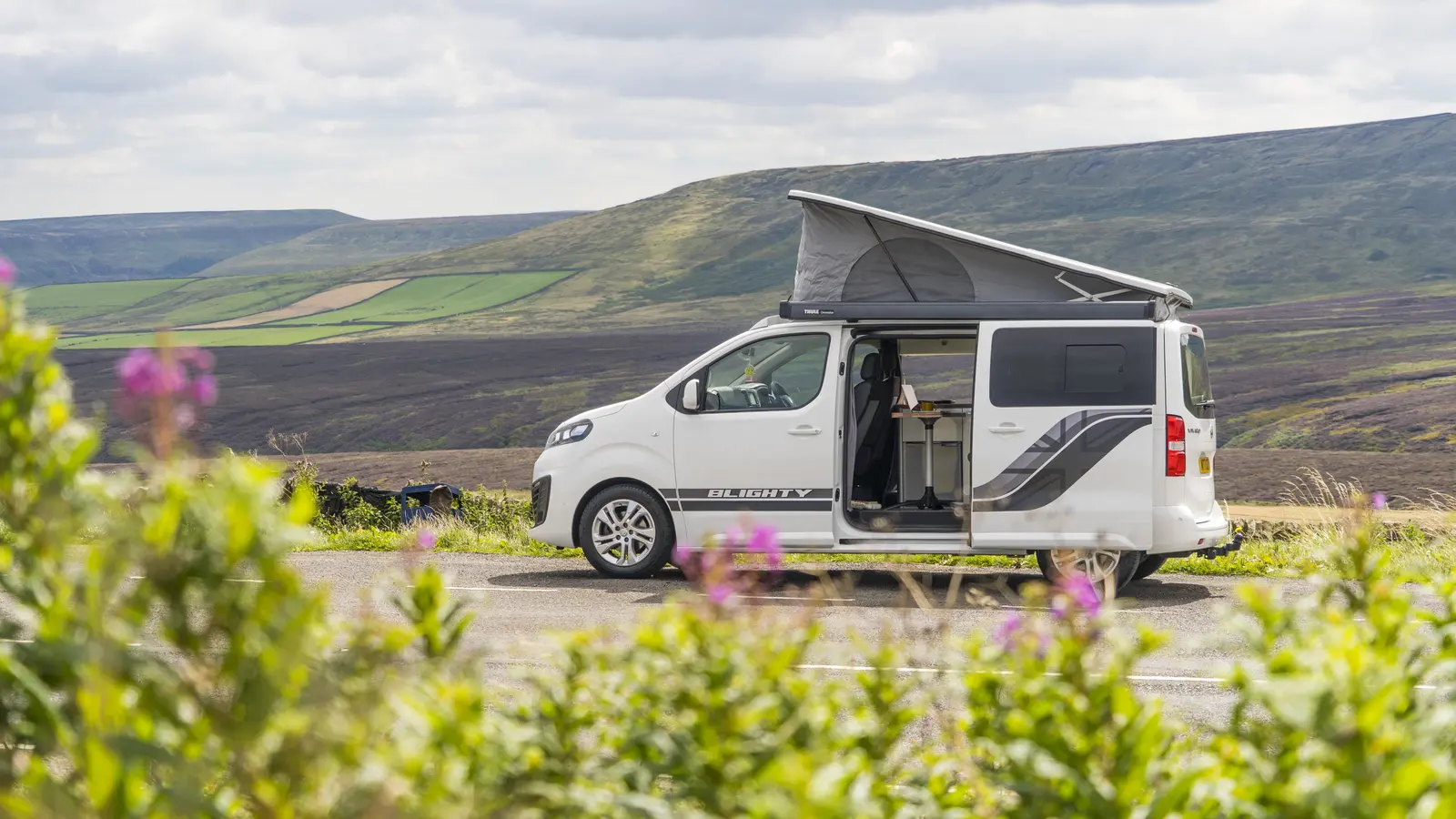
New South Wales says a car licence covers vehicles up to 4.5 tonnes gross vehicle mass seating up to 12 people including the driver, so most campervans need no special licence. Towing a caravan on a car licence depends on the combined mass limits of the licence and the tow vehicle. New South Wales learners cannot tow, and P1 car licence holders can tow up to 250 kg unloaded.
Brakes depend on the trailer's gross mass. New South Wales requires none up to 750 kg, brakes on at least one axle from 751 to 2,000 kg and brakes on all wheels from 2,001 to 4,500 kg. Over 2,000 kg a breakaway system is needed, and New South Wales requires one safety chain under 2,500 kg and two crossed chains over 2,500 kg. Western Australia caps unbraked towing at 750 kg or the manufacturer's limit, whichever is lower. Queensland and New South Wales both say extra mirrors may be needed when towing a large trailer.
- Check the tow vehicle's rated limit
- Brake rules rise with mass
- Learners cannot tow in NSW
Registration, inspections and gas
A caravan is registered as well as the car that tows it, and a campervan is registered once. New South Wales requires a yearly inspection report for most light vehicles over 5 years old, and this covers trailers and caravans up to 4.5 tonnes ATM, with caravans of a tare under 411 kg exempt. A New South Wales green slip is required to register a vehicle, and trailers and caravans are excluded.
Queensland charges no vehicle registration duty on trailers and caravans, but it does charge light vehicles by cylinder count when ownership transfers. Queensland also requires a gas certificate under 3 months old at transfer for a vehicle with gas fittings, and caravans and motorhomes are not exempt. The buying guide sets out the transfer rules by state.
- Two registrations for a caravan
- Gas certificate in Queensland
- NSW inspection covers caravans
Size, roads and where you can go
Length and width limits apply to both. New South Wales says a vehicle, trailer and load together must not be longer than 19 m, and the load must not make the width exceed 2.5 m. A caravan and car is a long combination for narrow bush roads and town car parks, and a campervan is shorter and easier to turn.
Check a place before you commit. Park agencies publish access notes for each campground, such as 2WD or high-clearance 4WD, so read the page for the site. The Spirit of Tasmania guide sets out the ferry rules for both, and the road trains guide covers sharing the road on long outback legs.
- Combination length matters
- Read each campground's page
- Ferry rules differ for each
What the usual comparisons say
Comparison guides from hire companies and caravan sellers commonly say that a campervan suits couples and people who move often, because packing up means closing the door. They say a caravan suits long stays and families, because it can stay set up while you drive the car, and that a camper trailer suits rougher tracks. These are opinions, not rules, and they come from businesses that sell one or the other.
Fuel use depends on the vehicle, so run the fuel formula for each setup: kilometres times litres per 100 km, divided by 100, times the price per litre.
- Opinions, not rules
- Run the fuel formula for each
- Compare the two-vehicle total
Which suits a working holiday
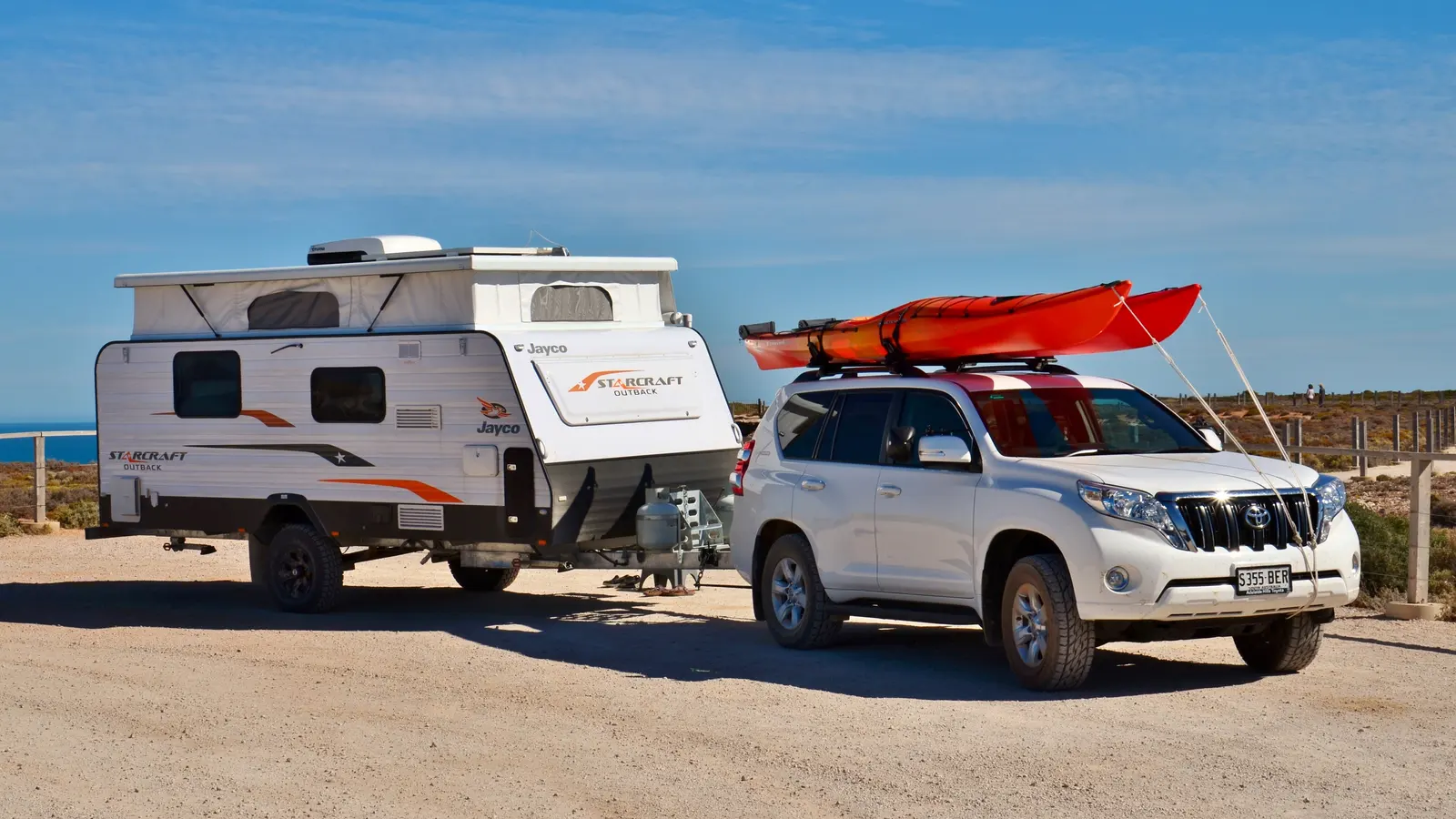
A working holiday usually means buying a vehicle, using it for months and selling it before you fly home. A campervan is one vehicle to check, register and sell. A caravan means a car and a caravan to buy, inspect and sell, plus towing rules that rise with the trailer's mass.
A caravan suits a long fruit-picking or farm placement in one place, where you leave it set up and drive the car to work. A campervan suits a trip with a new camp every few nights. If you will move often, price both setups for the whole trip and include the sale at the end.
- Moving often: campervan
- Staying put: caravan
- Price the whole trip, then the sale
Check each place's vehicle details in AussieCamps
AussieCamps lists 1,838 campgrounds and 745 national parks from the state park agencies, plus 5,552 rest areas from road authorities. A place page shows facilities and a Vehicles and RVs section, such as a car park or caravan sites, as the agency publishes it, so you can see what a place says about your setup before you drive there.
You can save places and build a trip with ordered stops, dates, notes and route distance. Place details work offline; map tiles, routing, weather and photos need signal. The app does not tell you a caravan's size limits for a given road, so read the agency's page.
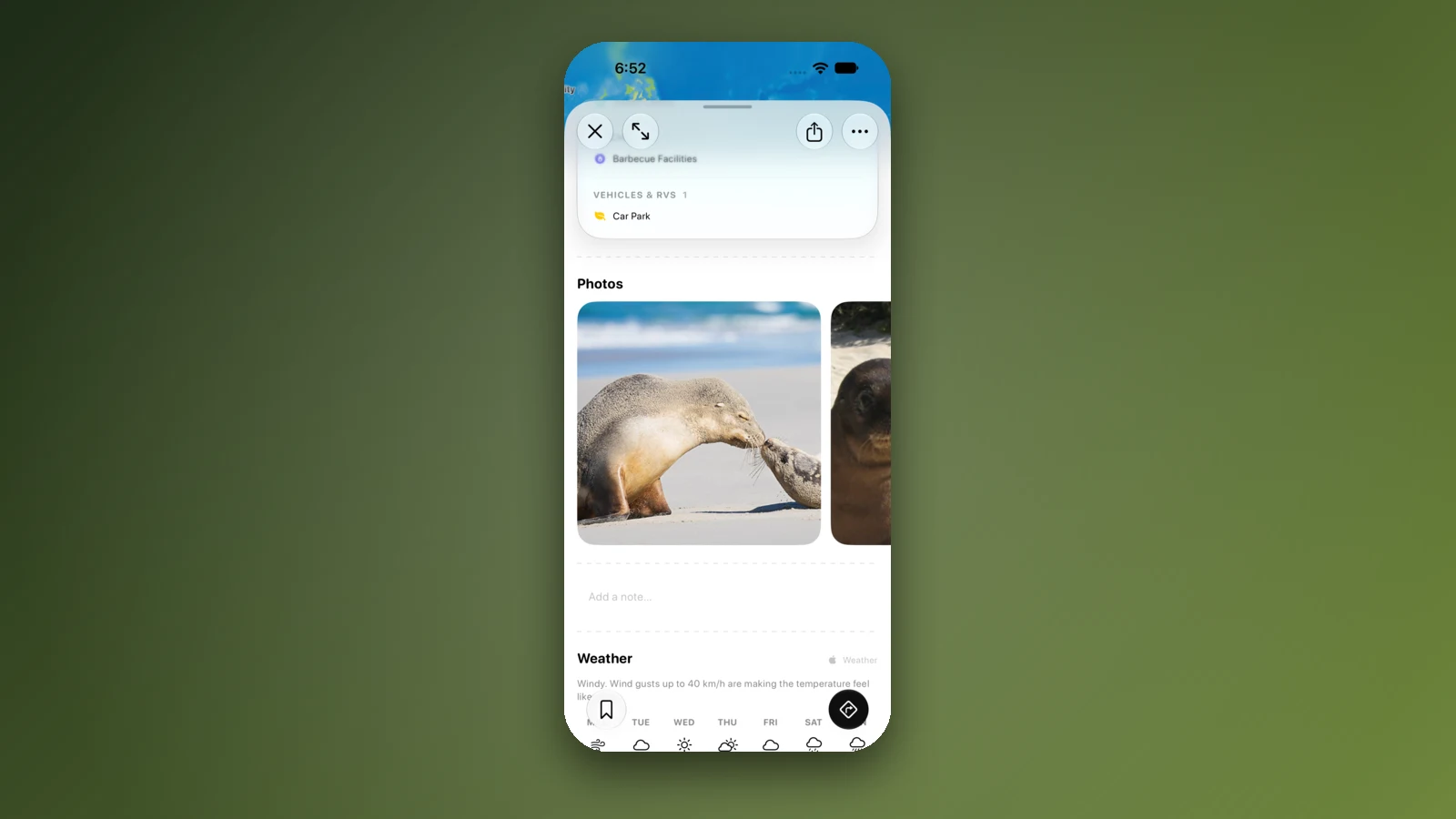
- Read the Vehicles and RVs section
- Save places for your setup
- Check size limits on the agency page
Places along the way
Check before you go
Rules and conditions change. Recheck the official source and the page for your exact park or campground before departure.
- NSW Government: licence classes and conditions
- NSW Government: towing a caravan
- NSW Government: safety checks and vehicle inspections
- Service NSW: buying a vehicle
- Queensland Government: towing vehicles and trailers
- Queensland Government: transfer vehicle registration
- Queensland Government: vehicle registration duty rates
- WA Department of Transport: safe towing guide
Common questions
Is a campervan or a caravan better for a working holiday in Australia?+
A campervan is usually simpler: one vehicle to buy, register, insure and sell. A caravan needs a tow vehicle as well, so you buy, check and sell two vehicles, and the towing rules apply. A caravan can stay set up while you drive the car, which suits a long stay in one place.
Can I tow a caravan on a car licence in Australia?+
Generally yes, within the limits of your licence and your vehicle. In New South Wales learner drivers cannot tow, and a P1 car licence holder can tow up to 250 kg unloaded. Check the towing limit in the vehicle's handbook and the licence rules of the state where you will drive.
Does a caravan need brakes in Australia?+
It depends on its weight. New South Wales requires no brakes up to 750 kg gross trailer mass, brakes on at least one axle from 751 to 2,000 kg, and brakes on all wheels from 2,001 to 4,500 kg, with a breakaway system over 2,000 kg. Western Australia caps unbraked towing at 750 kg or the manufacturer's limit, whichever is lower.
Do I need a special licence to drive a campervan in Australia?+
Not for most campervans. A car licence covers a vehicle up to 4.5 tonnes gross vehicle mass seating up to 12 people including the driver, which includes most campervans. A heavier motorhome needs a higher licence class, so check the van's plate.
Take it on the road
Save the stops. Plan the whole trip.
Build an ordered route from saved places, calculate the distance and keep dates, notes and to-dos attached.