A week from Darwin can connect Litchfield, Kakadu and Mary River, but water access, campgrounds and roads change sharply between wet and dry seasons.
Litchfield first
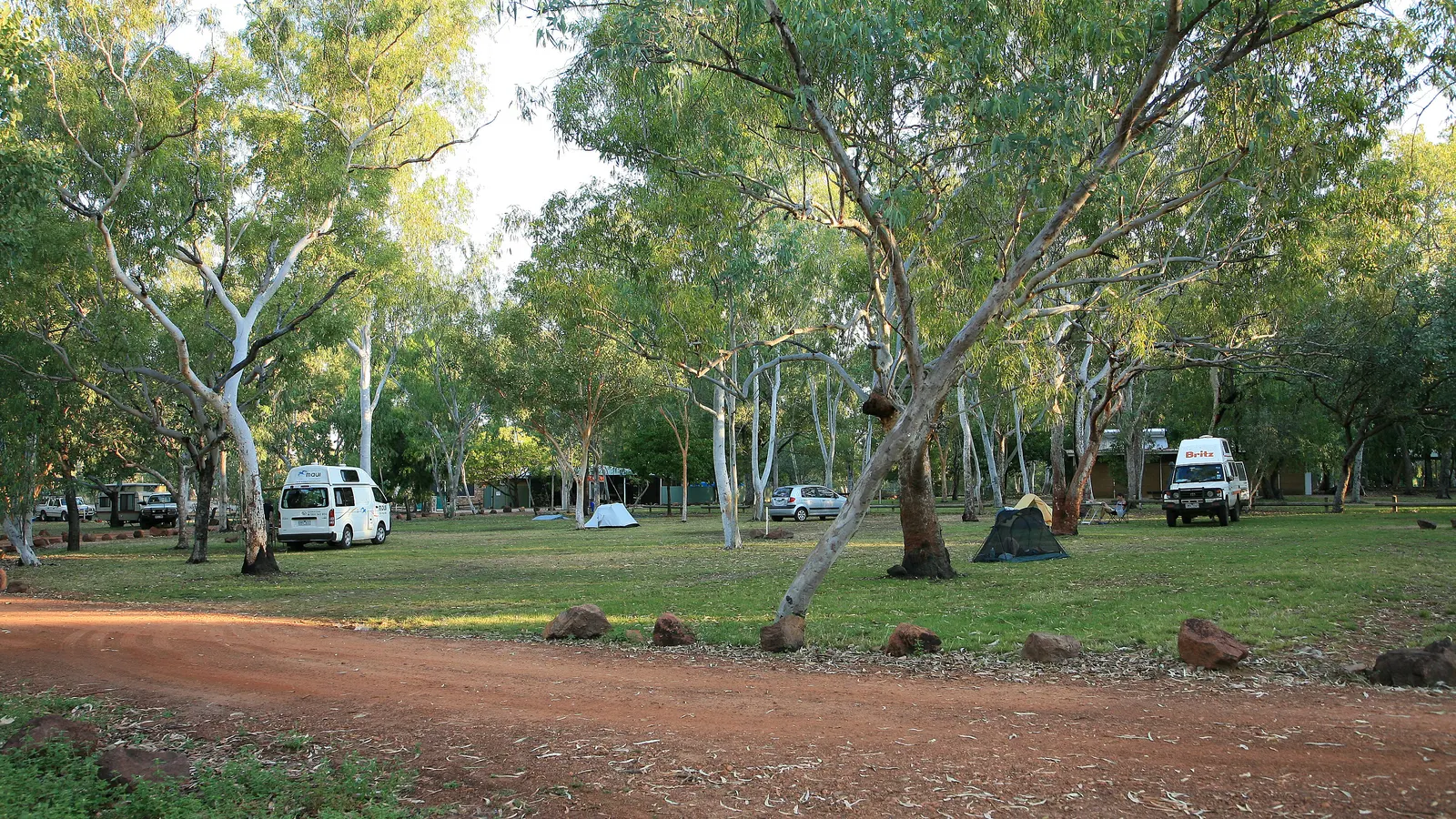
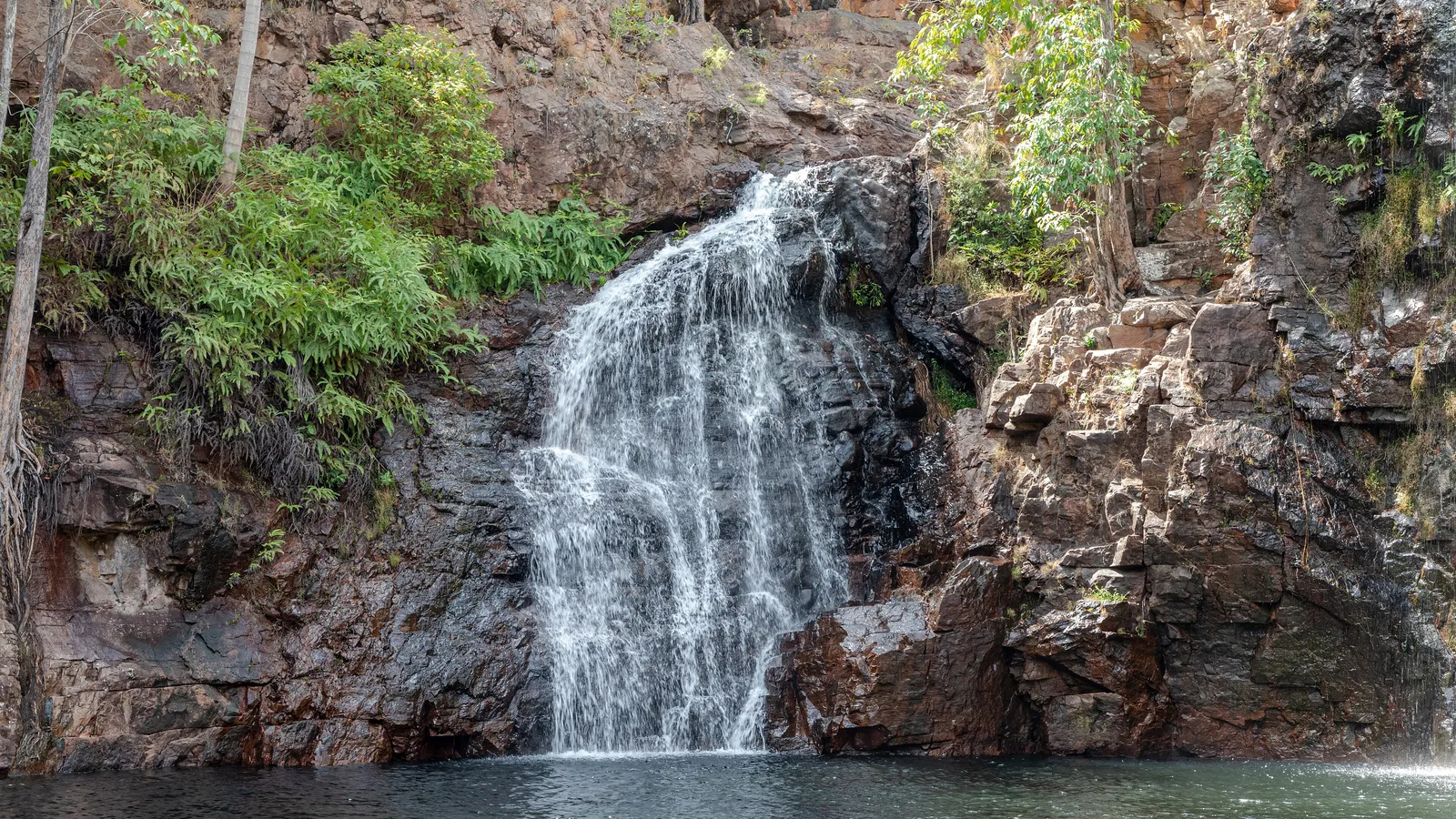
Drive south from Darwin and settle into a designated Litchfield campground before chasing waterfalls. Wangi Falls, Florence Falls and other swimming areas open or close according to conditions.
Never treat clear water as permission to swim. Read crocodile and closure signs at every location, every time.
- Wangi Falls Campground
- Florence Falls
- Darwin
Across to Kakadu
Allow more than one night in Kakadu. The park is vast and distances between art sites, wetlands and campgrounds add up quickly. A park pass and separate campground arrangements may apply.
Cooinda is a useful serviced base, while simpler camps trade facilities for location. Carry water, fuel conservatively and check roads after any rain.
Mary River and the return
Mary River wetlands make a slower final leg before Darwin. Stay back from water edges and follow local crocodile advice, including at boat ramps and fishing spots.
The Top End heat remains serious in the dry. Walk early, rest through the hottest hours and keep drinking water accessible inside the vehicle.
The wet and the dry decide everything
The dry season, roughly May to October, is when this loop works: roads open, waterfalls accessible, humidity manageable and campgrounds operating. The wet season closes large parts of Kakadu and makes travel genuinely difficult.
The shoulder months at either end are the sweet spot. Waterfalls still run strongly in May and June after the wet, while the roads have reopened and the crowds have not fully arrived.
In the wet, from November to April, expect extreme humidity, monsoonal storms, road closures and many walks and campgrounds shut. Some people prefer it for the scale of the waterfalls, but it is not a straightforward trip. Which Kakadu sites stay open in the wet is covered in our guide to wet season camping in the Top End and northern WA.
- Dry season is May to October
- May and June for full waterfalls
- Wet season closes much of Kakadu
Crocodiles govern every water decision
Kakadu and Litchfield are both serious crocodile country and estuarine crocodiles are present in waterways that look completely safe. Every year animals are removed from swimming holes, and the survey status of a hole can change between seasons.
Swim only where current signage explicitly permits it, and check on the day rather than relying on a guidebook or a previous visit. Wangi Falls and Florence Falls in Litchfield are the commonly open ones, and even they close after surveys.
Do not camp at the water's edge, clean fish beside a river or launch a kayak in unsurveyed water. Freshwater crocodiles are also present and are generally harmless if left alone, but distinguishing them from a distance is not a skill to rely on.
- Only swim where signed open today
- Holes close after surveys
- Never camp at the water's edge
Kakadu permits, passes and culture
Kakadu requires a park pass, purchasable online, and it is a living cultural landscape jointly managed with its Traditional Owners. Some areas are restricted and photography is prohibited at certain rock art and ceremonial sites.
The rock art at Ubirr and Nourlangie is among the oldest continuous artistic tradition anywhere, some of it tens of thousands of years old. Take a guided walk if one is running, because the interpretation transforms what you are looking at.
Respect closures and restricted areas without exception. These are not administrative boundaries but conditions of access to somebody's country.
- Buy the Kakadu pass online
- Some sites prohibit photography
- Guided walks transform the rock art
Vehicle requirements and Litchfield
Much of Kakadu's best country, including Jim Jim Falls and Twin Falls, requires a high-clearance four-wheel drive and involves creek crossings. A two-wheel drive still reaches Ubirr and Burrungkuy (Nourlangie) in the dry season. The Kakadu access report currently lists Gunlom Road as high-clearance 4WD only, and some hire companies do not allow 2WDs on unsealed roads, so check the access report and your rental terms.
Litchfield is considerably more accessible, with Florence, Wangi and Tolmer falls all reachable in a two-wheel drive on sealed roads. For travellers without a four-wheel drive, Litchfield delivers more per day than Kakadu.
Check your rental agreement before attempting any unsealed road here. Most standard hire agreements prohibit them entirely, and recovery in this country is expensive.
- Jim Jim and Twin Falls need 4WD
- Litchfield works in a 2WD
- Check hire terms before unsealed roads
Darwin as a base
Darwin has the services, supermarkets and hire depots that nothing else up here does, plus Mindil Beach markets in the dry season and the Museum and Art Gallery explaining Cyclone Tracy and the 1942 bombing.
Do the big shop in Darwin before heading into either park. Inside Kakadu, Jabiru has a supermarket and service station and the Cooinda store sells fuel and groceries. Fuel is also considerably cheaper in town.
Katherine and Nitmiluk Gorge sit south of the loop and are worth adding if you have the days, with boat trips and canoeing through the gorge system.
Waterfall access in Kakadu opens progressively as the wet recedes, so a May visit may find some sites still closed that will be open by June.
- Restock and refuel in Darwin
- Mindil markets run in the dry
- Jabiru and Cooinda sell groceries
Places along the way
Check before you go
Rules and conditions change. Recheck the official source and the page for your exact park or campground before departure.
Places to camp in Northern Territory


Take it on the road
Save the stops. Plan the whole trip.
Build an ordered route from saved places, calculate the distance and keep dates, notes and to-dos attached.