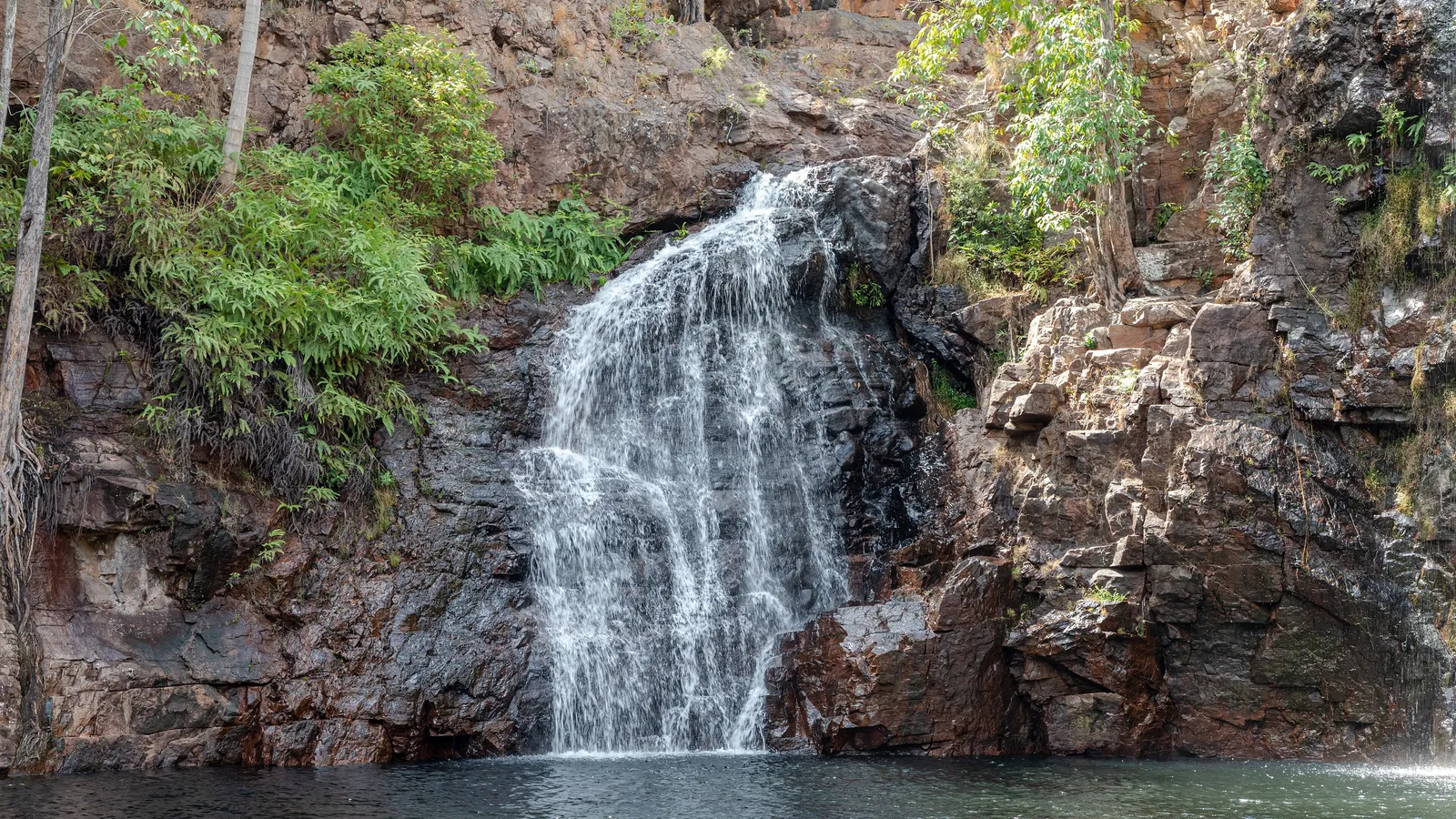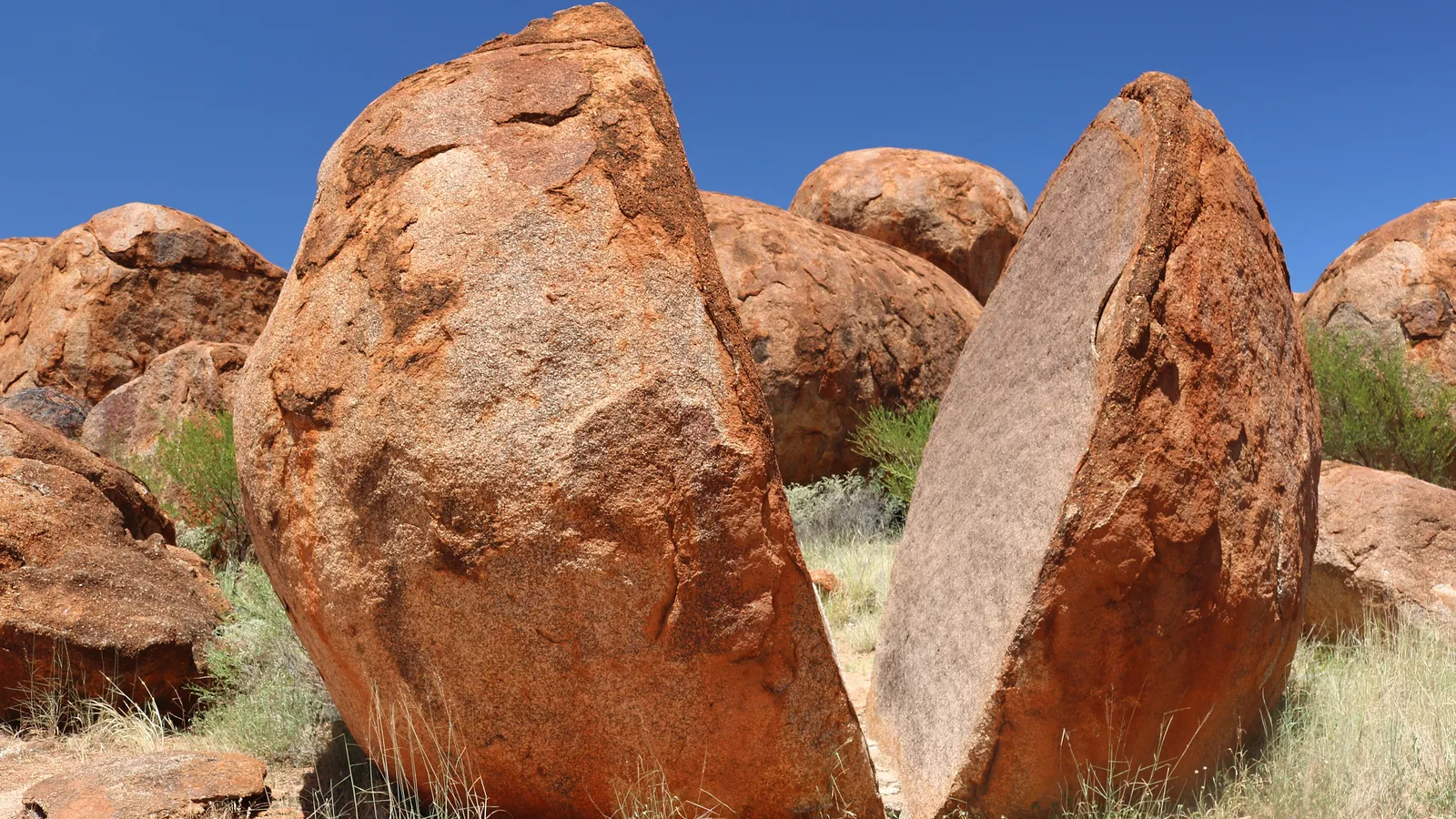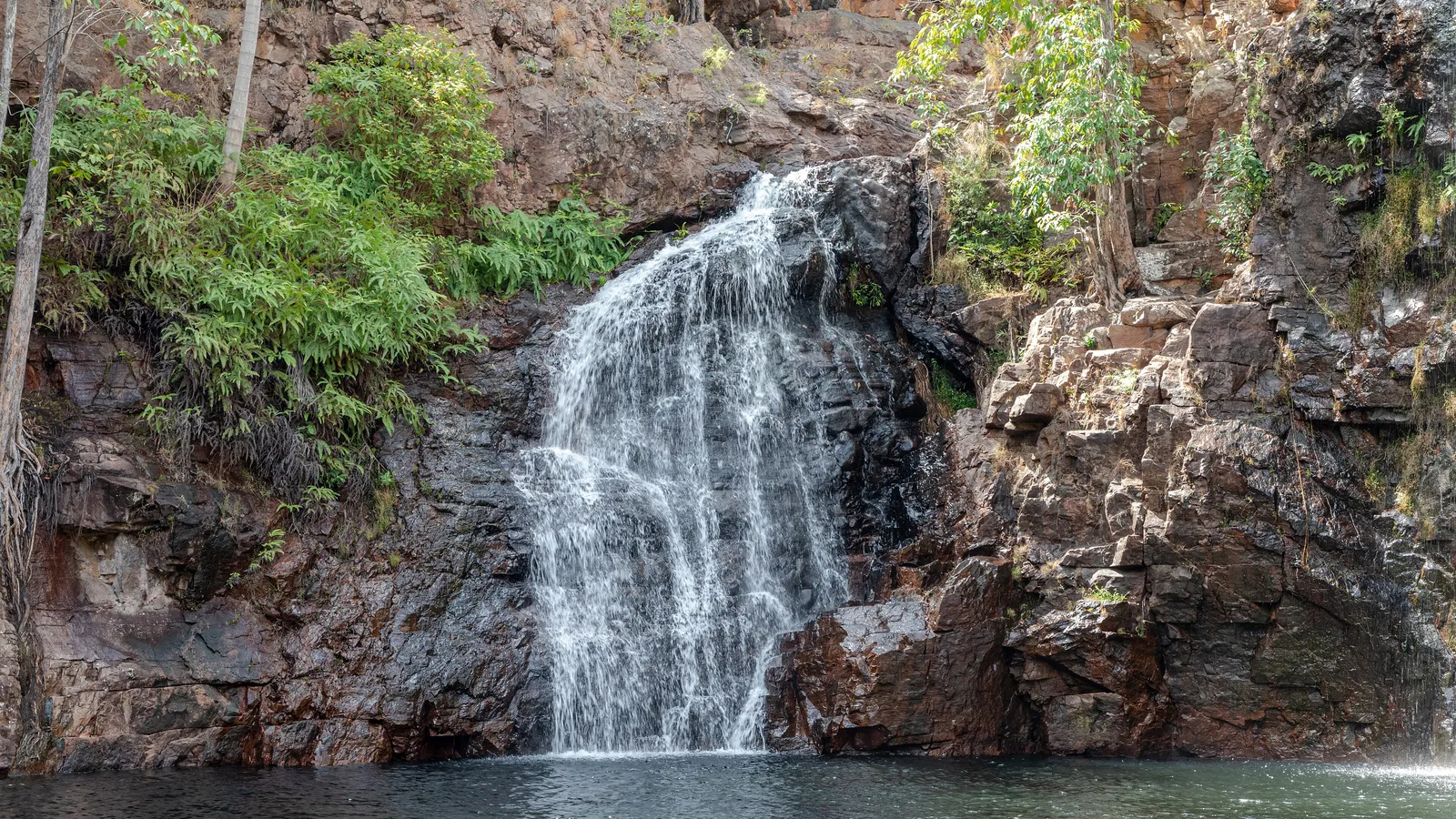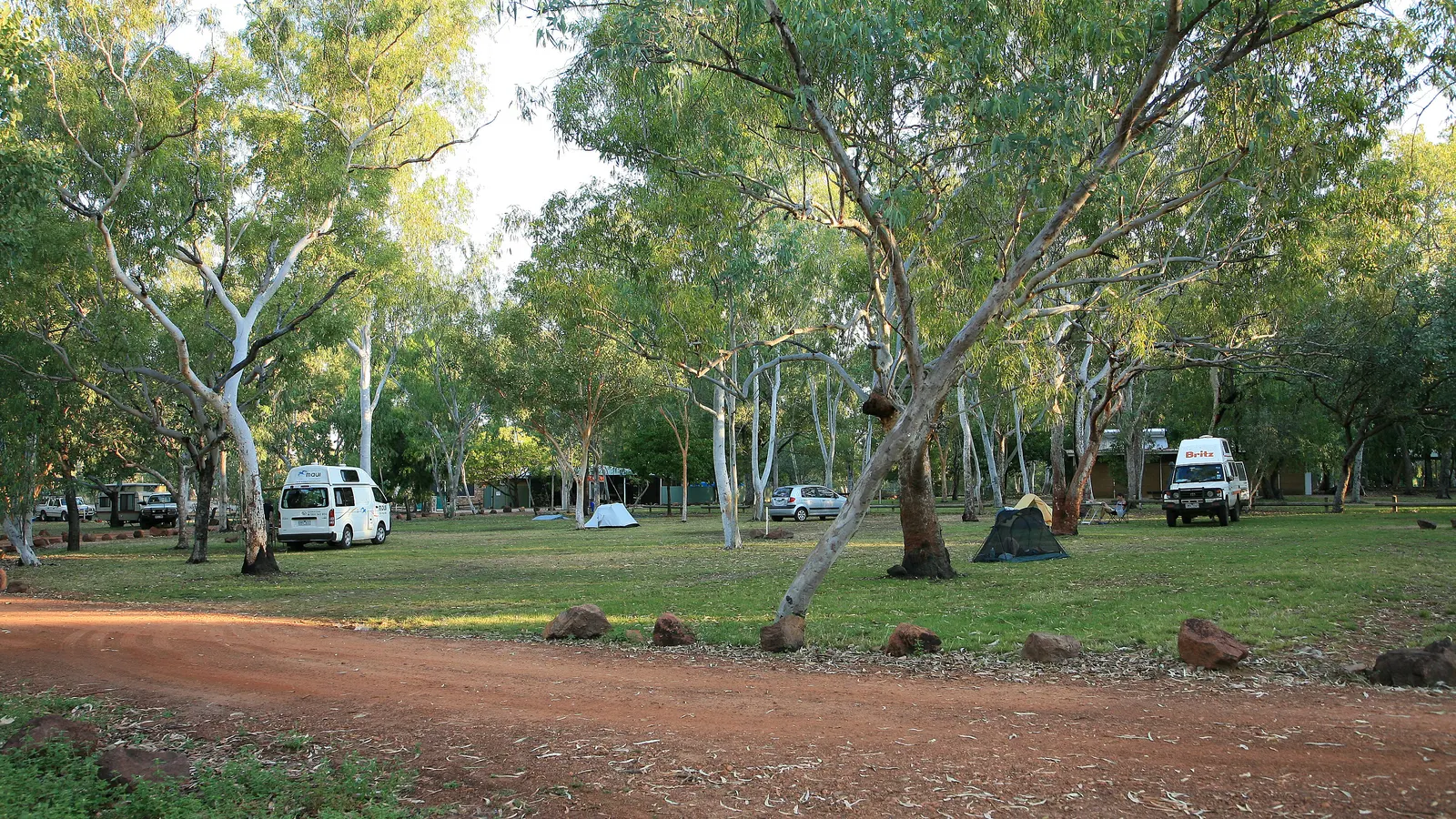
Mostly no: Northern Territory parks allow camping only in marked areas that you book and pay for online, visitors also need an NT Parks Visitor Pass for most parks, and the free option is a roadside rest stop signed for 24-hour overnight camping. AussieCamps maps 102 NT park campgrounds and 23 public dump points, a thin network that makes every booked night count.
Bookings and visitor passes
Designated campsites in NT parks, and the Jatbula, Larapinta and Tabletop tracks, are booked and paid for online, and rangers cannot take payment on site. Display the camping tag on your vehicle or tent, ready to show a ranger.
Visitors from outside the Territory need an NT Parks Visitor Pass for most parks and reserves, bought online before you go: $10 for a day, $30 for two weeks or $60 a year per adult. It does not cover Kakadu or Uluru-Kata Tjuta, which sell their own passes through Parks Australia. Road Report NT, Kakadu and Litchfield closures are set out in our guide to wet season camping in the Top End and northern WA.
Camping outside designated areas
Camping outside a designated campground needs a permit, with a fee of $4 per adult. Garig Gunak Barlu on the Cobourg Peninsula has its own permit, $232.10 per vehicle for up to five adults and seven nights, paid at least six weeks ahead, and the park opens only in the dry season.
Some campgrounds (Category C) are run by commercial operators, who set their own fees and handle bookings and payment themselves, so check with the operator before you go. Pets are generally not allowed in NT parks. Dogs can be walked at a few Darwin-area parks such as Casuarina Coastal Reserve and Holmes Jungle Nature Park, and near Alice Springs they may camp with you at Redbank Waterhole campground in Owen Springs Reserve.
- Off-campground permit: $4 an adult
- Garig Gunak Barlu: $232.10 a vehicle
- No pets in most parks
Seasonal access and water safety
Parks can close at short notice for flooding or bushfire, and most campgrounds stay open all year unless the season shuts them. Check the park page and the NT Road Report before every leg, even when it is dry where you are standing.
Saltwater crocodiles can be in any Top End waterway, so swim only where a sign says it is safe and camp at least 50 metres from the water.
Permits for Aboriginal land
Large areas of the Territory are Aboriginal land, and entering it needs a permit from the relevant land council. In the Top End that is the Northern Land Council, which warns that unauthorised entry can bring a fine of 50 penalty units, currently $18,200, under Commonwealth law.
An entry permit covers entry only: fishing or camping must be written into it. Main access roads into major communities need no permit, and the Mereenie Loop uses the Mereenie Tour Pass, free from the Central Land Council in Alice Springs, with no camping allowed along the loop.
Alcohol is banned in most Aboriginal communities unless a permit allows it. Check the rules for every community on your route before travelling with any in the vehicle.
- A permit covers entry, not camping
- No camping on the Mereenie Loop
- Alcohol banned in most communities
Kakadu, Litchfield and park passes
Litchfield, Nitmiluk, Watarrka, Tjoritja / West MacDonnell and Judbarra / Gregory all need the NT Parks Visitor Pass. Kakadu needs a Parks Australia pass instead, valid for seven days: $25 per adult in the tropical summer (1 November to 14 May) and $40 in the dry season (15 May to 31 October), although visits from 1 July to 31 October 2026 are also charged the $25 rate. NT residents enter free.
The Jim Jim and Twin Falls area, including Karnamarr campground, is closed for all of 2026. Check the Kakadu access report, which is updated daily, before planning a day around any site.
NT park camping fees follow campground categories: $10 per adult at Category B sites, $15 at Category A and $20 at Category D, with lower child and family rates. Category C campgrounds are run commercially and set their own prices.
- Litchfield needs the NT pass
- Kakadu pass: $25 until 14 May 2027
- Jim Jim closed through 2026
Crocodiles and water
Saltwater crocodiles live in rivers, creeks, billabongs, estuaries and along the coast across the Top End, and the Territory says it is never completely safe to enter the water. Assume every waterway holds one.
Swimming areas open and close with surveys and water levels, so check the sign and the park page on the day rather than trusting a previous visit or an old guidebook.
Saltwater crocodiles live in fresh water as well as salt water, so a freshwater river or billabong is no guarantee of safety. Keep children well back from the bank and supervise them near water.
- Assume crocs in every Top End waterway
- Camp 50 m from the water
- Swim only where signed safe
The build-up and the seasons
The Territory's own calendar runs the dry season from May to September, the build-up from October to December, the wet from January to mid-March and the run-off through March and April. Park campgrounds are busiest from May to September. If your trip falls in the festive weeks, our guide to camping over Christmas and summer 2026-27 compares booking windows and fire rules by state.
Heavy rain and road and park closures can run from November to April, while the waterfalls are at full flow. Some travellers prefer that season, but it means checking every park and road before you commit.
Central Australia swings between extremes. Temperatures can pass 40 degrees between October and April, and winter nights are cold, so pack for a hot afternoon and a cold night in the same day.
- Dry season May to September
- Build-up October to December
- Above 40 degrees Oct to April
Fires, fishing and collecting
A fire ban usually lasts up to 24 hours. During one you must not start a fire in the open air, although a small cooking fire is allowed if it burns only while cooking, has 4 metres cleared around it and is always attended, and gas or coal barbecues can still be used.
Outside a ban, small fires for cooking and boiling water need no permit, but the 4 m clearing is still the law, with a maximum penalty of $15,000. Lighting a fire for any other purpose without a permit carries up to $77,000 or five years in prison.
Recreational fishing has bag and size limits, and some barramundi waters close for part of the year. Check the current NT fishing rules for the river you plan to fish.
Plants and animals in NT parks are protected, so leave rocks, plants and artefacts where they are, and gather firewood outside the park from fallen branches only.
- Fire ban: cooking fires only
- Clear 4 m around every fire
- Gather firewood outside parks
Places along the way
Check before you go
Rules and conditions change. Recheck the official source and the page for your exact park or campground before departure.
- NT parks camping
- NT Parks Visitor Pass
- NT camping fees
- How to use the NT parks booking system
- Garig Gunak Barlu permits
- Rules for pets in NT parks
- NT camping safety
- NT fire bans
- NT campfire safety
- Northern Land Council permits
- Central Land Council permits
- Kakadu park passes
- Kakadu access report
- NT fishing seasons
- NT road rest stops
- NT camping in parks information sheet
- NT parks safety rules
- Swimming in NT parks
Common questions
Do you need a permit to camp in the Northern Territory?+
In NT parks you book and pay for a campsite online and, as a visitor, also hold an NT Parks Visitor Pass. Camping outside a designated campground needs its own permit, and entering Aboriginal land needs a land council permit arranged before you go.
When is camping in the Northern Territory not possible?+
Many Top End campgrounds and unsealed roads close during the wet and run-off, roughly November to April, and parks can close at short notice for flooding or fire. Garig Gunak Barlu opens only in the dry season, and Kakadu's Jim Jim and Twin Falls area is closed for all of 2026.
Places to camp in Northern Territory



Take it on the road
Save the stops. Plan the whole trip.
Build an ordered route from saved places, calculate the distance and keep dates, notes and to-dos attached.