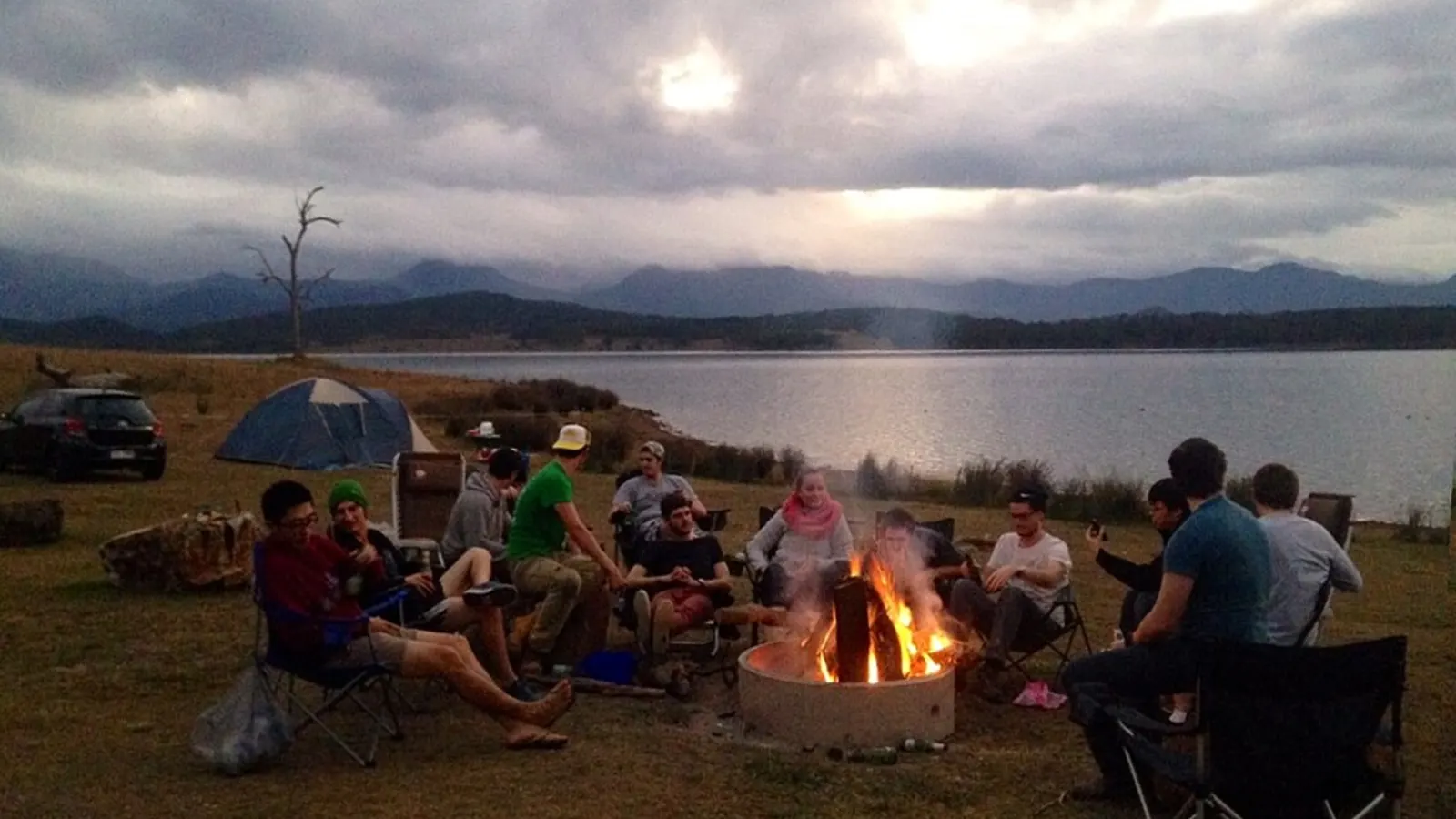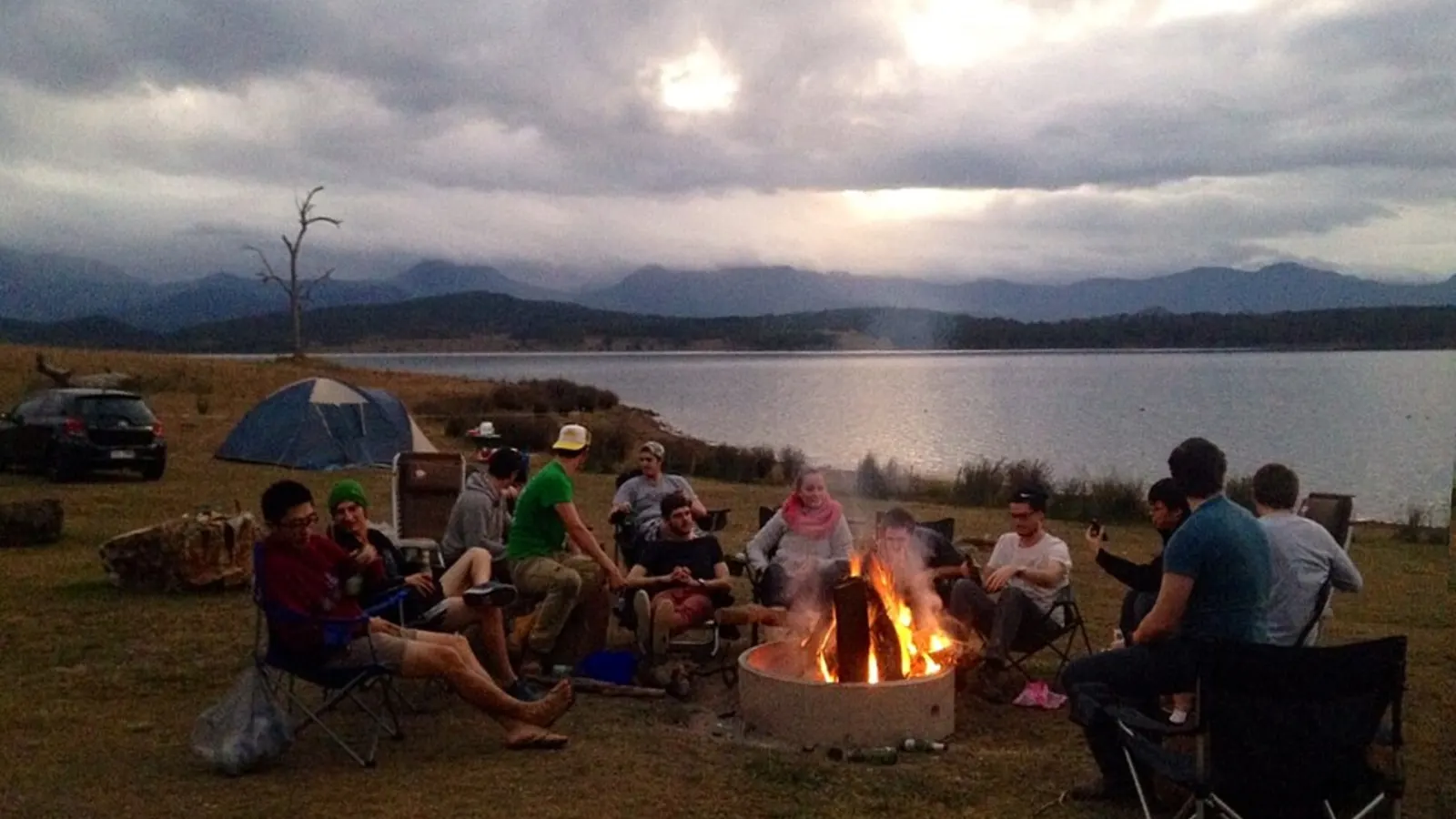
A campfire is legal only when there is no fire ban for the district, the land manager allows fires at that site and you keep to the size and clearance rules. Each state runs its own system: NSW, Victoria, South Australia, Western Australia, Tasmania and the ACT declare Total Fire Bans, Queensland declares local fire bans instead, and the Northern Territory's fire bans usually last up to 24 hours. Before you light one, the AussieCamps app shows each campground's conditions, current alerts and weather, so you can check the site and the day together.
The rules by state
Solid fuel is the constant: on any ban day, wood, charcoal and heat-bead fires are illegal in the affected district, fire rings included. What changes from state to state is the fire season, the size and clearance rules for a legal fire, and whether a gas cooker is still allowed in a park on a ban day.
Read the row for the state you are in, then check the fire authority on the day. Park agencies can add their own bans and closures on top, and those apply even when the fire authority has declared nothing.
| State | Fire authority | Fire season 2026-27 | Cookers in parks on a ban day | Legal campfire |
|---|---|---|---|---|
| New South Wales | NSW Rural Fire Service | Usually 1 October to 31 March; some areas start earlier or end later | Visitor gas cookers generally banned in national parks | State forests: under 1 m², 4.5 m from trees |
| Victoria | CFA | Set by council area | Solid and chemical-fuel cookers banned | Under 1 m across, 3 m cleared, always attended |
| Queensland | Queensland Fire Department | Local fire bans; no Total Fire Ban term | Contained gas and spirit stoves allowed | Only in QPWS fireplaces and fire rings |
| South Australia | Country Fire Service | From 15 October or 1 November in many districts; others later | Set park by park; check NPWS park fire restrictions | 30 cm trench, 1 m², 4 m cleared |
| Western Australia | DFES and local governments | Burning times set by each local government | Check DBCA and DFES; gas is restricted on ban days | Park fire rings only, 3 m cleared |
| Tasmania | Tasmania Fire Service | Fire permit periods declared by area | LPG and electric only; no liquid-fuel stoves | Under 1 m by 1 m, 3 m from fuel |
| Northern Territory | NT Government (Bushfires NT) | Declared by district (Top End: 22 June to 4 October 2026) | Cooking fires need no permit; other fires need one | 4 m cleared around every fire |
| ACT | ACT Emergency Services Agency | Declared by the ACT Emergency Services Agency | Gas barbecues in parks switched off | Constructed fireplaces in four areas only |
Three checks before lighting
Check the fire authority for the district, the park alert page and the campground's own rules. In Queensland, call 1800 020 440 or check with the local Rural Fire Service office if you are unsure whether a fire ban applies.
Bans are usually declared the afternoon before, although the RFS can still declare one on the day, so check in the evening and again in the morning to change the dinner plan rather than react at camp.
Firewood and setup
Collecting firewood is banned in national parks in most states because fallen timber is habitat, and in Western Australia the ban covers national parks and other conservation reserves. Bring clean, untreated wood from outside the park where fires are allowed.
Use the fireplace provided, clear the area as the rules require and keep water beside you, not in the vehicle. Never light a fire under branches or in strong wind.
- Bring your own wood
- Water beside the fire
- No fires in strong wind
Put it out cold
Douse the fire with water, stir the ashes and douse again until the remains are cold to the touch. Sand can hide hot embers rather than put them out.
Never leave a fire unattended, including while it burns down or while you sleep. If the wind rises, put it out.
Fire danger ratings and fire bans
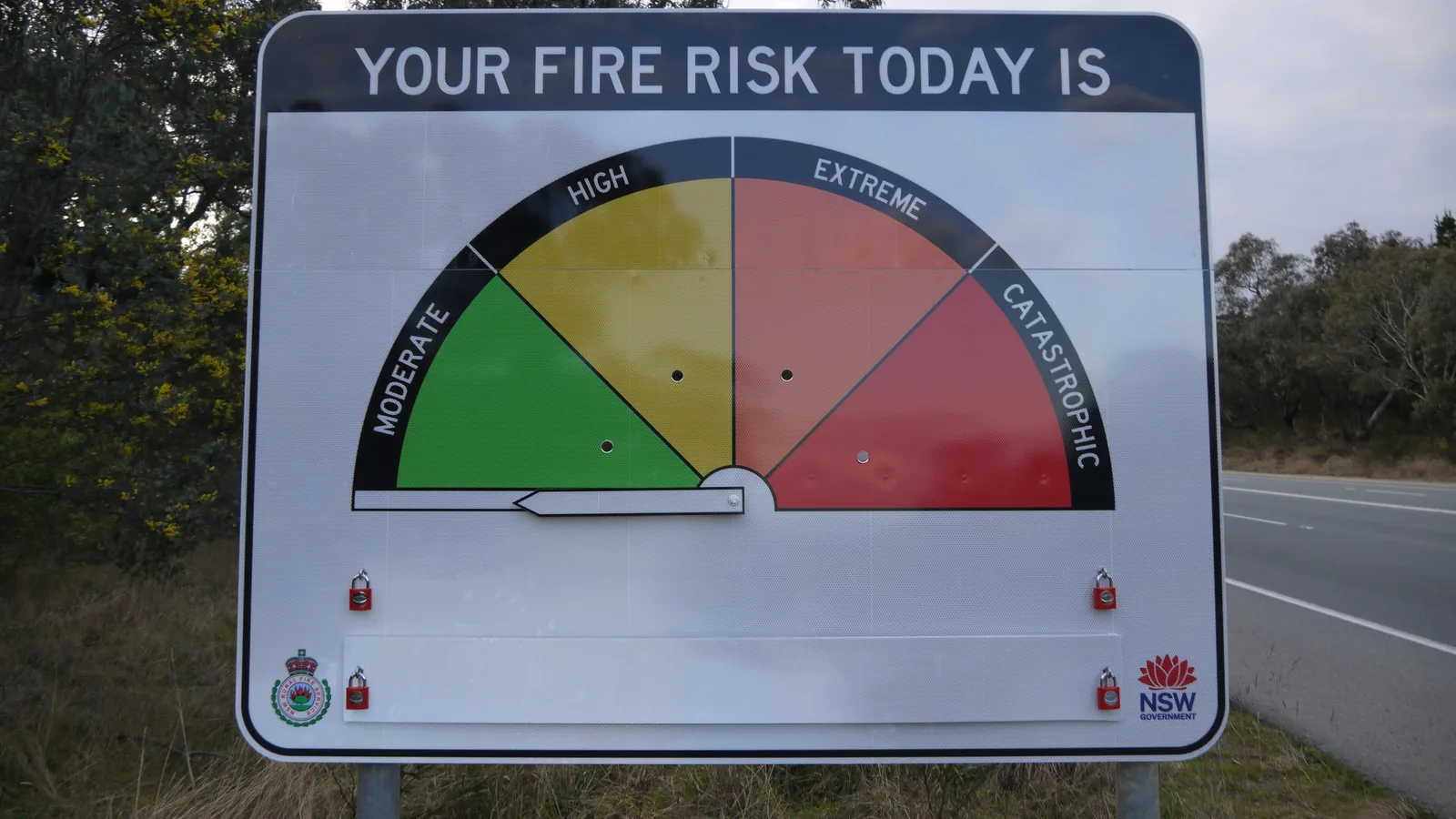
The Australian Fire Danger Rating System has four levels, Moderate, High, Extreme and Catastrophic, published by district. A Total Fire Ban is declared separately, so check both rather than reading the rating as permission.
On a ban day, campfires and solid-fuel barbecues are illegal in the district. Gas is where the states differ: NSW national parks generally ban visitor-owned gas cookers, ACT parks switch off gas barbecues, South Australian park rules are set park by park, Tasmania allows LPG and electric stoves but not liquid-fuel ones, and Queensland allows contained gas and spirit stoves during a fire ban.
Parks also close on the worst days. South Australian parks and ForestrySA forests may close on ban days, and NPWS can declare its own park fire ban or close a park in NSW when the risk is high. A summer trip also depends on booking windows, which our guide to camping over Christmas and summer 2026-27 compares by state.
- Four ratings, Moderate to Catastrophic
- Solid fuel is banned everywhere on ban days
- Gas rules differ by state
Where fires are allowed at all
Many parks ban fires for part or all of the year. Ikara-Flinders Ranges bans wood fires during its fire ban period, from mid-October 2026 to late March 2027, ForestrySA bans fires in its forests from 1 November to 30 April, and many Western Australian parks stop campfires from about 1 December to 31 March.
Tasmania's Fuel Stove Only Areas ban campfires all year across much of the wilderness, including Cradle Mountain-Lake St Clair, Freycinet and Mount Field. In the ACT, campfires are allowed only in constructed fireplaces in four areas: Namadgi, Tidbinbilla and the Cotter and Uriarra Crossing recreation areas.
The campground page decides in the end, because a land manager's rule is often stricter than the fire danger system and applies all year.
- Seasonal park bans are common
- Tasmania: Fuel Stove Only Areas
- The campground page decides
Building and controlling a legal fire
Size and clearance rules differ: NSW state forests require a fire under one square metre and 4.5 metres from the nearest tree, Victorian state forests one under a metre across with three metres cleared, and South Australia a trench 30 cm deep during the fire season.
CFA asks for a campfire to be supervised by an awake, alert adult within 50 metres at all times, and only when the wind is under 10 km/h. Those conditions are a good standard anywhere in Australia.
Escaped campfires often start after the people who lit them decided it was nearly out. Treat the fire as live until it is cold to the touch.
- Wind under 10 km/h
- Adult within 50 metres
- Live until cold
Fines and liability
Lighting a fire on a Total Fire Ban day in NSW brings an on-the-spot fine of $2,200, or up to $5,500 and 12 months in jail in court. Western Australia issues a $1,000 infringement, with up to $25,000 and 12 months in jail on conviction.
CFA warns that a fire on a Total Fire Ban day in Victoria can bring a fine of more than $40,000, two years in prison or both. In the Northern Territory, lighting a fire for anything other than cooking without a permit carries up to about $77,000 or five years, and failing to clear 4 metres around a fire up to about $15,000; the amounts are indexed, so check the NT page.
If a fire escapes, do not fight it beyond the first seconds. Move away and call triple zero with the clearest location you can give.
- NSW ban-day fine: $2,200
- Victoria: over $40,000 in court
- Escaped fire: move and call 000
Cooking when fires are banned
Keep a gas cooker in the vehicle permanently, and check the rule for cookers as well as fires, because some parks ban those too on the worst days.
Never cook inside a tent, an awning or a closed vehicle. Western Australia's gas safety regulator warns that portable outdoor gas appliances must never be used inside a tent, semi-enclosed area, caravan or RV.
Plan meals that need no flame for the days a ban is forecast: cold lunches, wraps and food cooked the night before keep the trip moving.
- Carry a gas cooker
- Never cook in a closed space
- Plan cold meals for ban days
Places along the way
Check before you go
Rules and conditions change. Recheck the official source and the page for your exact park or campground before departure.
- Australian Fire Danger Rating System
- NSW RFS total fire ban rules
- NSW RFS Bush Fire Danger Period
- NSW National Parks fire bans
- Forestry Corporation of NSW solid fuel fire bans
- CFA campfire rules
- Campfires in Victorian state forests
- Queensland Fire Department fire bans
- Campfires in Queensland parks
- SA CFS fire danger season dates
- SA CFS what you can and cannot do
- DFES total fire bans
- WA parks campfires and firewood
- Tasmania Parks campfires and fire bans
- NT fire bans
- NT campfire safety
- ACT Parks campfires
- WA Building and Energy: camping safely with gas
- NT declaration of a fire danger period, June 2026
- SA National Parks fire bans and restrictions
- ForestrySA camping
- Tasmania Parks Fuel Stove Only Areas
Common questions
Can you have a campfire while camping in Australia?+
Yes, when there is no fire ban for the district and the campground allows fires, using the fireplace provided and wood you bring in. During a Total Fire Ban, or a local fire ban in Queensland, solid-fuel fires are illegal everywhere in that area, fire rings included.
Can you use a gas stove on a total fire ban day?+
It depends on the state and the land. NSW national parks generally ban visitor-owned gas cookers on those days, ACT parks switch off gas barbecues, Tasmania allows LPG and electric stoves but not liquid-fuel ones, and Queensland allows contained gas and spirit stoves during a fire ban. In South Australia, check the park fire restrictions for the park you are in.
Take it on the road
Save the stops. Plan the whole trip.
Build an ordered route from saved places, calculate the distance and keep dates, notes and to-dos attached.