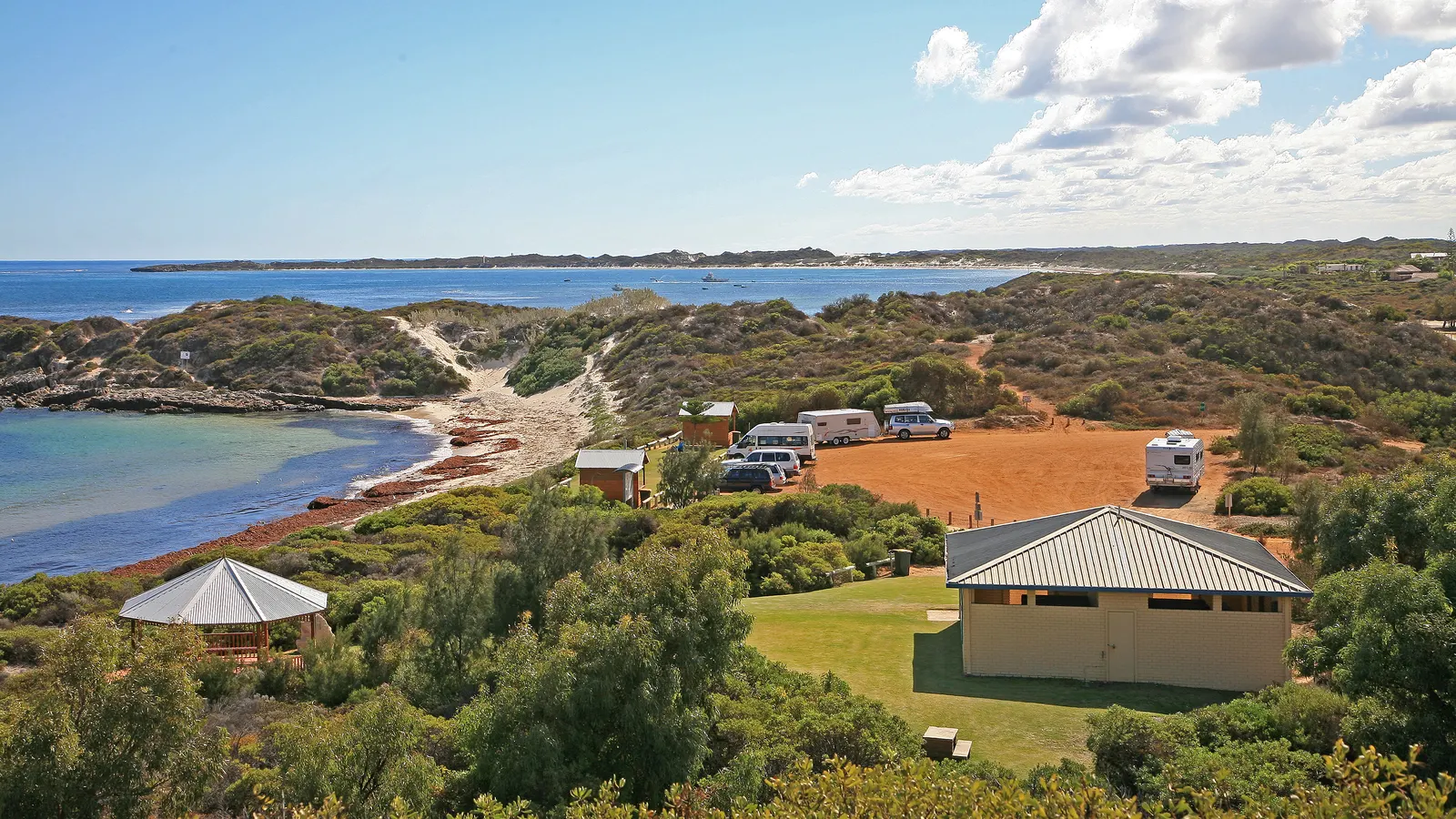
Only in limited places: Western Australia lets you camp outside a licensed caravan park or camping ground only with approval, and the main free exception is a signed overnight rest stop, where you can stay up to 24 consecutive hours. In national parks you camp only in designated campgrounds, at $10 to $20 per adult a night. AussieCamps maps 260 Western Australian park campgrounds and 238 public dump points across those long distances. In the AussieCamps app each one shows its fees, conditions and current alerts, and rest areas are mapped too for the long gaps between towns.
Park Stay WA and fees
Many national park campgrounds are booked through Park Stay WA, up to 180 days ahead. Fees are per person per night: $10 an adult at campgrounds without facilities, $15 with basic facilities and $20 with additional facilities, and children aged 5 and under camp free.
Campgrounds that cannot be booked are first come, first served, and sites are usually available outside the busiest periods, but vacancies are not guaranteed. Fees are still payable, usually in cash or by self-registration envelope. Arrive early and keep a legal alternative within your fuel range. School holiday limits at Ningaloo and the other states' summer rules are set out in our guide to camping over Christmas and summer 2026-27.
Roadside and remote camping
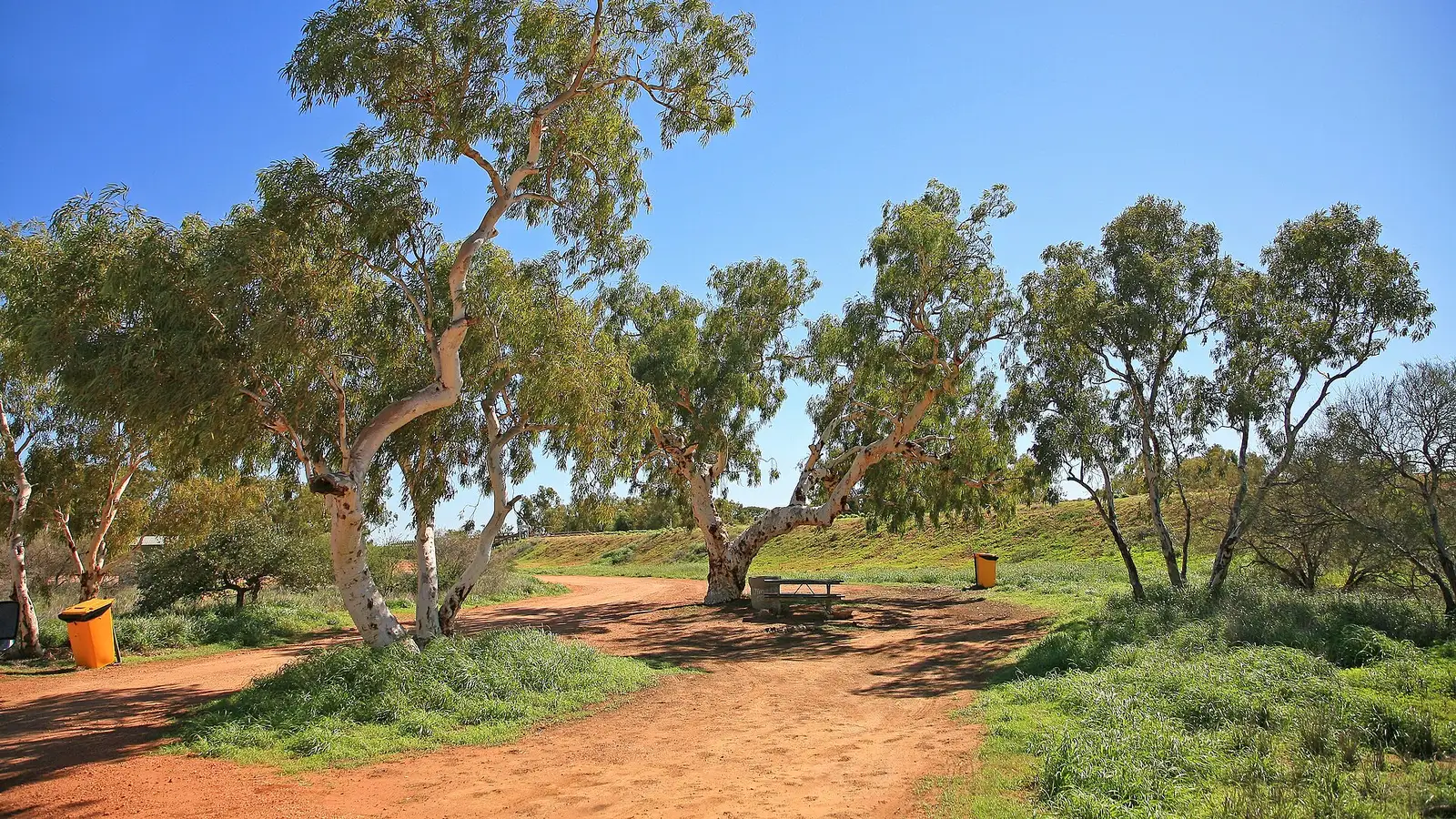
Main Roads WA says its 24-hour rest areas are not intended for camping, a stay must not exceed 24 consecutive hours, and no overnight stop is allowed at a rest area without a sign permitting it. Keep heavy-vehicle bays clear for road trains.
Camping anywhere else outside a licensed caravan park or camping ground without approval risks an offence, whether the land is public or private. On private land, the owner's permission covers a stay of up to 5 nights; longer stays also need local government approval. Some local governments run their own designated sites. Kimberley roads and parks that close in summer are covered in our guide to wet season camping in the Top End and northern WA.
- 24 consecutive hours at most
- Only where a sign allows it
- Elsewhere needs approval
Fire, water and distance
Most park campgrounds have no drinking water. Where rainwater or bore water is available, supply is not guaranteed and you should boil, treat or filter it, so carry all the water you need. In national parks, fires are allowed only in the fire rings provided, with at least three metres cleared around them, and restrictions can start without notice.
Collecting firewood, even dead wood, is banned in national parks, nature reserves and conservation parks. In State forest it is allowed only in designated firewood areas in the Perth Hills (with a permit) and the South West, so bring firewood or buy it near where you will burn it. Many parks stop campfires from about 1 December to 31 March, and some never allow them.
The scale changes the planning
Western Australia covers about a third of the continent, and the gaps between parks, towns and fuel shape every camping plan. A full or closed campground can cost a day of driving.
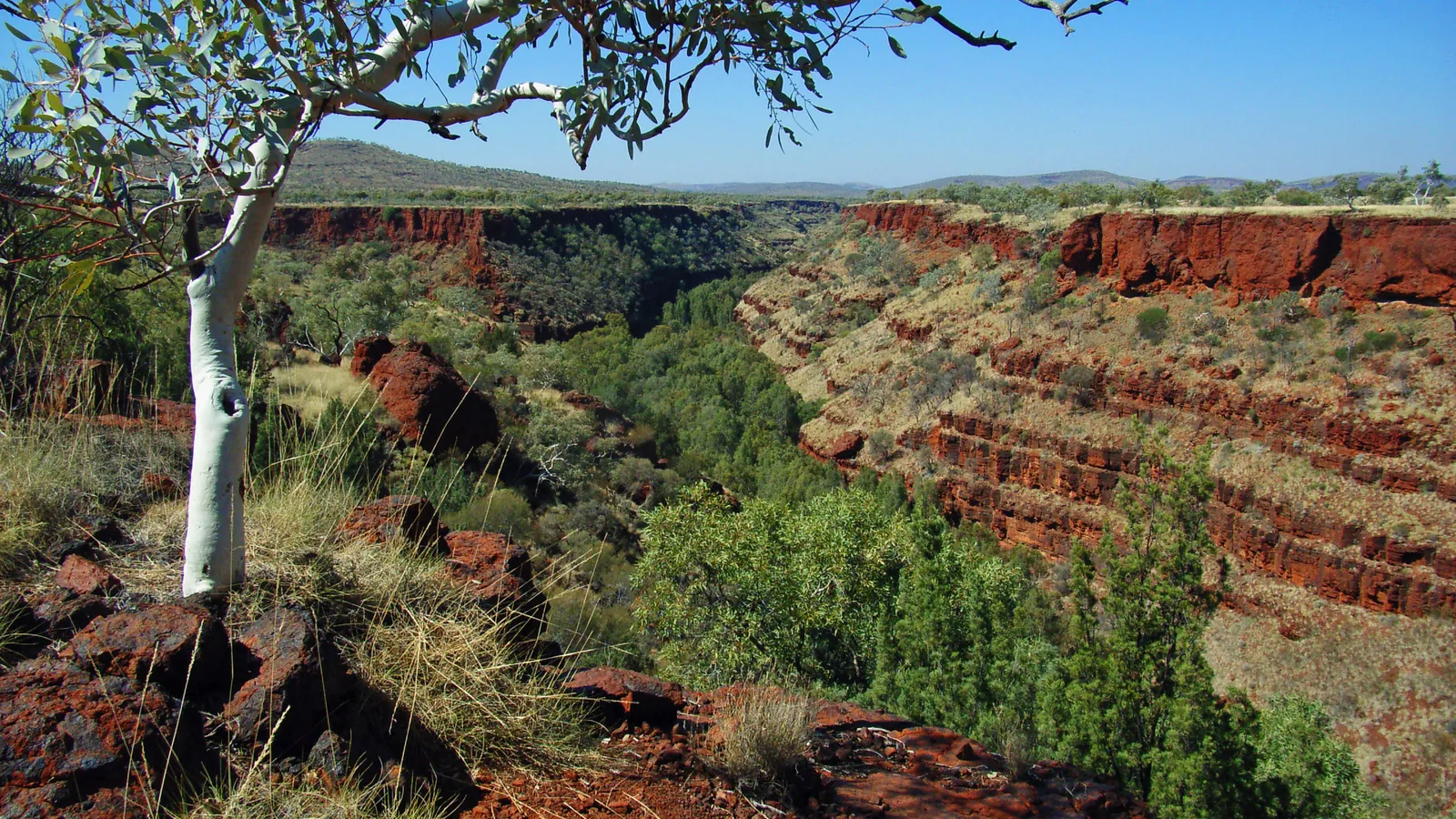
Park entry is charged separately from camping at parks such as Karijini and Cape Range: $17 per standard vehicle, or $10 with a concession. The All Parks Pass costs $130 a year ($80 concession) and holiday passes start at $30, so a pass pays off quickly on a run up the coast.
Northern roads and campgrounds follow the weather rather than the calendar. Check DBCA park alerts and the Main Roads WA Travel Map before each leg, and ask the local shire about shire-managed roads.
- Karijini entry: $17 a vehicle
- All Parks Pass: $130 a year
- Check alerts before each leg
Free camping and the 24 hour rule
Outside paid campgrounds, the main place the state lets you stay overnight without approval is a signed overnight rest stop, for up to 24 consecutive hours. Main Roads WA treats that limit as one to enforce, and the official rules allow no longer stays at roadside sites.
Some local governments run low-cost or free campgrounds for travellers, each with its own stay limit and conditions. Ask the shire or the visitor centre, because the rules change from one shire to the next.
Station stays, where pastoral properties open camping areas to travellers, are a distinctive WA option, and some make a handy stopover on long remote stretches, such as Cheela Plains between Ningaloo and Karijini. Confirm the price, payment method and road access with the station before you arrive.
- 24 hours at signed rest stops
- Shires set their own rules
- Confirm station stays ahead
Water, fuel and communication
Carry drinking water for several extra days per person, and treat fuel range as the constraint that shapes the route. Roadhouses can be closed, out of fuel or card-only when the connection drops.
Mobile coverage exists near towns and disappears between them. A satellite messenger or personal locator beacon is standard equipment for remote WA travel, not an optional extra.
Tell someone your route and expected arrival. If you break down, stay with the vehicle: it is shade and shelter, and far easier for searchers to find than a person walking.
- Water for several extra days
- Carry a satellite messenger
- Stay with the vehicle
Ningaloo, cyclones and the dry
Ningaloo Coast campgrounds release bookings monthly, on the first Tuesday at 10am Perth time, a system adopted in September 2026 after an eight-month trial. Stays are capped at 14 nights if any night falls in WA school holidays and 28 nights otherwise.
Severe Tropical Cyclone Narelle damaged every campground along the Ningaloo Coast in 2026. Most Cape Range campgrounds reopened on 27 April but some stayed closed for longer, so check the alert for your exact site.
The north works best in the dry season, roughly May to October, and the cyclone season runs from November to April. Inland summer temperatures regularly pass 40 degrees, and a breakdown in that heat without water is life-threatening.
- Ningaloo: first Tuesday, 10am
- 14 nights in school holidays
- Cyclone season November to April
Permits, pets and park alerts
Entering an Aboriginal reserve in Western Australia needs a permit issued through the Department of Planning, Lands and Heritage, applied for before you travel. Permits are not handed out at the boundary.
Some roads need a transit permit even if you never stop. The Great Central Road between Laverton and the Northern Territory border is the best-known example, and the Central Land Council handles the Northern Territory side.
Dogs and other pets are not allowed in many national parks, including Karijini and Cape Range. Plan pet-friendly stops between them before you set off.
DBCA publishes park alerts and Park Stay WA shows availability online, which matters when a closed campground can cost a full day. Confirm both before committing to a long drive.
- Apply for permits before you travel
- Transit permits cover passing through
- No dogs at Karijini or Cape Range
Places along the way
Check before you go
Rules and conditions change. Recheck the official source and the page for your exact park or campground before departure.
- Explore Parks WA camping fees
- Where and when to camp in WA parks
- Campfires, firewood and cooking appliances
- Karijini National Park
- Cape Range National Park
- DBCA park passes
- Temporary accommodation and camping outside caravan parks
- Main Roads WA long-distance driving
- DFES total fire bans
- Permits to enter Aboriginal land in WA
- Guide to booking a Ningaloo Coast campsite
- Bureau of Meteorology tropical cyclones
- Explore Parks WA campground facilities
- DBCA firewood collection
- Main Roads WA Travel Map
- Western Australia station and farm stays
Common questions
Can you camp anywhere in Western Australia?+
No. Camping outside a licensed caravan park or camping ground needs approval, national park camping is limited to designated campgrounds, and signed overnight rest stops allow up to 24 consecutive hours without approval.
Do WA national parks charge an entry fee?+
Some do. Karijini and Cape Range charge $17 per standard vehicle, or $10 with a concession, on top of camping fees of $10 to $20 per adult a night. The All Parks Pass costs $130 a year and holiday passes start at $30.
Places to camp in Western Australia



Take it on the road
Save the stops. Plan the whole trip.
Build an ordered route from saved places, calculate the distance and keep dates, notes and to-dos attached.