Christmas and January are the busiest weeks for camping in Australia, and the popular national park campgrounds are usually booked well before the school year ends. This guide sets out how far ahead each state's park system takes bookings, when the 2026-27 school holidays fall, what a total fire ban means for your stove, and where the north's wet season and marine stingers change the plan. We checked each agency's pages on 21 October 2026. Queensland Parks and the Northern Territory Government block automated reading, so for those we relied on search summaries of their official pages and say so, and where an agency publishes nothing we say so.
When the 2026-27 peak falls
Christmas Day is Friday 25 December 2026 and New Year's Day is Friday 1 January 2027. Boxing Day falls on a Saturday, so Monday 28 December is an extra public holiday in New South Wales, Queensland and Western Australia, and search summaries of the other states' official lists show the same Monday. Check your own state's public holiday page.
Government school holidays are the best guide to demand. In all six states the last day of term 4 falls between 11 and 18 December, and students return in late January or early February, so a stay that crosses Christmas needs booking long before the break begins. The dates below are for government schools; private and Catholic schools can differ.
| State | Last day of term 4 2026 | First day of term 1 2027 |
|---|---|---|
| New South Wales | Thursday 17 December | Wednesday 3 February (Western division: Wednesday 10 February) |
| Victoria | Friday 18 December | Thursday 28 January |
| Queensland | Friday 11 December | Wednesday 27 January |
| Western Australia | Thursday 17 December | Monday 1 February |
| South Australia | Friday 11 December | Late January: the department lists 27 January |
| Tasmania | Friday 18 December | Thursday 4 February |
- Boxing Day 2026 is a Saturday
- Monday 28 December is a public holiday in NSW, Queensland and WA
- School dates are for government schools
Booking windows by state and territory
Each park agency sets its own window, so there is no single rule. Victoria releases bookings four times a year for stays about 6 to 9 months ahead, and says summer stays from 18 December 2026 to 28 February 2027 are already open at its bookable campgrounds. Western Australia opens bookable campgrounds outside the Ningaloo Coast 180 days ahead, and Tasmania's Parks and Wildlife Service says bookings open 180 days ahead at Fortescue Bay.
Victoria says there is no ballot for peak season, which is managed through its quarterly release program, and we found no ballot published by the other agencies for the 2026-27 summer. Tasmania is the one to watch: its Parks and Wildlife Service said its new Parks Online Booking System would start on 3 November 2026, and it paused new bookings at Fortescue Bay and Freycinet for stays from that date until the new system opened. Book Tasmanian campgrounds through parks.tas.gov.au.
| State or territory | Booking window | Peak-season note |
|---|---|---|
| New South Wales (NPWS) | Set per campground; the agency does not publish a single window | “You'll need to book with plenty of time to secure your campsite.” |
| Victoria (Parks Victoria) | Quarterly releases, about 6 to 9 months ahead | Summer to 28 February 2027 is open; no ballot; some campgrounds have Christmas minimum stays |
| Queensland (QPWS) | Most campsites up to 12 months ahead (Queensland Government, 2020); check the Queensland National Parks Booking Service | Queensland Parks restricts K'gari Great Walk camp bookings to 14 days ahead each year from 1 November to 28 February; check the park alerts |
| Western Australia (Parks and Wildlife) | 180 days ahead for bookable campgrounds outside the Ningaloo Coast; Ningaloo Coast opens monthly on the first Tuesday at 10 am AWST | Ningaloo Coast: up to 14 nights in a park if any night falls in a WA school holiday period |
| South Australia (NPWS SA) | Up to 12 months ahead, according to NPWS SA advice last updated in 2022 | Lincoln and Coffin Bay national parks are busiest from mid-December to the end of January |
| Tasmania (Parks and Wildlife Service) | 180 days ahead at Fortescue Bay; new booking system from 3 November 2026 | Honeymoon Bay at Freycinet is open only over summer holidays and Easter |
| Northern Territory (Parks and Wildlife) | Book online before you go; we could not read a single published window | Designated campsites are booked and paid for online |
- Victoria: summer 2026-27 is open now
- WA: 180 days ahead, Ningaloo by monthly release
- Tasmania: new booking system from 3 November 2026
Christmas rules at popular campgrounds
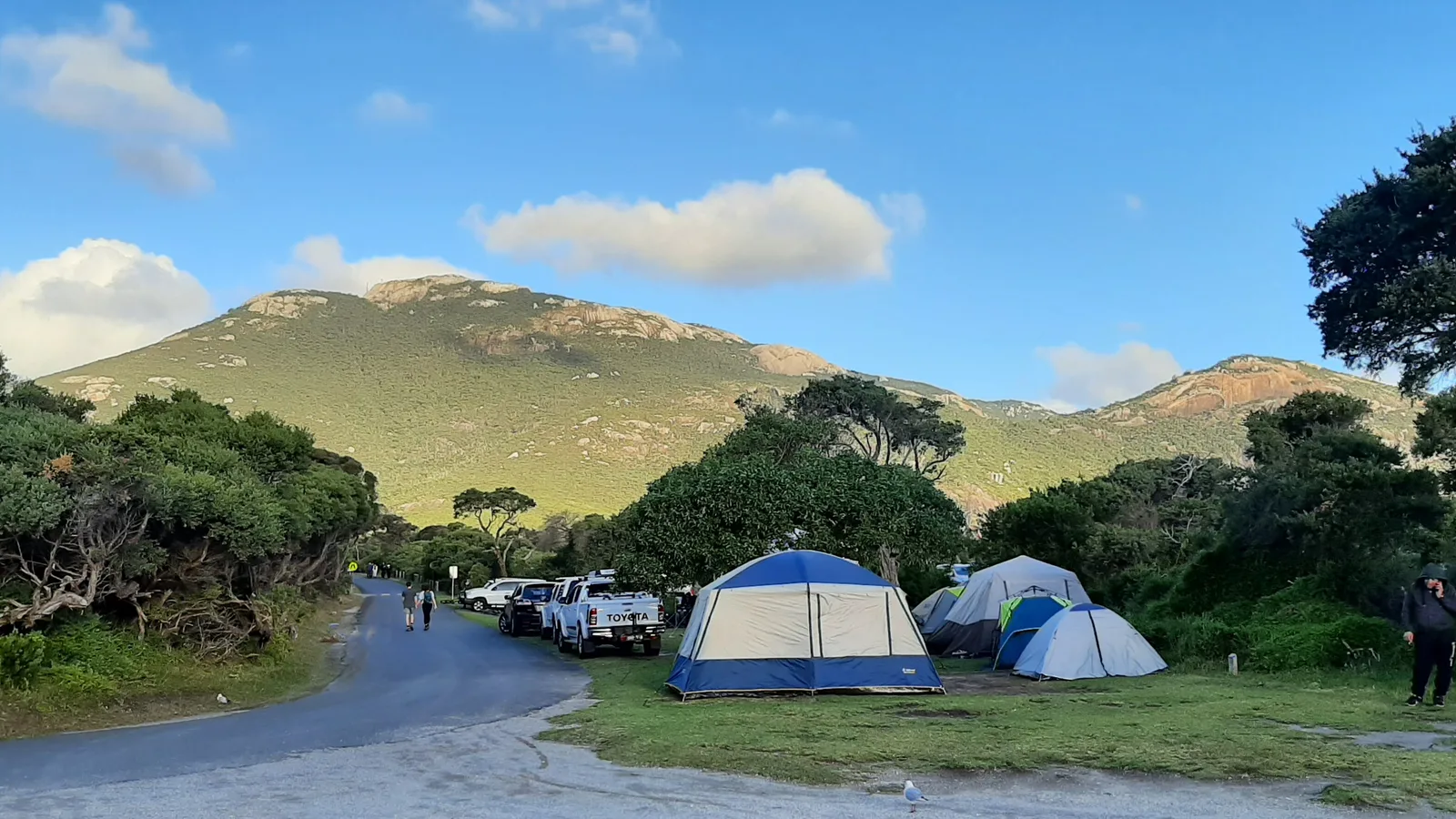
Some campgrounds set minimum stays for the peak weeks. Parks Victoria publishes these for 2026-27: Tidal River at Wilsons Promontory has a 7-night minimum and 14-night maximum between Sunday 20 December and Sunday 24 January with arrival and departure on Sundays, Cape Conran's Banksia Bluff has the same limits between Saturday 19 December 2026 and Saturday 23 January 2027, and Lake Catani at Mount Buffalo has them between Saturday 26 December 2026 and Saturday 9 January 2027. Lake Mombeong and Swan Lake in Discovery Bay Coastal Park have a 2-night minimum from 18 December 2026 to 31 January 2027.
At Ningaloo Coast campgrounds, Western Australia limits a stay to 14 nights in a park if any night falls during a WA school holiday period, and 28 nights at other times. Parks Victoria also limits a booking transaction to three campsites in the same campground.
Cancellation rules differ by agency, so read them before you book. Parks Victoria refunds 100% if you cancel 30 days or more before the first day, 50% from 8 to 29 days before, and nothing inside 8 days, and says a cancelled site goes back online straight away for someone else to book. DBCA says Park Stay WA bookings at its newly bookable south-west campgrounds can be amended or cancelled up to one day before travel.
- Minimum stays apply at Tidal River and Cape Conran
- Cancel early so the site returns to the pool
- Read each agency's refund rules before paying
Total fire bans and the fire danger season
A total fire ban is declared by the state fire agency on days of heightened fire danger, and it applies in national parks as well as on private land. In New South Wales the Rural Fire Service Commissioner declares it. In Victoria it is the CFA's Chief Officer, who can declare one even when the fire danger rating is not Extreme. In Western Australia the Department of Fire and Emergency Services (DFES) declares it by local government area, and in Tasmania the Tasmania Fire Service declares it and Parks and Wildlife says the ban applies to national parks and reserves in the affected area.
Queensland does not use the term in the same way: the Queensland Fire Department declares fire bans by council area, covering parks and forests, and QPWS can prohibit fires in a park or forest.
The fire danger season is not the same as a ban. New South Wales calls it the bush fire danger period, October to March. Victoria's Fire Danger Period is declared by municipality, as early as October and sometimes into May. South Australia's CFS had declared 2026-27 dates for some districts by 21 October: 15 October 2026 to 15 April 2027 for districts including Flinders and West Coast, and 1 November 2026 to 30 April 2027 for the Riverland and Murraylands, with others still to come. Western Australia's burning periods are set by each local government.
| State | What the agency says | Where to check |
|---|---|---|
| New South Wales | Campfires and solid-fuel or liquid-fuel barbecues and stoves are prohibited; visitor-owned gas and electric cookers are generally prohibited, with gas and electric cookers permitted inside a caravan or its three-sided enclosed annexe | NSW Rural Fire Service |
| Victoria | Campfires are not allowed; solid-fuel, chemical-fuel and liquid-fuel (such as methylated spirits) barbecues and stoves are prohibited; a gas or electric barbecue or stove made of non-flammable material, designed for meals and stable in use may be used only to cook, supervised, with nothing flammable within 3 metres and a hose or at least 10 litres of water | CFA and the VicEmergency app |
| Queensland | Lighting fires is prohibited in a declared fire ban area, including QPWS fire rings and barbecues, wood-fuelled braziers and barbecues and heat-bead or ash-producing appliances; electric barbecues and gas and spirit stoves are allowed if they cannot throw embers or ignite ground fuels, are attended and are suitably contained | Queensland Fire Department |
| Western Australia | It is illegal to light, maintain or use a fire in the open air; solid-fuel or liquid-fuel cookers are not allowed in an area that is not fully enclosed; a breach can bring a $1,000 infringement | Emergency WA |
| South Australia | All fires and most barbecues, including gas and liquid fuel, are not allowed in parks on declared days; parks may be closed | CFS and its hotline 1800 362 361 |
| Tasmania | All outdoor fires are prohibited, including wood, charcoal and liquid-fuel stoves; electric stoves and LPG cookers are the exceptions; at Freycinet no naked flames, including gas and fuel stoves, may be used on Total Fire Ban days | Tasmania Fire Service |
- A ban can be declared even on a day rated below Extreme
- Check the agency on the day you cook
- Fire danger season is not a total fire ban
Reading the fire danger rating
The Australian Fire Danger Rating System has four levels: Moderate (plan and prepare), High (be ready to act), Extreme (take action now to protect your life and property) and Catastrophic (for your survival, leave bushfire risk areas). Ratings are forecast from Bureau of Meteorology data up to four days ahead, and a rating describes how dangerous a fire would be, not how likely one is to start.
On a Catastrophic day the CFA says that if a fire takes hold, lives are likely to be lost, and that you should be in a safer place early in the morning or the night before. The CFA advises not being in bushfire risk areas on those days, so have a second plan ready for the summer.
- Catastrophic: leave bushfire risk areas
- Ratings run up to four days ahead
- Plan a fallback before you leave
The north in summer: wet season and stingers
Northern Australia's wet season runs from November to April, with the far north of the Northern Territory counted from about October, and the cyclone season runs from 1 November to 30 April. Roads close, some parks shut and swimming becomes unsafe, so our guide to wet season camping in the Top End and northern WA sets out what is open and where to check each day.
Queensland's marine stinger season is November to May, though stingers are present in tropical Queensland waters all year. The Queensland Government says to swim in the stinger nets where provided, and if you are stung to call Triple Zero (000), pour vinegar on the sting and seek medical help if in doubt. Tourism NT says marine stingers in the Northern Territory are most prevalent from October to May, though stings have occurred throughout the year, and DBCA says box jellyfish and irukandji are most prevalent in the Kimberley from November to April. In Queensland crocodile country, stay at least 5 metres back from the water's edge, and never swim in it.
- Queensland stinger season: November to May
- Swim in stinger nets where provided
- Stay back from the water's edge in croc country
Booked out? Where else to stay
Rest areas help with a long drive, but the rules are narrow. Queensland says vehicles can stop at a rest area for up to 20 hours unless signed otherwise, but that rest areas are not camping sites or an accommodation option. Main Roads WA lists 63 rest areas where overnight stays are allowed for up to 24 consecutive hours. New South Wales says you must not camp in rest areas.
In Victoria, state forests are an alternative: the Victorian Government says you can camp anywhere in a state forest if you set up at least 20 metres from waterways and stay no longer than 28 consecutive nights. Fire rules still apply there, and campfires are not allowed on total fire ban days. Free camping elsewhere depends on the land manager's rule or sign, so read our guide to the rules in your state before you rely on a free camp.
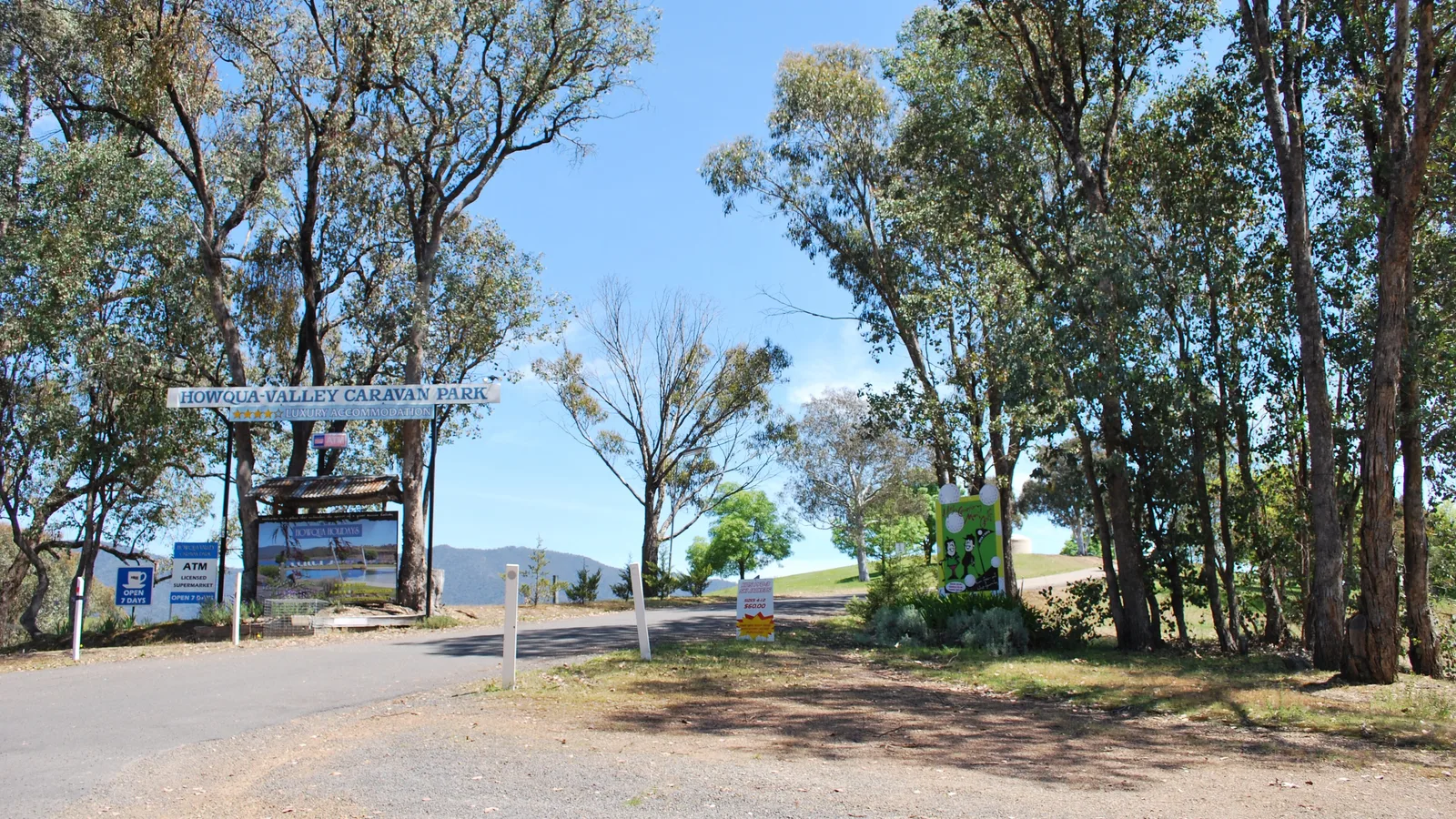
When nothing is free in a popular area, a bookable holiday park or motel is usually the quickest answer,.
- Rest areas are for resting, not camping, unless signed
- Victorian state forests: 20 metres from waterways, 28 nights
- Check the agency system for cancellations
Using AussieCamps over summer
AussieCamps lists campgrounds and national parks with the facilities, fees and rules the park agency publishes, and you can filter by cost to find the lower-priced and free sites. It also lists 5,552 rest areas from road authorities, so you can see where a roadside stop is, though the sign at the site and the road authority's rules decide whether you may sleep there.
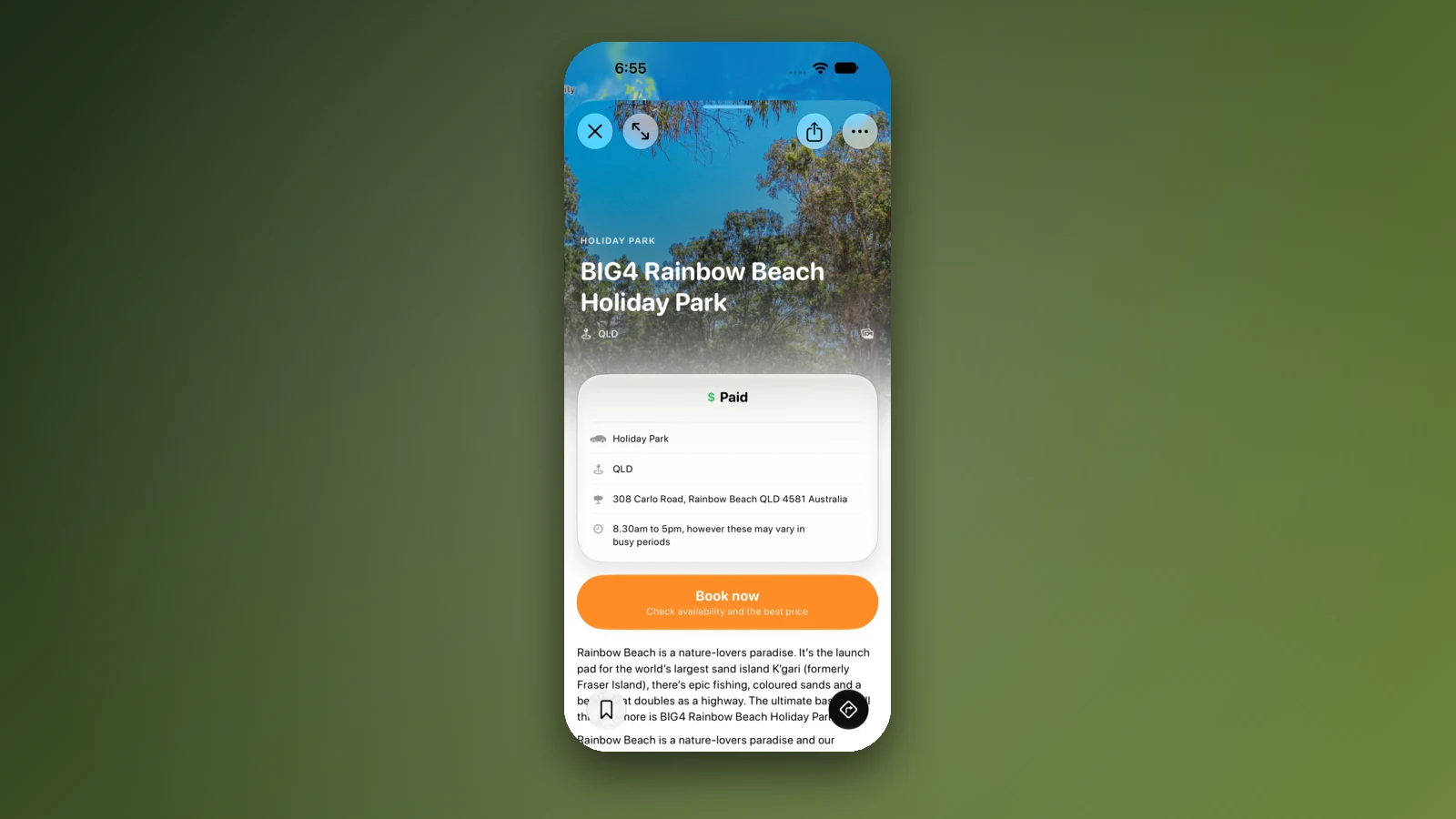
For nights you cannot get in a park, the app lists holiday parks, motels, B&Bs and tours from BookEasy that you can book in the app, and each holiday park page shows its address, hours and a Book now button. Place details are stored on the phone, so they stay readable out of signal; the map, directions, weather and photos need a connection, and weather is a 7-day forecast on each place page.
AussieCamps does not show fire bans, fire danger ratings or booking availability in the park agencies' systems, so check the agency and the fire service on the day.
- Filter by cost
- Save a bookable fallback to your trip
- Check fire bans with the fire service
Places along the way
Check before you go
Rules and conditions change. Recheck the official source and the page for your exact park or campground before departure.
- Parks Victoria: bookings release schedule
- Parks and Wildlife Service Tasmania: Fortescue Bay campground booking
- WA Parks and Wildlife: another three campgrounds now bookable online
- Explore Parks WA: Ningaloo Coast camping booking FAQ
- NPWS SA: popular campsites, book in advance
- NSW National Parks: Woody Head campground
- NSW Department of Education: school calendars
- Victorian Government: school term dates and holidays
- Queensland Department of Education: term dates
- WA Department of Education: term dates
- SA Department for Education: term dates
- Tasmanian Department for Education: term dates
- NSW Government: public holidays
- Queensland Government: public holidays
- WA Government: public holidays
- NSW National Parks: fire bans
- CFA: about total fire bans
- CFA: Fire Danger Period restriction dates
- CFA: about fire danger ratings
- Victorian Government: campfires, stoves and barbecues
- Queensland Government: campfires and fire bans
- DFES: total fire ban
- NPWS SA: fires and barbecues
- CFS: Fire Danger Season dates and permits
- Parks and Wildlife Service Tasmania: campfires and fire bans
- Tourism NT: wildlife, crocodiles and stingers
- Queensland Government: dangerous marine animals
- Queensland Government: camping in crocodile country
- Queensland Government: rest areas
- NSW Government: fatigue and rest areas
- Victorian Government: camping in state forests
- Bureau of Meteorology: tropical cyclones in the Australian region
- DBCA Explore Parks WA: Kimberley
- Park Stay WA: campground bookings
- Main Roads WA: guide to safe stopping places
- Queensland Department of Education: future term dates
Common questions
How far ahead should I book Christmas camping in Australia?+
As early as the agency allows. Parks Victoria's summer stays to 28 February 2027 are already open, Western Australia opens bookable campgrounds outside the Ningaloo Coast 180 days ahead, and Queensland and South Australia advise booking up to 12 months ahead. Some Victorian campgrounds, such as Tidal River and Cape Conran, have 7-night minimum stays over Christmas.
When are the 2026-27 summer school holidays in Australia?+
For government schools, term 4 ends between 11 December (Queensland and South Australia) and 18 December (Victoria and Tasmania), and term 1 2027 starts between 27 January and 4 February for most states, with Western Australia on 1 February and New South Wales on 3 February (10 February in its Western division).
Can I use a camp stove on a total fire ban day?+
It depends on the state and the fuel. Solid-fuel and liquid-fuel stoves are banned on total fire ban days in New South Wales, Victoria, Western Australia and Tasmania. In NSW national parks visitor-owned gas and electric cookers are generally prohibited too, except inside a caravan or its enclosed annexe. Victoria and Western Australia allow gas barbecues that meet set conditions, Tasmania allows electric and LPG cookers (but not at Freycinet), Queensland allows gas and spirit stoves that are contained and attended, and South Australia bans all fires and most barbecues, including gas, in parks. Check the state fire agency on the day.
What can I do if every campground is booked out?+
Keep checking the agency's booking system, because Parks Victoria says a cancelled site goes back online straight away for someone else to book. Victorian state forests allow camping at least 20 metres from waterways for up to 28 consecutive nights, a bookable holiday park or motel is another option, and rest areas are for resting unless a sign allows overnight stays: Queensland allows up to 20 hours, and Western Australia allows 24 hours at the 63 rest areas that permit it.
Take it on the road
Save the stops. Plan the whole trip.
Build an ordered route from saved places, calculate the distance and keep dates, notes and to-dos attached.