Yes, you can free camp in South Australia, but only where the land manager allows it: Crown land allows camping for up to 21 days without approval, councils set the rules for their own reserves, and almost every national park campsite must be booked before you arrive, the Simpson Desert parks being the exception. AussieCamps maps 115 South Australian park campgrounds, 391 roadside rest areas and 199 public dump points.
Book before you go
Almost every South Australian national park campsite must be booked before arrival, online or through a booking agent, and bookings open up to 12 months ahead; the Munga-Thirri-Simpson Desert parks use the Desert Parks Pass instead. Check how many vehicles a site takes and its facilities before paying, because sites are priced by both.
A campground booking usually covers vehicle entry to that park, with Flinders Chase on Kangaroo Island the main exception. Keep the confirmation on your phone, and expect parks in the affected district to close on catastrophic fire danger days even when you hold a booking. For summer holiday dates and booking advice across the states, see our guide to camping over Christmas and summer 2026-27.
Campfires and pets
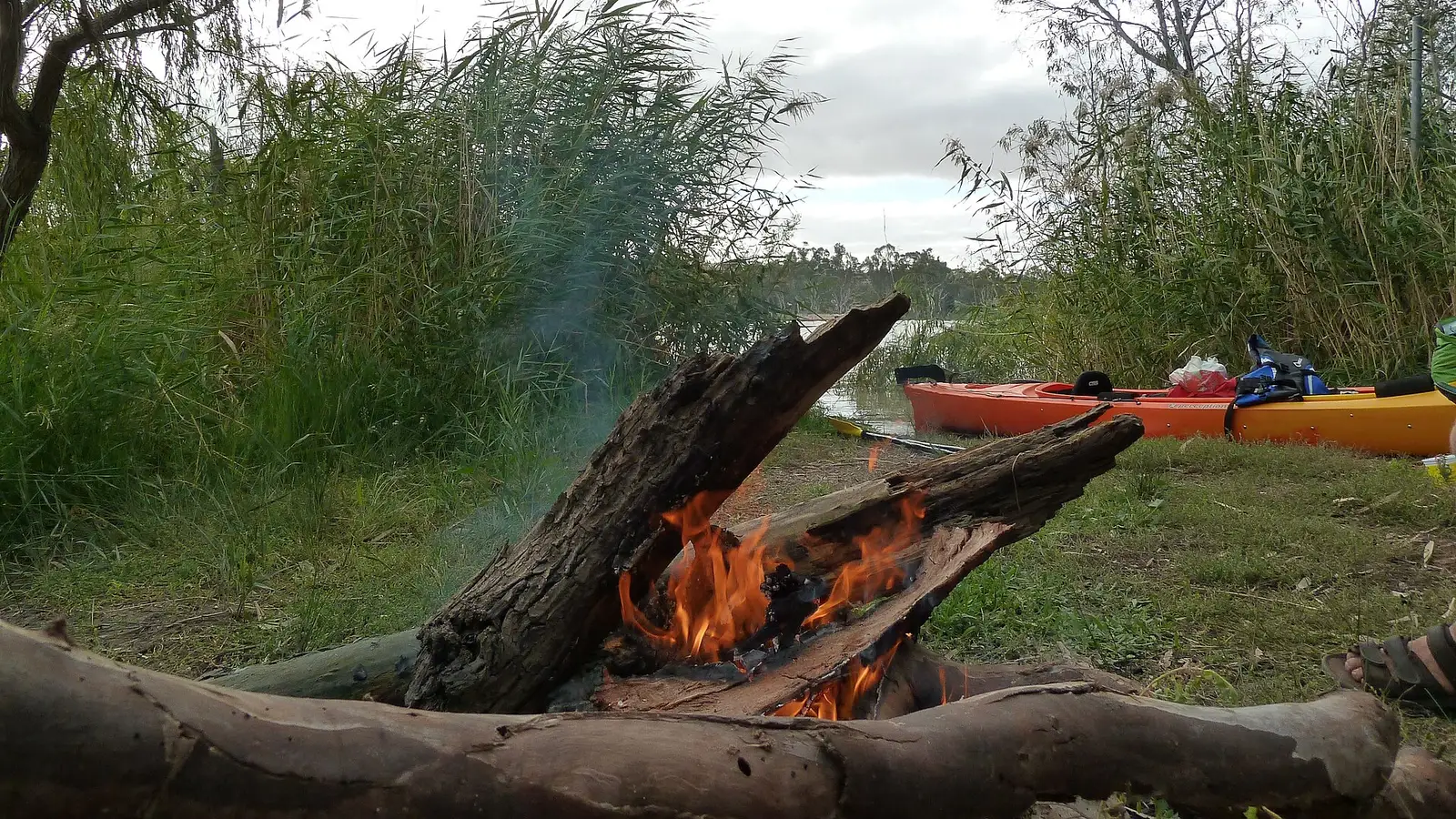
Collecting firewood is banned in South Australian parks, so bring clean, untreated wood where fires are allowed and use the pit provided. Ikara-Flinders Ranges bans wood fires from 15 October 2026 to 24 March 2027, and inside Wilpena Pound itself wood, solid-fuel and gas fires are banned all year, except gas at Wilcolo Camp.
Most national parks do not allow dogs or other pets, and Ikara-Flinders Ranges is one of them. Some parks allow dogs on a lead no longer than two metres; the park page says which, and a lead does not override a no-pets rule.
- Bring firewood, never collect it
- Ikara wood-fire ban to 24 March 2027
- Most parks are pet-free
Remote country
Outback tracks and desert park roads close after rain, often for days and, after major floods, for months. Check the park alert and the outback road report from the Department for Infrastructure and Transport before leaving the bitumen, and never drive around a closed sign.
Carry more water and fuel than the distance suggests, plus a way to call for help where there is no mobile coverage, such as a satellite messenger or a personal locator beacon.
Parks passes and booking
Park entry and camping are separate products. A Multiple Entry Parks Pass covers vehicle entry only, as a single-park pass for 12 months or a multi-park pass for two or 12 months, and camping is still booked on top; the Desert Parks Pass is the exception and includes camping.
Most South Australian parks are free to enter. Where a day fee applies it is usually charged per vehicle, such as $14.40 at Ikara-Flinders Ranges, while Flinders Chase on Kangaroo Island charges each person instead.
Bookings open 12 months ahead, so book school holidays and long weekends as soon as your dates are fixed. Ikara-Flinders Ranges campsites start at $12.30 a night, while the powered sites and permanent tents at Wilpena are run by Wilpena Pound Resort rather than the parks booking system.
- Entry passes don't include camping
- Most parks are free to enter
- Bookings open 12 months ahead
Fruit fly quarantine
Travellers cannot bring fruit fly host fruit and vegetables, or some plants and plant products, into South Australia. The list depends on the state you are coming from, and a receipt does not make produce legal.
PIRSA checks vehicles at quarantine stations such as Yamba on the Sturt Highway and at random roadblocks, and from 1 July 2026 the fine for carrying restricted produce is up to $423. Eat or bin it before the border, because there is no disposal at Yamba itself, and restock from a shop once across.
The Riverland has its own controls inside the state. Buy fruit and vegetables there from accredited retailers rather than roadside stalls or markets, and check the current outbreak restrictions before a Murray River leg.
- No restricted fruit over the border
- Fines up to $423 from July 2026
- Riverland: buy from accredited shops
Outback travel and permits
The Desert Parks Pass gives 12 months of vehicle entry and camping in the far north: Innamincka Regional Reserve, Kati Thanda-Lake Eyre, Malkumba-Coongie Lakes, Munga-Thirri-Simpson Desert, Tallaringa and Witjira, plus entry only to Wabma Kadarbu Mound Springs, where camping is not allowed.
It is mandatory only for the Munga-Thirri-Simpson Desert National Park and Regional Reserve and for travel east of Dalhousie Springs in Witjira, and the Simpson Desert parks close every year from 1 December to 15 March. Elsewhere in the desert parks you can pay day entry and camping fees instead.
On the Oodnadatta, Strzelecki and Birdsville tracks, carry spare parts and two spare tyres, extra water and fuel for delays, and a satellite phone, beacon or UHF radio. Mobile reception is often unreliable once you leave town.
- Desert Parks Pass lasts 12 months
- Simpson Desert closed 1 Dec to 15 Mar
- Roads can close for months
Fire restrictions
South Australia's Fire Danger Season is set by district. In 2026-27 it starts on 15 October in the Flinders, Eastern Eyre, West Coast and pastoral districts and on 1 November in the South East, Murraylands and Riverland, and runs into April. During it a campfire must sit in a trench 30 cm deep and no more than one square metre, with 4 m cleared around and above it, and a responsible person present at all times with water or an extinguisher.
On a Total Fire Ban day campfires and solid-fuel barbecues are banned. National parks go further and also ban gas and liquid-fuel stoves on those days and may close, so a gas cooker is no workaround inside a park.
Many parks ban wood fires at any time of year, and ForestrySA bans fires in its forests from 1 November to 30 April. Pack a gas cooker and plan meals that never depend on a fire.
- Season starts 15 October up north
- No gas stoves in parks on ban days
- Trench 30 cm deep, 4 m cleared
Coastal and conservation park rules
Coorong beach camping needs a permit for each vehicle, is 4WD only and allows one vehicle with up to five people per site. The ocean beach between Tea Tree Crossing and the Murray Mouth closes to vehicles from 24 October to 24 December for nesting birds.
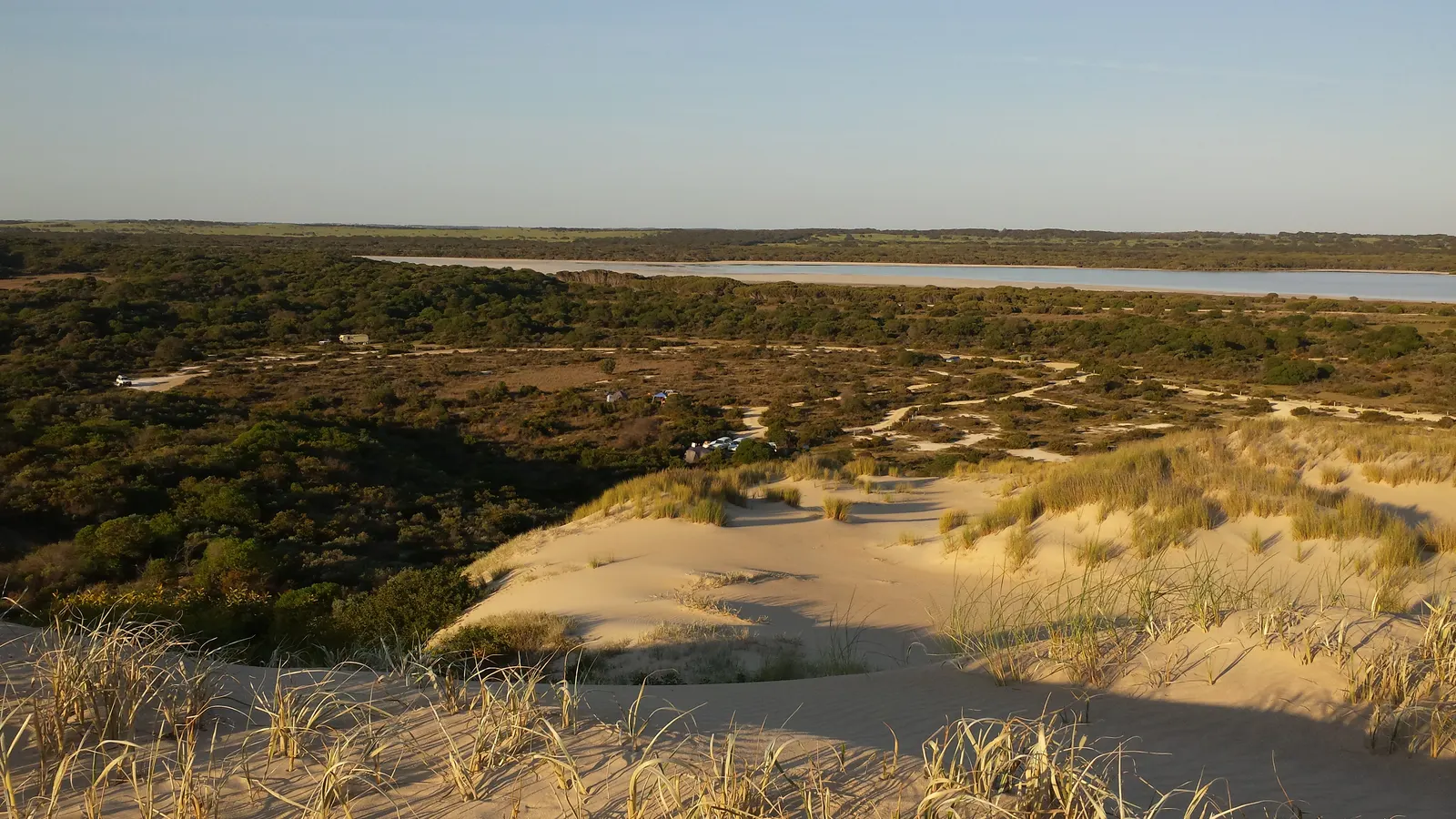
Many conservation parks do not allow camping at all; where they do, camp only at designated sites booked before you arrive. Coastal parks keep vehicles off the dunes, so stay on hard sand and marked tracks.
Crown land is one free alternative to a booked park. Camping there is allowed without approval for up to 21 days, vehicles must stay on established tracks, firewood collection is banned, and misuse can bring a $315 expiation.
Check the park alert on the morning you travel. Fire danger and track closures change quickly over summer, and some arid parks close for the whole season, such as Munga-Thirri-Simpson Desert from 1 December to 15 March.
- Coorong beach camping: one permit per vehicle
- Tea Tree Crossing to Murray Mouth closed 24 Oct to 24 Dec
- Crown land camping: up to 21 days
Places along the way
Check before you go
Rules and conditions change. Recheck the official source and the page for your exact park or campground before departure.
- South Australia camping essentials
- Parks SA booking FAQs
- Ikara-Flinders Ranges National Park
- Parks SA Parks Passes
- Desert Parks Pass
- Flinders Chase National Park
- Coorong National Park
- CFS fire danger season dates
- CFS what you can and cannot do
- Accessing Crown land in SA
- ForestrySA camping
- Pets in South Australian parks
- SA outback road report
- Travelling in outback South Australia
- Fruit fly: travelling to South Australia
- Munga-Thirri-Simpson Desert National Park
Common questions
Do you need a permit to camp in South Australian parks?+
Yes, almost everywhere. National park campsites are booked and paid for before you arrive, online or through a booking agent, and the booking usually covers vehicle entry to that park. The Simpson Desert parks use the 12-month Desert Parks Pass instead, which is also compulsory east of Dalhousie Springs in Witjira.
Can you park a campervan anywhere in South Australia?+
No. You can camp on Crown land for up to 21 days without approval, at council sites and rest areas where signs allow an overnight stop, and at booked park campsites. Some councils ban or limit overnight stays, so read the sign at the exact spot.
Places to camp in South Australia

Take it on the road
Save the stops. Plan the whole trip.
Build an ordered route from saved places, calculate the distance and keep dates, notes and to-dos attached.