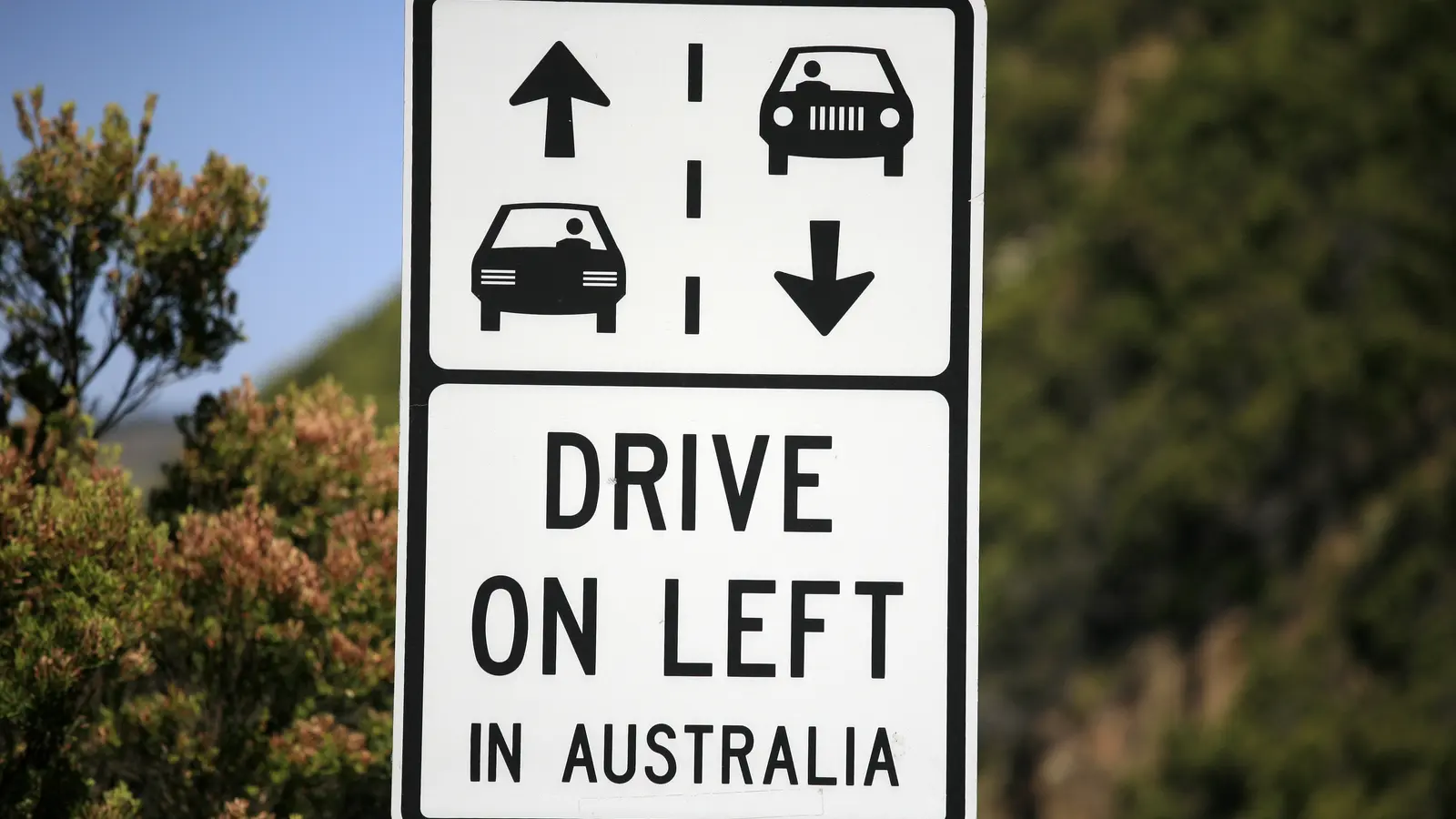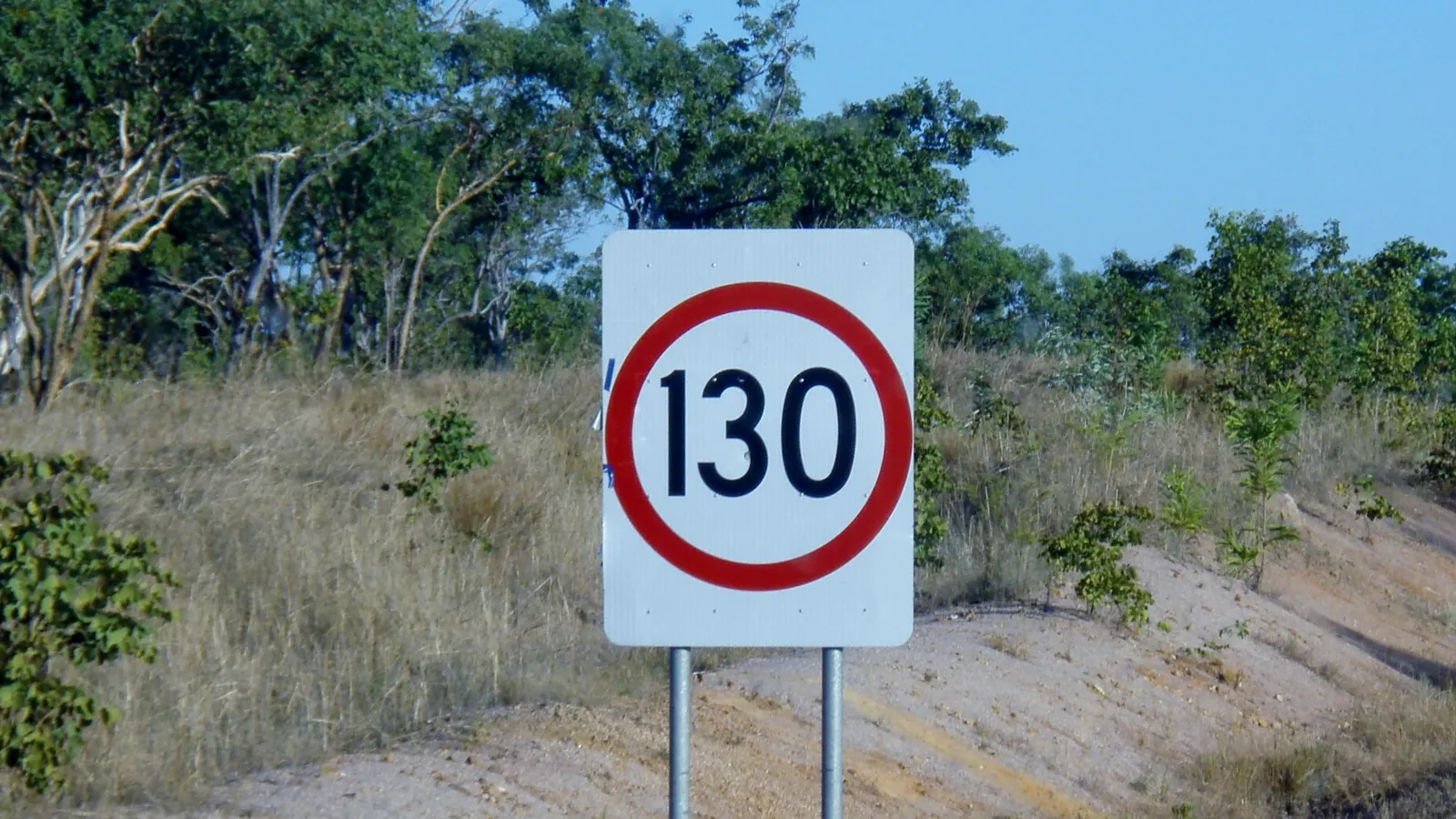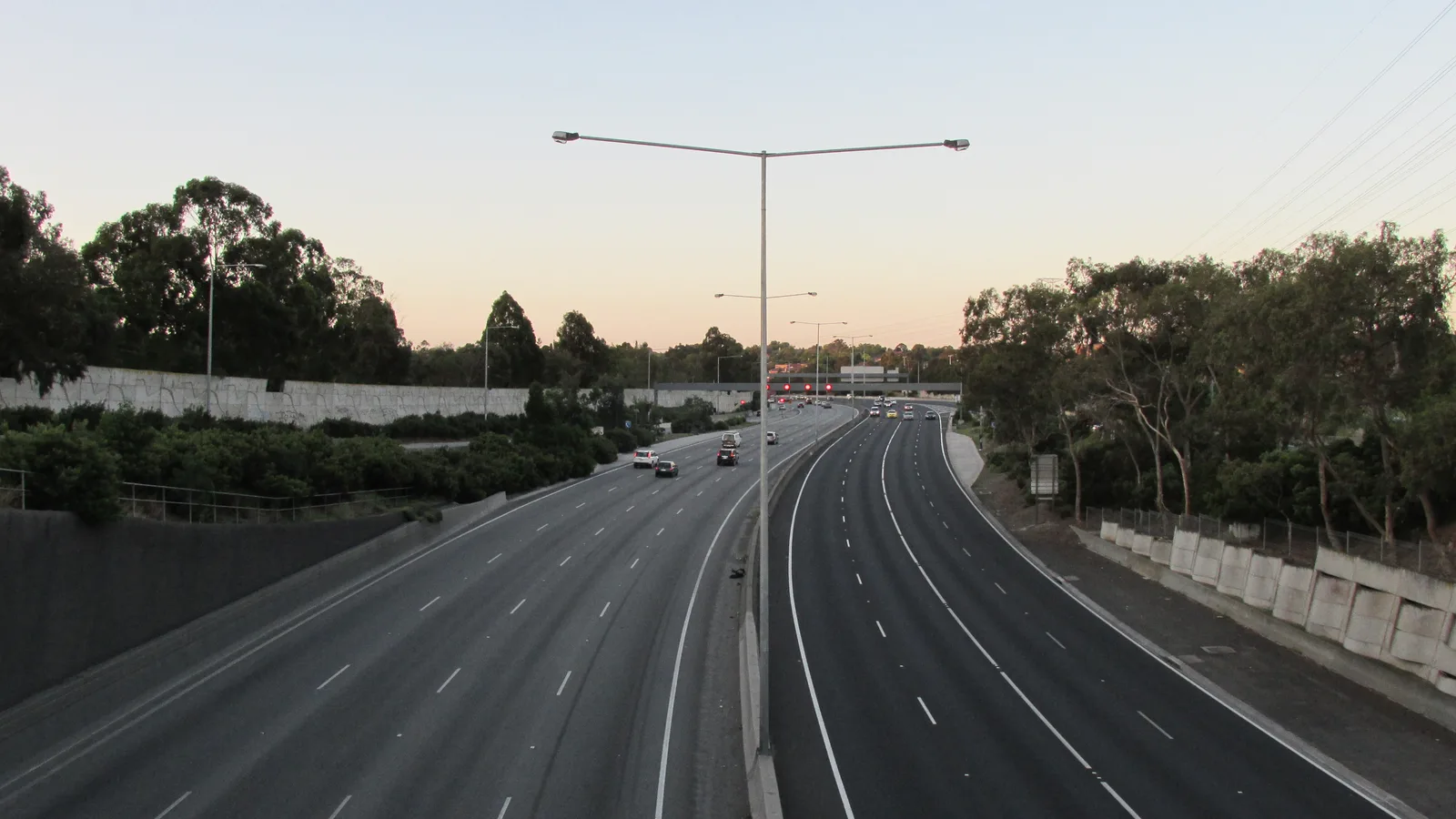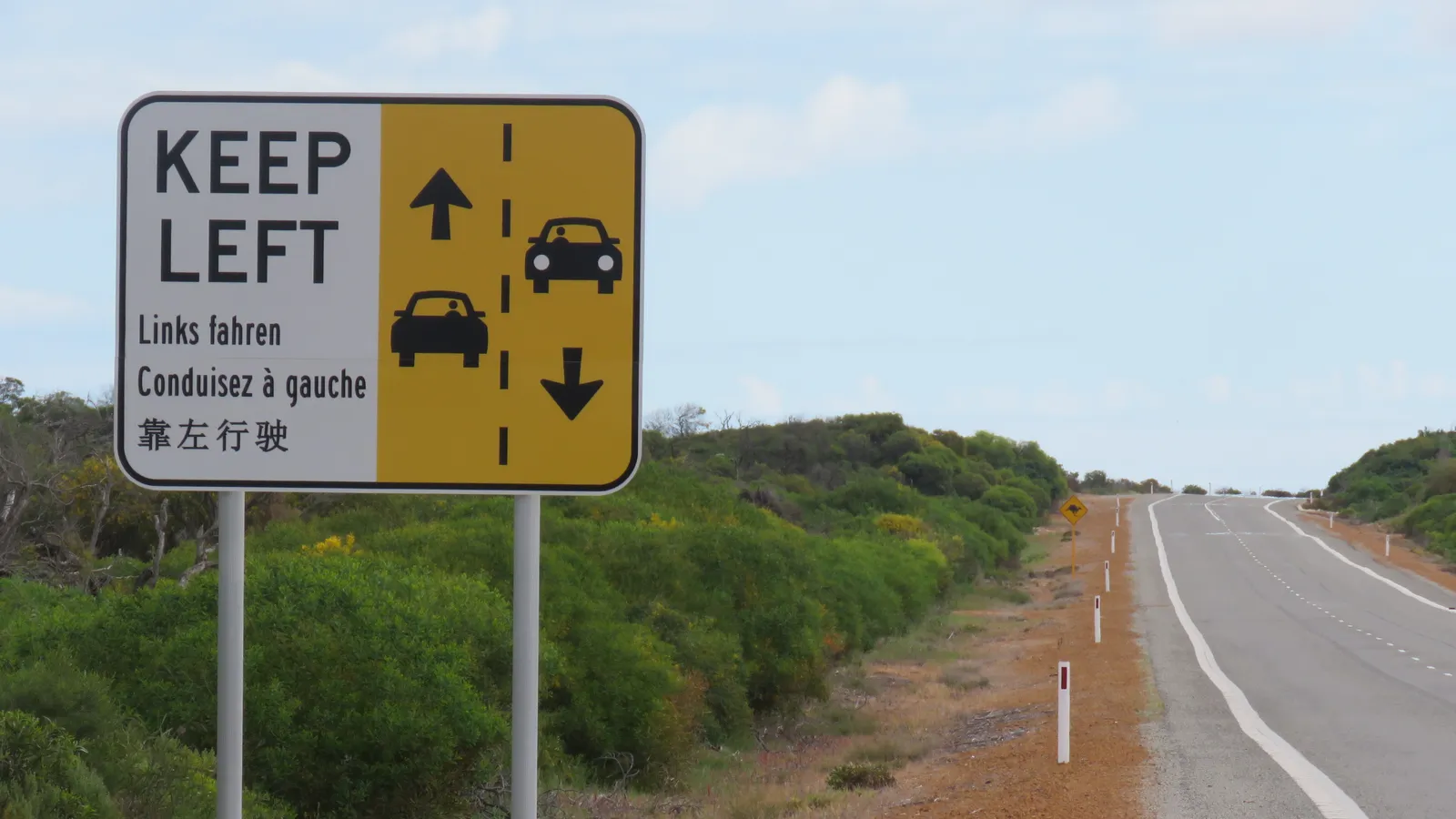
Australia drives on the left, with the driver on the right of the car. Tourism Australia's rule of thumb is to keep the driver's side close to the centre of the road, stay in the left lane unless you are overtaking, and give way to the right at roundabouts. Most visitors manage the open road; the mistakes happen when turning out of a car park, after a fuel stop on an empty highway, or at the first roundabout. Hire an automatic if you can, set the car up before you move, and keep the first day short. We read each official page on 9 November 2026.
Set the car up before you move
Tourism Australia suggests hiring a car with automatic transmission if you are not used to driving on the left, so changing gear with your left hand is one thing you do not have to learn. It warns that the indicator and windscreen wiper stalks may be on the opposite side of the steering wheel to your car at home, while the brake and accelerator are always in the same place.
Before leaving the hire depot, adjust the seat and all three mirrors, pair your phone and start the navigation, because Australian law bans touching a phone while you drive, even when stopped at lights. Then drive a lap of the car park. Expect to switch on the wipers when you meant to indicate for the first day or two; it is harmless, and it fades.
- An automatic removes one job
- Wipers and indicators may swap
- Set the phone before you move
Where right-side habits come back
On a busy road, other cars show you where to be. The risk comes when there are none: pulling out of a car park or driveway, rejoining an empty highway after a rest stop, or turning at a quiet T-intersection. In those moments the brain falls back on what it knows, and drivers end up on the right.
Say a short check out loud each time you start moving or turn: driver to the centre line. On a right turn you cross the oncoming lane and end up in the far lane; on a left turn you keep tight to the kerb. A passenger who reads the signs and says keep left at each turn helps more than any app.
- Empty roads are the trap
- Driver to the centre line
- Left turns tight, right turns wide
Roundabouts
Roundabouts in Australia run clockwise. The NSW Government says you must slow down or stop to give way to all vehicles already in the roundabout, which means traffic on your right, and vehicles that entered from your left or from directly opposite you.
Indicate when turning at a roundabout and keep indicating as you turn; when you leave, indicate left if it is practical, and stop indicating once you are out. On roundabouts with more than one lane, follow the arrows on the road surface or the signs: to turn left, use the left lane unless the arrows allow another.
- Clockwise, give way to the right
- Indicate left as you leave
- Follow the lane arrows
Lanes and overtaking
Stay in the left lane unless you are overtaking, and always pass on the right. Tourism Australia explains the centre lines: a single broken white line means you can overtake when it is safe, and where there are two lines you may only overtake when the line closest to you is broken. Where a Keep Left Unless Overtaking sign is posted, sitting in the right lane is an offence.
On country highways, wait for a signed overtaking lane rather than pulling out on a short straight. Road trains can be over 50 m long and take far longer to pass than they look, so the safe move is often to stay behind until the road opens up.
- Pass on the right only
- Two lines: overtake only on your broken side
- Wait for an overtaking lane
City quirks: hook turns, trams and parking
Central Melbourne uses hook turns at signed intersections, so that cars turning right stay clear of the trams in the middle of the road. You turn right from the left lane: move to the far left of the intersection with your right indicator on, wait until the lights on the street you are turning into go green, then complete the turn. The sign reads Right Turn From Left Only.
In Melbourne and Adelaide, trams share the road, and you must stop behind a tram that has stopped for passengers unless there is a safety zone. Tourism Australia also reminds visitors to park on the left-hand side of the road, as parking facing oncoming traffic is illegal, and to read time limits such as 2P, meaning two hours.
- Hook turns: right from the left lane
- Stop behind a stopped tram
- Park with the traffic
Keep the first day short
A long flight, a new car and the other side of the road add up. Collect the vehicle in the morning, after a night's sleep, and make the first day's drive short, ideally to a campground or holiday park within two hours of the airport. Tourism Australia advises against driving at night in the outback and country areas, because kangaroos and other animals are hard to see in the dark.
Fatigue makes old habits stronger, so take a break at least every two hours and swap drivers if you can. After a few days on the left, most visitors find the habit sticks; the moments to stay alert are the quiet ones.
- Pick up after a night's sleep
- First drive under two hours
- No country driving at night
Plan a short first leg in AussieCamps
AussieCamps lists campgrounds, holiday parks and rest areas around every major airport, with the facilities and access notes the park agencies publish, so you can find a first night close to the depot. Add it to a trip and AussieCamps shows the driving distance and time before you set off.
When you are ready, AussieCamps hands directions to Apple Maps or Google Maps, so turn-by-turn guidance tells you which lane to be in. Place details stay readable with no signal; the map, directions and weather need a connection. AussieCamps runs on iPhone.
- A first night near the depot
- Directions in Apple or Google Maps
- iPhone only
Places along the way
Check before you go
Rules and conditions change. Recheck the official source and the page for your exact park or campground before departure.
Common questions
Which side of the road do you drive on in Australia?+
The left. The driver sits on the right of the car and should stay close to the centre line. You overtake on the right, go clockwise around roundabouts and give way to traffic already in the roundabout.
What is a hook turn in Melbourne?+
A right turn made from the left lane, used at signed intersections in central Melbourne so cars stay clear of the trams in the middle of the road. You move to the far left of the intersection with your right indicator on, wait until the lights for the street you are turning into go green, then turn.
Take it on the road
Save the stops. Plan the whole trip.
Build an ordered route from saved places, calculate the distance and keep dates, notes and to-dos attached.