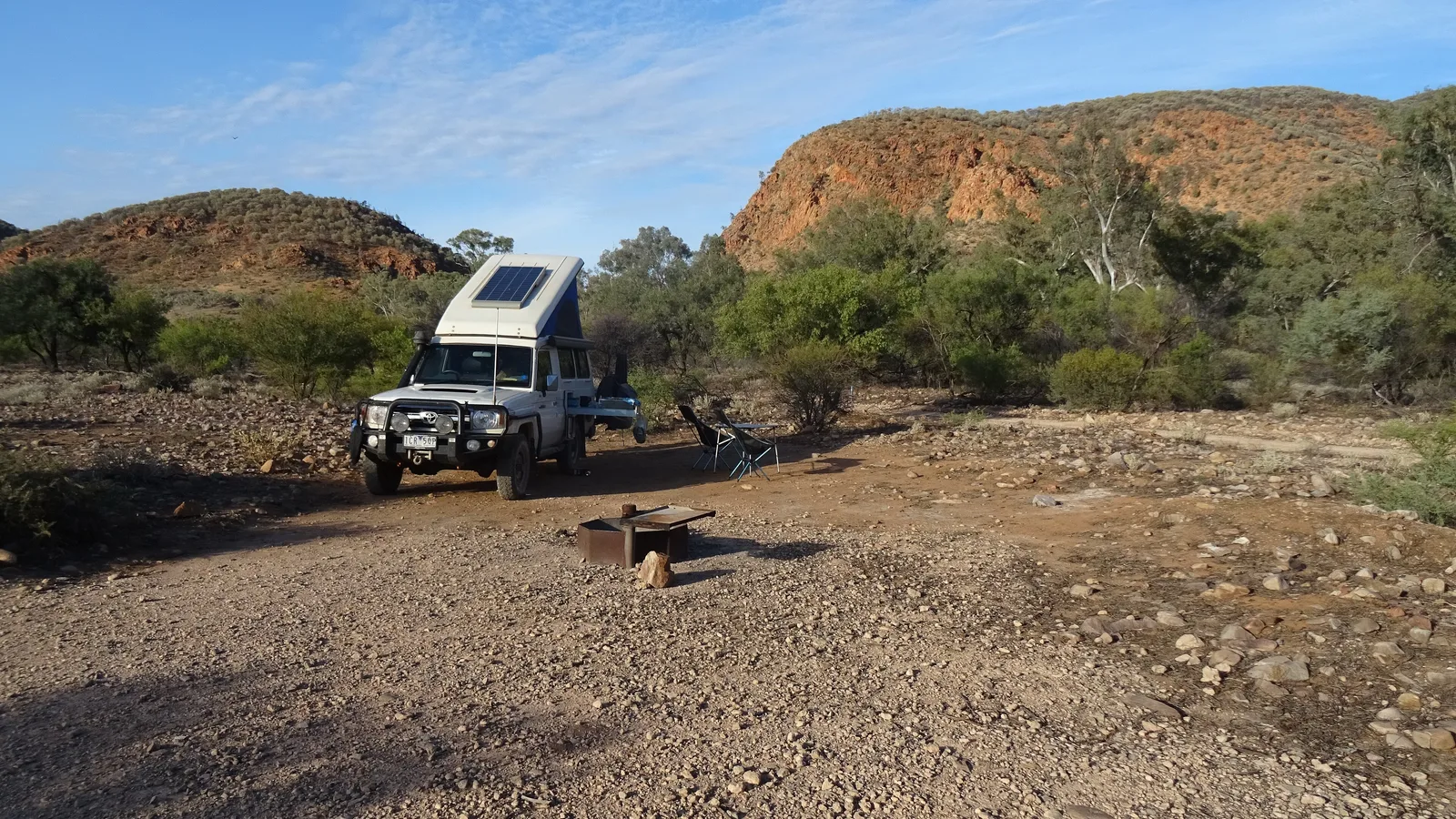
Flat tyres are one of the most common problems on a long Australian road trip, and the next town can be a long way off. Most hire companies run a roadside assistance line, and that is the first call, but it helps to know where the spare is, how to use it and when to stop and wait for help. Below are the checks to make at pick-up and the steps for changing a wheel safely.
Check the spare before you leave
Do this at pick-up, not on the side of the road. Find the spare, the jack, the wheel brace and the locking wheel nut key if the van has one, and make sure the spare has air in it. Ask the hire company where each item is stored, because it varies from van to van, and ask who to call and what the policy is for tyres.
Check the tyre pressures on the placard in the door jamb and keep an eye on them on long hot days. Under-inflated tyres wear faster and are more likely to fail. If the vehicle is a 4WD that will go on gravel, ask whether it carries one spare or two.
- Find the spare, jack and wheel brace
- Check the spare has air
- Save the roadside assistance number
When to call for help instead
If you are on a busy highway, on a bend or hill with no safe place to stop, on soft ground, or the van is heavy and loaded, call roadside assistance rather than changing the wheel yourself. If a nut is stuck, the jack will not lift the van or you do not feel confident, the same applies.
Out of mobile range, stay with the van, because it is easier to find than a person on foot, and flag down a passing vehicle if you need help. The no phone signal guide covers how to prepare for the long stretches without coverage.
- Call if the roadside is unsafe
- Stay with the van if there is no signal
- Never crawl under a van held up by a jack
Steps to change a wheel
Pull well off the road onto firm, flat ground, turn on the hazard lights, put the handbrake on, select park or first gear and have everyone wait well away from traffic. Put something under the wheel on the opposite corner so the van cannot roll. Loosen the wheel nuts about a half turn while the wheel is on the ground, then raise the van with the jack at the jacking point marked in the manual until the tyre is clear of the ground.
Remove the nuts, take off the wheel, fit the spare, hand-tighten the nuts in a star pattern, lower the van and then tighten them fully with the brace. Check the nuts again after the first 50 to 100 km. Keep the flat tyre, and tell the hire company as soon as you can.
- Firm flat ground, hazard lights
- Loosen nuts before jacking
- Tighten in a star pattern
- Check the nuts after 50 to 100 km
After the change
Drive carefully on a space-saver spare, keep to the speed printed on the wheel, which is usually about 80 km/h, and get the tyre repaired or replaced at the next town. Many hire agreements treat tyres as an exclusion, so call the company before you pay a bill and keep the receipt.
The campervan driving safety guide covers the rest of the daily checks, and the hire cost guide explains what the excess and the extras cover.
- Keep to the spare's speed limit
- Call the hire company before paying
- Keep the receipt
Plan the route in AussieCamps
AussieCamps lists 1,838 campgrounds, 5,552 rest areas and 1,393 dump points from park agencies, road authorities and public datasets, and each place page shows the facilities those sources publish. Build the trip as ordered stops and it shows the distance and drive time for each leg, which helps you see how far apart towns are before a long stretch.
The iPhone app is free to download, with in-app purchases.
- Check the gaps between towns
- Add each stop in order
- Free to download
Places along the way
Check before you go
Rules and conditions change. Recheck the official source and the page for your exact park or campground before departure.
Common questions
Do I have to change a flat tyre myself in a hire campervan?+
Not always. Most hire companies run a roadside assistance line, and some will send help or tell you to use a local tyre shop. Read your rental agreement before you leave, because tyre damage is often not covered by the basic insurance and you may have to pay for the repair or replacement yourself.
Where is the spare tyre in a campervan?+
It depends on the vehicle. It can be under the rear of the van, on a rack on the back door, inside a cargo area or under the floor. Ask at pick-up, and check that the jack, the wheel brace and the locking wheel nut key, if there is one, are on board.
How fast can I drive on a space-saver spare?+
A temporary space-saver spare usually has a speed limit of about 80 km/h printed on the wheel or in the manual. Keep to it, avoid long distances and get the proper tyre repaired or replaced at the next town.
How do I loosen wheel nuts that are too tight?+
Loosen them while the wheel is still on the ground, using the wheel brace and your body weight on the handle. If a nut will not move, call roadside assistance rather than risk rounding it off or hurting yourself.
Take it on the road
Save the stops. Plan the whole trip.
Build an ordered route from saved places, calculate the distance and keep dates, notes and to-dos attached.