It depends where you go: some remote communities allow no alcohol at all, some allow a fixed amount, and the rule is set for each community or region by its state or territory government. Check the sign and the government page before you cross the boundary, because breaching a limit can mean seized alcohol, a confiscated vehicle and fines of tens of thousands of dollars.
The short answer by state
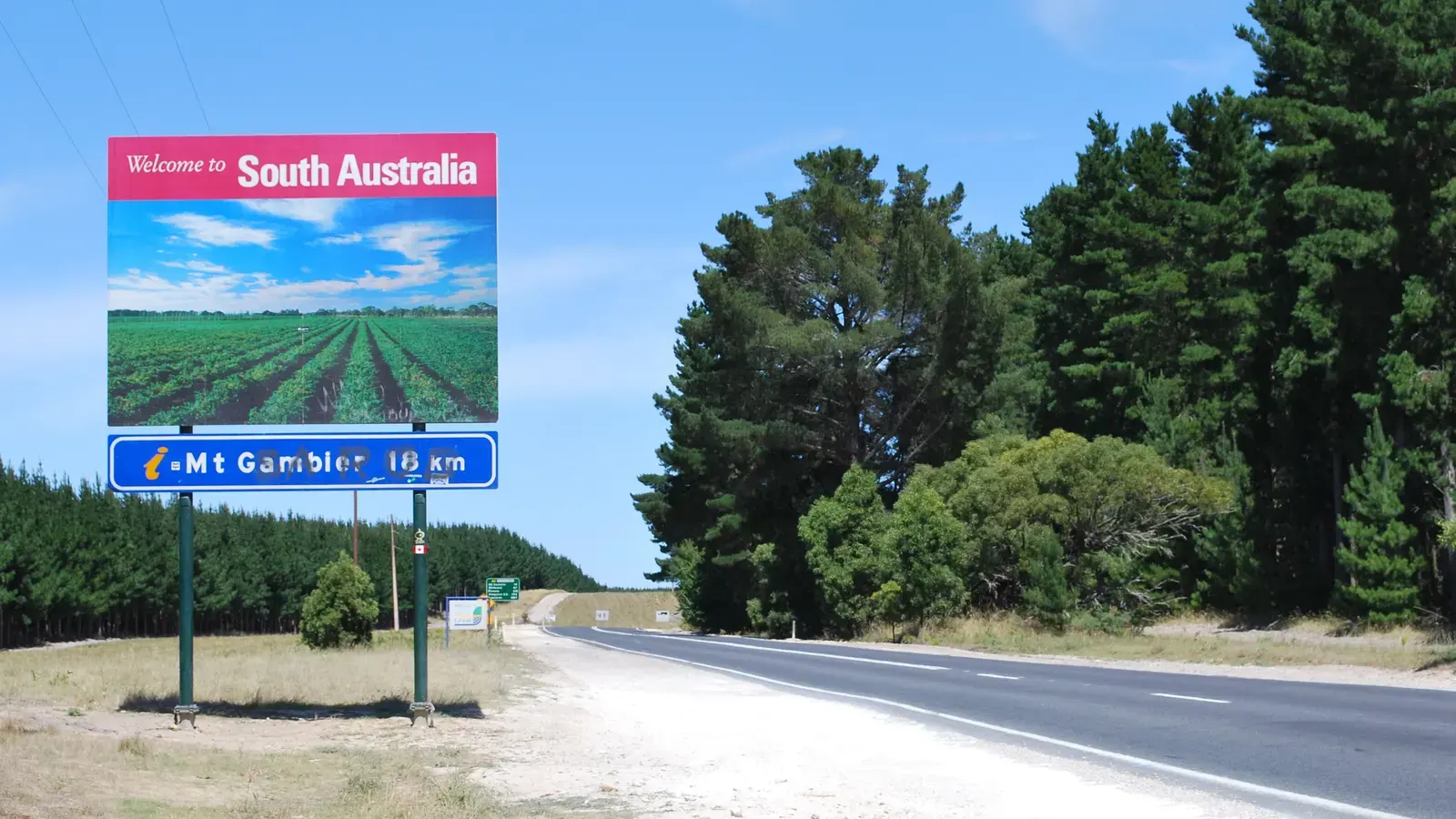
There is no national rule, and the same trip can cross three systems. Queensland sets a carriage limit for 15 community areas, the Northern Territory declares dry protected areas, and Western Australia uses carriage limits in the Kimberley and a separate list of restricted communities. Each section below says which page to read.
| State or territory | What applies to a traveller | Source |
|---|---|---|
| Queensland | Carriage limits in 15 community areas, zero in some. Penalties up to $64,762 for a first offence. Vehicles can be confiscated. | Queensland Government |
| Northern Territory | Interim alcohol protected areas ban bringing in, possessing, consuming, selling or supplying alcohol. Aboriginal land is dry unless a permit allows it. Penalty up to 200 penalty units or 12 months in jail. | NT Government |
| Western Australia, Kimberley | Carriage limits in Broome, Derby, Fitzroy Crossing, Halls Creek, Kununurra, Wyndham and Carnarvon, and within 5 km of the shire boundaries. Fine of $40,000. | WA Department of Local Government, Sport and Cultural Industries |
| Western Australia, restricted communities | Bringing in and possessing liquor is prohibited in each listed community, with a $2,000 fine for most people ($5,000 for licensees and managers). Some list exemptions for transiting vehicles or tourists. | WA Department of Local Government, Sport and Cultural Industries |
| South Australia, APY Lands | The APY says permit holders must comply with the laws on alcohol possession and sale on the lands. Transit permits are not issued to tourists. | APY |
- Rules are per community
- Check the sign and the page
- Checked 2026-10-21
Queensland: Cape York and Gulf communities
The Queensland Government lists 15 restricted community areas, and a restricted area is the whole shire unless the page says otherwise. A carriage limit is the most you can have, per person on foot or per vehicle, boat or aircraft however many people are in it. In some communities the limit is zero.
A bona fide traveller is someone, including a tourist, who can prove their destination is outside the restricted area, for example with an itinerary, camping permits, a licence with a home address elsewhere or a booking. On named roads only, such as the Savannah Way at Doomadgee, Frenchmen's Road and Portland Roads Road at Lockhart River and the Bloomfield Track at Wujal Wujal, extra alcohol may travel through if it is covered and secured, not taken out, not drunk, and you stop only at prescribed public facilities. That page was last updated in 2016, so confirm it by phone on 13 74 68.
| Community | Carriage limit | Source |
|---|---|---|
| Aurukun | Possession prohibited | Queensland Government |
| Lockhart River | Possession prohibited | Queensland Government |
| Napranum | Possession prohibited. The Peninsula Development Road through the shire is outside the restricted area. | Queensland Government |
| Wujal Wujal | Possession prohibited | Queensland Government |
| Kowanyama | 2 litres unfortified wine and 4.5 litres (12 cans) of beer and pre-mix under 4% | Queensland Government |
| Pormpuraaw | 4.5 litres (12 cans) of beer and pre-mix up to 4% | Queensland Government |
| Doomadgee | Up to 22.5 litres of beer under 4% (two cartons of 30 cans). Wine and spirits are zero. | Queensland Government |
| Mornington Island | 11.25 litres (30 cans) of beer and pre-mix up to 4% | Queensland Government |
| Northern Peninsula Area | 2 litres unfortified wine plus either 11.25 litres of beer or 9 litres of pre-mix up to 5.5% | Queensland Government |
- Zero in four Cape York communities
- Limits apply per vehicle
- Named roads only for travellers
Queensland fines and powers
Going into a restricted area with more than the limit is an offence. The maximum penalty is 375 penalty units for a first offence, 525 units or six months in jail for a second and 750 units or 18 months for a third, with the unit at $172.70 from 1 July 2026. Attempting to bring in alcohol above the limit carries up to 375 units.
Police can stop and search vehicles entering or in a restricted area, take alcohol, and take the vehicle used to bring it in. Mapoon, Hope Vale, Cherbourg, Palm Island, Woorabinda and Yarrabah also have restrictions, so read the community page before you go.
- First offence: up to $64,762
- Vehicle can be seized
- Read each community page
Northern Territory
Since 16 February 2023, communities previously under the Commonwealth's Stronger Futures law are dry again as interim alcohol protected areas. It is illegal to bring in, possess, consume, sell or supply alcohol in them. The Director of Liquor Licensing's notice says they repeal on 28 February 2027, but a Liquor Amendment Bill 2026 (introduced 23 July 2026) proposes moving them into the General Restricted Area framework, and a 17 October 2026 news report says it has passed. We could not open an official page confirming this, so check the current position with the NT Government before you travel. Boundaries are certified plans on the NTLIS site.
On Aboriginal land, alcohol is banned unless a permit allows it. The Central Land Council says transit visitors may carry alcohol provided they do not drink it on Aboriginal land, while the NT Government says bringing it into a protected area is an offence. Do not rely on the transit wording until you have checked that community. Police can stop and search vehicles and seize the vehicle used.
In towns, takeaway buyers anywhere in the NT need approved photo ID. Alice Springs has no takeaway on Mondays or Tuesdays, Tennant Creek none on Sundays, and hours are limited in Alice Springs, Tennant Creek and Katherine. Drinking in public is not permitted in those three towns or parts of Darwin, and across the NT you cannot drink within 2 km of licensed premises.
- NT dry areas: check current status
- Photo ID for takeaway
- No drinking within 2 km
Western Australia: Kimberley and restricted communities
The Kimberley carriage limits cover Broome, Derby, Fitzroy Crossing, Halls Creek, Kununurra, Wyndham and Carnarvon, and the area within 5 km of the Broome, Carnarvon, Derby-West Kimberley, Halls Creek and Wyndham-East Kimberley shire boundaries. Per person, you may carry one carton (11.25 litres) of beer, cider or pre-mix at 2.7 to 7 per cent, 3 bottles (2.25 litres) of wine, or 1 litre of spirits or fortified wine, alone or with one other kind, and nothing with two or more other kinds. A vehicle's limit is based on its adult occupants, and the fine is $40,000.
The department lists exemptions for tourists, pastoralists, station owners and remote work site operators, but the page does not give their conditions, so confirm them before you rely on one. Takeaway rules also limit what you can buy: Kimberley-wide, no containers over 1 litre at 6 per cent or more (1.5 litre wine casks excepted) and no beer in glass bottles of 400 mL or more, and Fitzroy Crossing and Halls Creek restrict takeaway above 2.7 per cent to hotel lodgers, and liquor merchants at Halls Creek.
Separately, restricted communities, such as Looma, Strelley and Spinifex, prohibit bringing in and possessing liquor, with a $2,000 fine for most people ($5,000 for licensees and managers), and police can seize it. Some exempt transiting vehicles, meaning those that pass through on a public road without stopping, and some give tourists limited exceptions, such as 50 metres either side of the Anne Beadell Highway at Spinifex. These entries expire on set dates, so read the current list.
- Kimberley fine: $40,000
- Transit exemptions are listed
- Read the community's entry
Aboriginal land and the APY Lands
A permit to enter Aboriginal land is not permission to bring alcohol. The Central Land Council says possession, consumption and sale of alcohol on Aboriginal land in its region is prohibited and severe penalties apply. The Aboriginal land permit guide covers the permits themselves.
In South Australia, the APY says permit holders must comply with the alcohol laws on the lands, and tourist transit permits are not issued. Confirm the current alcohol rules with the APY before you apply for any permit.
- Permit is not alcohol consent
- Check the land council
- No tourist transit on APY
Drinking at camp and in town
Even where carrying is allowed, drinking may not be. In the Kimberley, drinking on public roads or in private vehicles is an offence unless a permit or licence applies, and so is drinking in parks or public places without the owner's or controlling authority's consent. Campgrounds and parks set their own rules on top, so read the notice at the entrance.
In the Northern Territory, a 2 km rule applies around licensed premises, so a roadside camp near a roadhouse can be inside it. Buy what you need in the last large town within the limits, and do not carry extra for a campfire night in a restricted area.
- Drinking rules differ from carrying
- Roadhouse zones can apply
- Read campground notices
Plan your route in AussieCamps
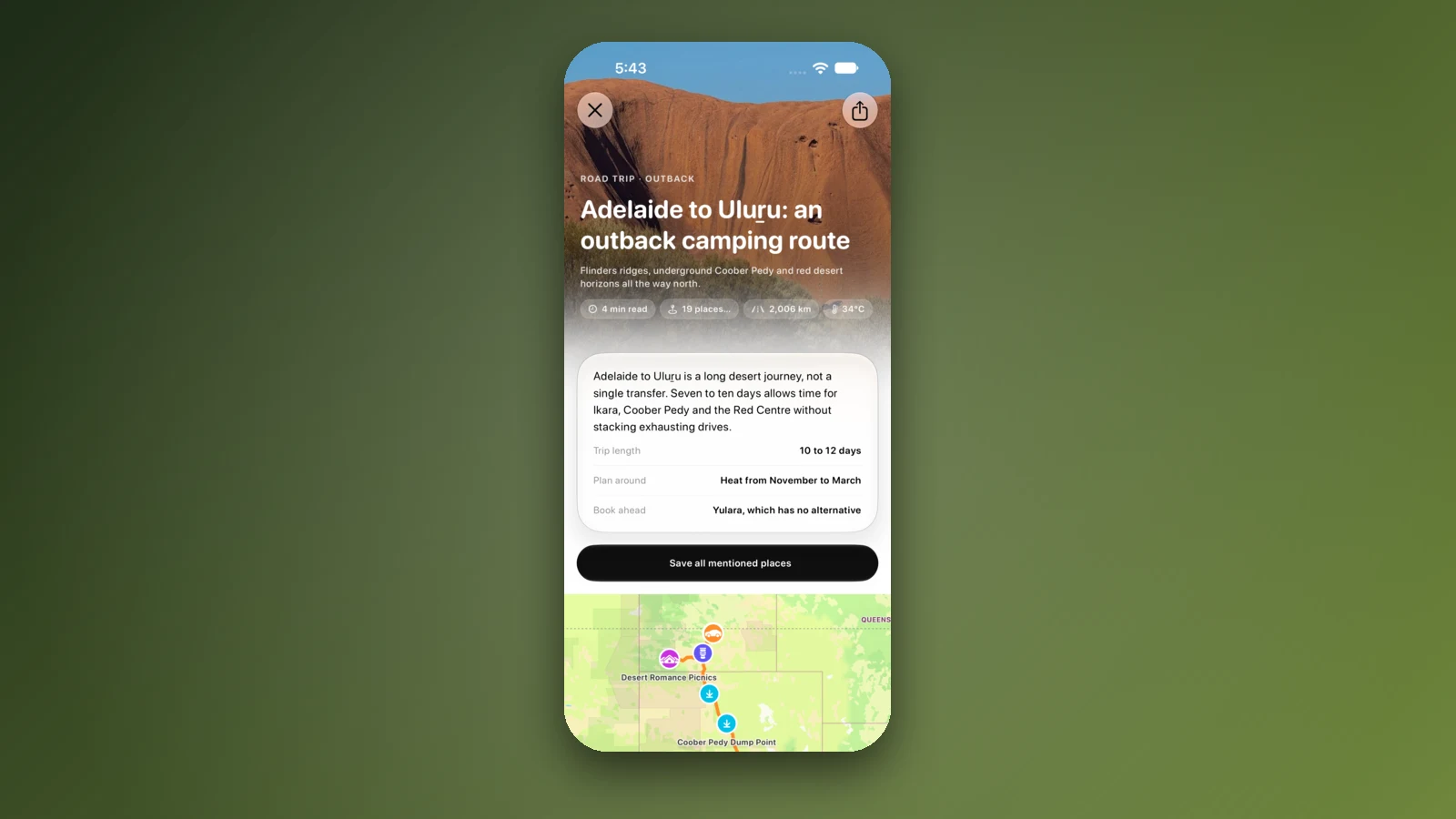
On a remote leg, the app can show national park campgrounds and rest areas near your route, each with the facilities, fees and rules the land manager publishes. Trips hold ordered stops with dates and the distance between legs, and collections keep the stops you are comparing. Place details open from the phone's stored directory, while live maps, directions and weather need a connection. It runs on iPhone only.
AussieCamps does not map community boundaries or carry alcohol rules. Take those from the Queensland, Northern Territory and Western Australian pages in the sources, and trust the sign at the boundary.
- iPhone only
- Trips for remote legs
- Alcohol rules: check government pages
Places along the way
Check before you go
Rules and conditions change. Recheck the official source and the page for your exact park or campground before departure.
- Queensland Government: community alcohol restrictions
- Queensland Government: alcohol restrictions in remote communities
- Queensland Government: travelling in alcohol restricted areas
- Queensland Government: fines and penalties
- Queensland Government: Northern Peninsula Area
- APY: permit requirements and information
- NT Government: alcohol penalties and offences
- NT Government: interim alcohol protected area boundaries
- Northern Territory tourism: purchasing and drinking alcohol
- Central Land Council: permits
- WA Government: liquor carriage limits
- WA Department of Local Government, Sport and Cultural Industries: liquor restrictions
Common questions
Can I drive through a dry community with alcohol in the car?+
Sometimes. Queensland allows extra alcohol only on named roads for a bona fide traveller, kept covered and secured and not consumed. Some Western Australian communities exempt transiting vehicles. The Northern Territory Government says bringing alcohol into a protected area is an offence, while the Central Land Council says transit visitors may carry it if they do not drink it, so check the community first.
How much alcohol can I take to Cape York?+
It depends on the community. Aurukun, Lockhart River, Napranum and Wujal Wujal prohibit possession altogether. Kowanyama and Pormpuraaw allow 4.5 litres of lower-strength beer or pre-mix, and the Northern Peninsula Area allows 2 litres of unfortified wine plus one carton of beer or pre-mix. Limits apply per person on foot or per vehicle.
What is the fine for taking alcohol into a restricted community?+
In Queensland the first offence carries up to 375 penalty units, $64,762 at the $172.70 unit value from 1 July 2026, and a vehicle may be confiscated. In the Kimberley, going over the carriage limit carries a fine of $40,000, and Western Australian restricted communities carry $2,000 for most people ($5,000 for licensees). The Northern Territory lists up to 200 penalty units or 12 months in jail.
Can I drink at a campsite in a remote area?+
Only where the land manager and local rules allow it. In the Kimberley, drinking in public roads, private vehicles and public places is an offence without a permit, licence or the owner's consent, and the Northern Territory bans drinking within 2 km of licensed premises. Read the campground's own rules as well.
Take it on the road
Save the stops. Plan the whole trip.
Build an ordered route from saved places, calculate the distance and keep dates, notes and to-dos attached.