It depends on the road authority and the sign: Queensland allows up to 20 hours at a rest area unless a sign says otherwise, and Western Australia allows up to 24 consecutive hours only at rest areas signed for overnight stops. Elsewhere the sign and the local council decide, and Queensland, Western Australia and NSW all say rest areas are not for camping.
The short answer by state
Only Queensland, Western Australia and the Northern Territory publish a time limit we could confirm. In the other states the sign at the site decides, and councils can add their own rules. The sleeping in a car guide and the free camping guide cover the wider picture. This page is about the rest area itself.
| State or territory | Overnight stay at a rest area | Source |
|---|---|---|
| New South Wales | Advice conflicts. Service NSW says rest areas are not for camping and Transport for NSW says you cannot stay overnight. The July 2026 planning practice note says camping may be permitted unless a no camping or no overnight stays sign is up. | Service NSW, Transport for NSW, NSW Department of Planning |
| Victoria | No statewide time limit found in the official sources we could open. Councils can ban overnight stays under local laws, so read the sign. | Victorian road authority and council pages |
| Queensland | Up to 20 hours in the 24 hours from when you entered, unless signed otherwise. Not camping sites. Heavy vehicle rest areas are for heavy vehicles only. | Queensland Government, State-controlled Roads Regulation 2017 |
| South Australia | No statewide overnight limit found. Some councils ban camping or overnight stays at rest areas, for example the Barossa Council. | Barossa Council |
| Western Australia | Up to 24 consecutive hours, only at rest areas signed to permit it. No overnight stop without that sign. | Main Roads Western Australia |
| Tasmania | No statewide rest-area stay limit found. Some councils run permit areas for self-contained vehicles, for example 48 hours free in Northern Midlands. | Northern Midlands Council |
| Northern Territory | Territory policy says no more than 24 hours at any one rest area. The Territory lists which highway stops allow 24-hour overnight camping, and some are marked camping not permitted. | NT Government |
- Sign beats everything
- Limits are in hours, not nights
- Checked 2026-10-21
What the signs mean
A blue guide sign with a white tree and picnic table marks a rest area in Queensland, and a rest area ahead sign gives the distance. It tells you the rest area is there. It does not say you may sleep there.
In Western Australia the sign that matters is the 24-hour information sign. Main Roads' policy says rest areas where 24-hour or overnight stays are permitted have a sign in a prominent position where every motorist entering can see it, and no overnight stops are allowed if there is no such signage. Signs showing a limit or a ban on overnight stays override the general rule in Queensland too, because the road authority can set a different period or restrict use.
- Blue tree and table sign: rest area only
- WA: no 24-hour sign, no overnight stop
- Time limit on sign wins
Time limits by road authority
Queensland's regulation says that where a rest area sign states no period, the maximum stay is 20 hours within the 24-hour period starting when the person first entered. The maximum penalty for breaching a sign or that limit is 20 penalty units. Queensland says there are just over 450 rest areas, and the three types are motorist, heavy vehicle and combined.
Main Roads WA says there are some 24-hour rest areas across the state, that they are not intended for camping, and that stopping at them should not exceed 24 consecutive hours. Its policy says most of its rest areas are not meant to be a camping place or for stays beyond 24 hours. The Northern Territory's rest area policy likewise says road users may not stay at any one rest area longer than 24 hours, while allowing limited overnight stays so tired drivers can rest. The Territory's rest stop list marks which highway stops allow 24-hour overnight camping and which do not.
- Qld: 20 hours unless signed
- WA: 24 consecutive hours, if signed
- NT: 24 hours at one rest area
What a rest area is for
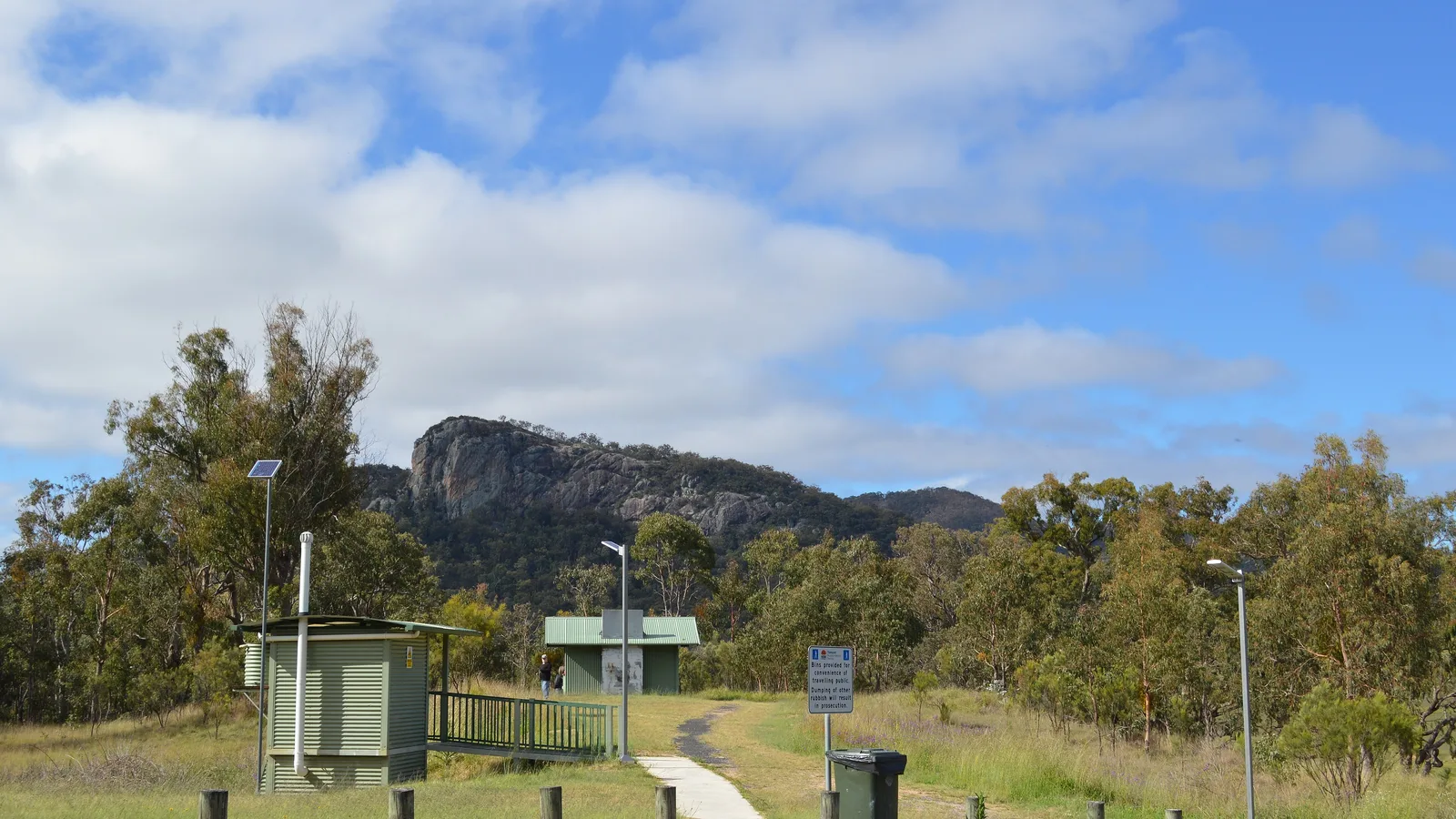
Rest areas exist to manage fatigue. Main Roads WA explains the effect of overnight use: a rest area heavily occupied by people on free overnight stays becomes unavailable to motorists with genuine fatigue, and its policy says 24-hour rest areas are in general not built close to civic sites that serve towns or where they would compete with local businesses. About 200 of its rest areas are heavy vehicle rest areas for truck drivers.
Queensland says truck drivers need to rest in the heavy vehicle rest areas, which are not for other motorists, and that fines may apply if you are not driving a commercial or heavy vehicle and are found using one. In Queensland, using a heavy vehicle rest area without a reasonable excuse can bring a maximum penalty of 20 penalty units.
- Leave truck bays for trucks
- Fatigue stop, not a campsite
When the site says No Camping
Do not stay. A no camping or no overnight stays sign, put up by a council or a road authority, is the line the NSW practice note draws, and Queensland requires road users to comply with the sign or marking at a designated rest area. A council can also ban camping outright: the Barossa Council in South Australia says camping or overnight stays are prohibited in any public reserve, car park, road or rest area in its region, and people found camping can face an on-the-spot fine.
Queensland's roadside rule is narrower than most people expect. A person may camp on a state-controlled road, other than a motorway or toll road, only to manage fatigue, between 4pm and 8am, outside a built-up area, at least 200 m from any kerb, 100 m from a rest area entry or exit and 9 m from the nearest traffic lane, and where no sign or marking prohibits it. A fire, fire pit or generator is not allowed while camping there.
- Sign beats any app or guide
- Photograph the sign
- Qld roadside: fatigue only, 4pm to 8am
Staying respectful
Queensland's regulation sets the baseline for a general vehicle rest area: put litter in the bins provided, do not light a fire or use a fire pit, do not operate a generator or engine-driven equipment between 7pm and 7am, and do not use machinery or appliances that unreasonably interfere with others. The road authority can direct you to leave if you breach these.
Practical habits follow from that. Keep your set-up inside the vehicle, leave bays free for other drivers, take your rubbish with you if the bins are full and leave early. Main Roads WA asks visitors to leave heavy vehicle rest areas free for trucks where they can, or leave enough room for trucks to pull up safely.
- Rubbish in the bin
- No fire, no generator at night
- Keep truck bays clear
What to do instead
If a rest area does not allow an overnight stop, a caravan park or a booked campground removes the doubt. Some councils run their own overnight areas, and Northern Midlands Council in Tasmania issues free permits for up to 48 hours for self-contained vehicles at designated, signposted areas, with no waste discharge allowed.
State forests in NSW and Victoria are the usual free option for camping, and the free camping guide covers where it is legal. The sleeping in a car guide covers the safety side of a night in the vehicle.
- Caravan park if in doubt
- Council overnight areas
- State forests for free camping
Check this rule at the place in AussieCamps
AussieCamps lists 5,552 rest areas from road authorities and public datasets next to 1,838 campgrounds, and a rest area's place page carries the facilities, such as toilets, that the authority publishes. Stored details open with no coverage, while the map, routing, weather and photos need a connection. It runs on iPhone only.
The app does not replace the sign. A listing can be out of date, so confirm the time limit on site or with the road authority or council.
- iPhone only
- Rest areas from road authorities
- The sign decides
Places along the way
Check before you go
Rules and conditions change. Recheck the official source and the page for your exact park or campground before departure.
- Queensland Government: rest areas
- Queensland Legislation: Transport Infrastructure (State-controlled Roads) Regulation 2017
- Main Roads WA: regional and long distance driving
- Main Roads WA: policy and guidelines for rest areas on main roads and highways
- Service NSW: find rest areas in NSW
- Transport for NSW: caravans
- NSW Department of Planning: caravan parks and camping grounds practice note
- NT Government: roadside rest areas policy
- NT Government: road rest stops in the NT
- Barossa Council: camping
- Northern Midlands Council: self contained vehicle overnight rest areas
Common questions
How long can I stay at a rest area in Queensland?+
Up to 20 hours within the 24-hour period starting when you first entered, unless a sign gives a different limit. Queensland says general and recreational vehicles can stop at a rest area for that long, but rest areas are not camping sites or an accommodation option. Heavy vehicle rest areas are for heavy vehicles only.
Can I sleep overnight at a rest area in Western Australia?+
Only where a sign permits it, and for no more than 24 consecutive hours. Main Roads WA says its 24-hour rest areas are not intended for camping, and its policy says no overnight stops are allowed if there is no signage permitting them.
Can I stay overnight at a rest area in NSW?+
The official advice conflicts. Service NSW says rest areas are not for camping, and Transport for NSW says you cannot stay overnight. A July 2026 planning practice note says camping in a roadside rest area may be permitted unless a no camping or no overnight stays sign has been placed there, so read the sign and check the council.
What does a No Camping sign at a rest area mean?+
It means do not set up camp or stay overnight there, and the sign beats any app listing or guide. In Queensland, a person must comply with the sign or marking for a rest area, and the maximum penalty for failing to is 20 penalty units. Move on to a caravan park, campground or a rest area that allows an overnight stop.
Take it on the road
Save the stops. Plan the whole trip.
Build an ordered route from saved places, calculate the distance and keep dates, notes and to-dos attached.