Visitors aged 18 or over can bring 25 cigarettes or 25 g of tobacco into Australia duty free, plus one open packet, and must declare anything more. Vapes are now sold only through pharmacies, and the traveller exemption allows 2 vapes, 20 pods or cartridges and 200 mL of liquid for your own treatment. You must be 18 to buy either, and smoking and vaping are banned in many outdoor places, from cafe tables to patrolled beaches. For campers the big one is fire: a lit butt thrown from a car or dropped in dry grass can cost thousands of dollars. These are the rules as they stand in November 2026.
What you can bring in duty free
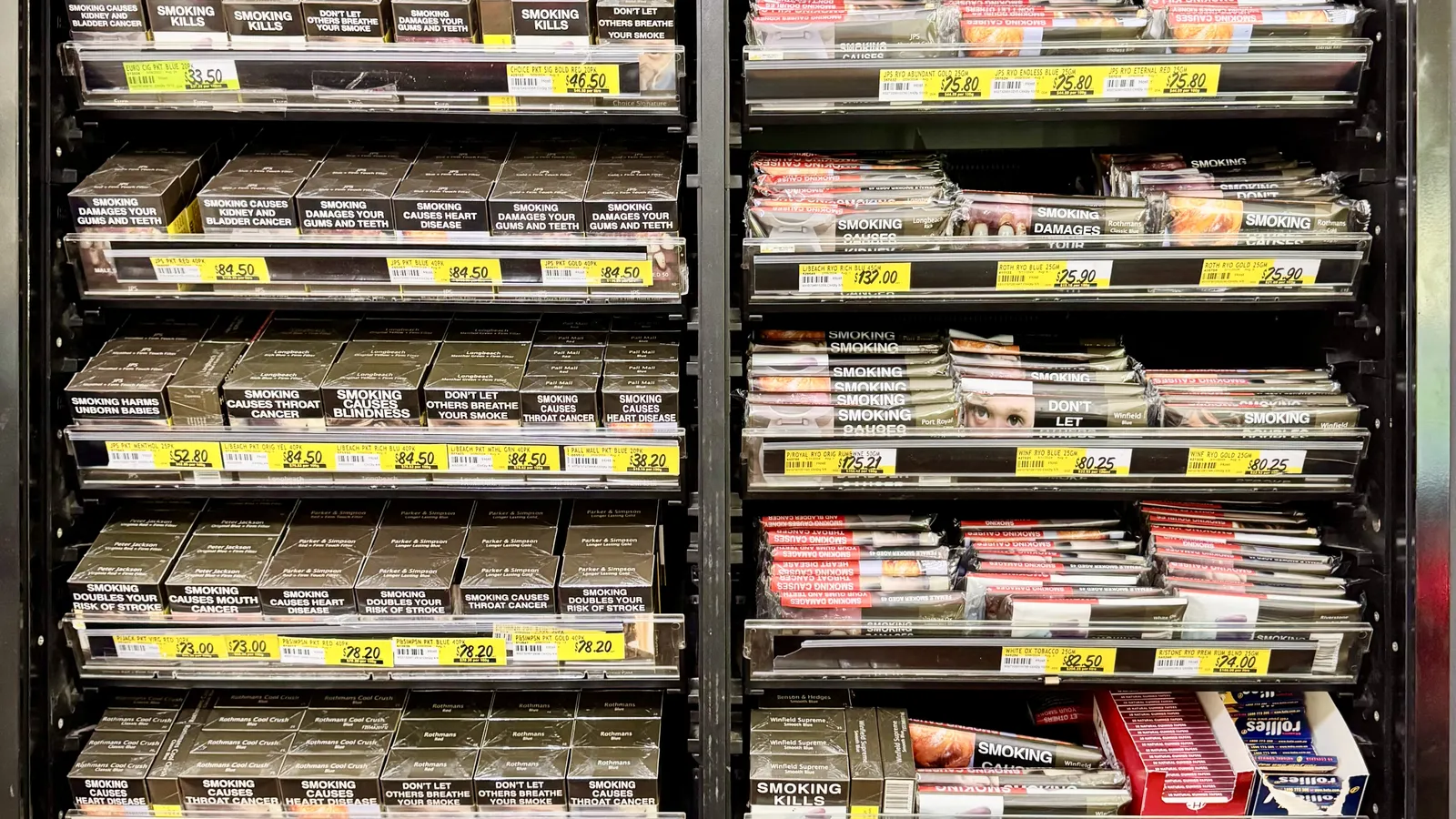
Adults aged 18 or over can bring tobacco into Australia without a permit. The duty free allowance is 25 cigarettes or 25 g of tobacco products, plus one open packet. With Australian and most overseas packs holding 20, that means one sealed pack plus the one you are smoking. Under 18s get no tobacco allowance at all.
Go over the limit and the Australian Border Force says duty and tax apply to all of that type of goods, not just the part over the limit. Not declaring the excess can mean penalties, prosecution or a cancelled visa, depending on how much you carry. If you have more, declare it on your Incoming Passenger Card, show proof of purchase and pay the duty, or hand it over at the border. Prices for local packets are covered in the cigarette prices guide.
- 25 cigarettes or 25 g
- Plus one open packet
- Declare anything over
Vapes for travellers
Since 2024, vapes in Australia are treated as therapeutic goods. Travellers can bring them in only under a traveller exemption: the vapes must be for your own treatment, or for someone you are caring for who travels with you on the same flight or ship. The limits are 2 vapes in total, 20 accessories such as pods, cartridges or capsules, and 200 mL of vape liquid.
Disposable vapes count towards the 2. Posting vapes to yourself, or having a friend send them, is not allowed, and anything over the limit can be seized. Declare your vapes and keep them in your hand luggage where officers can see them. Rules for carrying them on the plane are set by your airline, so check before you fly.
- 2 vapes, 20 pods, 200 mL
- Own use only
- No posting vapes to Australia
Buying vapes and the legal age
Vapes are sold only by pharmacies in Australia. Since October 2024, pharmacists can supply nicotine vapes at 20 mg/mL or lower to people aged 18 or over without a prescription, and under 18s need one. Tobacconists, vape shops, servos and convenience stores cannot sell vapes at all, whatever the nicotine content.
The legal age to buy tobacco is 18 in every state and territory, and shops can ask for photo ID. Visitors are asked the same as locals, so a passport or an overseas licence is the safe thing to carry. Pharmacists can also tell you about any extra state rules before you buy.
- Vapes: pharmacy only
- 18 to buy anything
- Carry photo ID
Where you can't smoke or vape
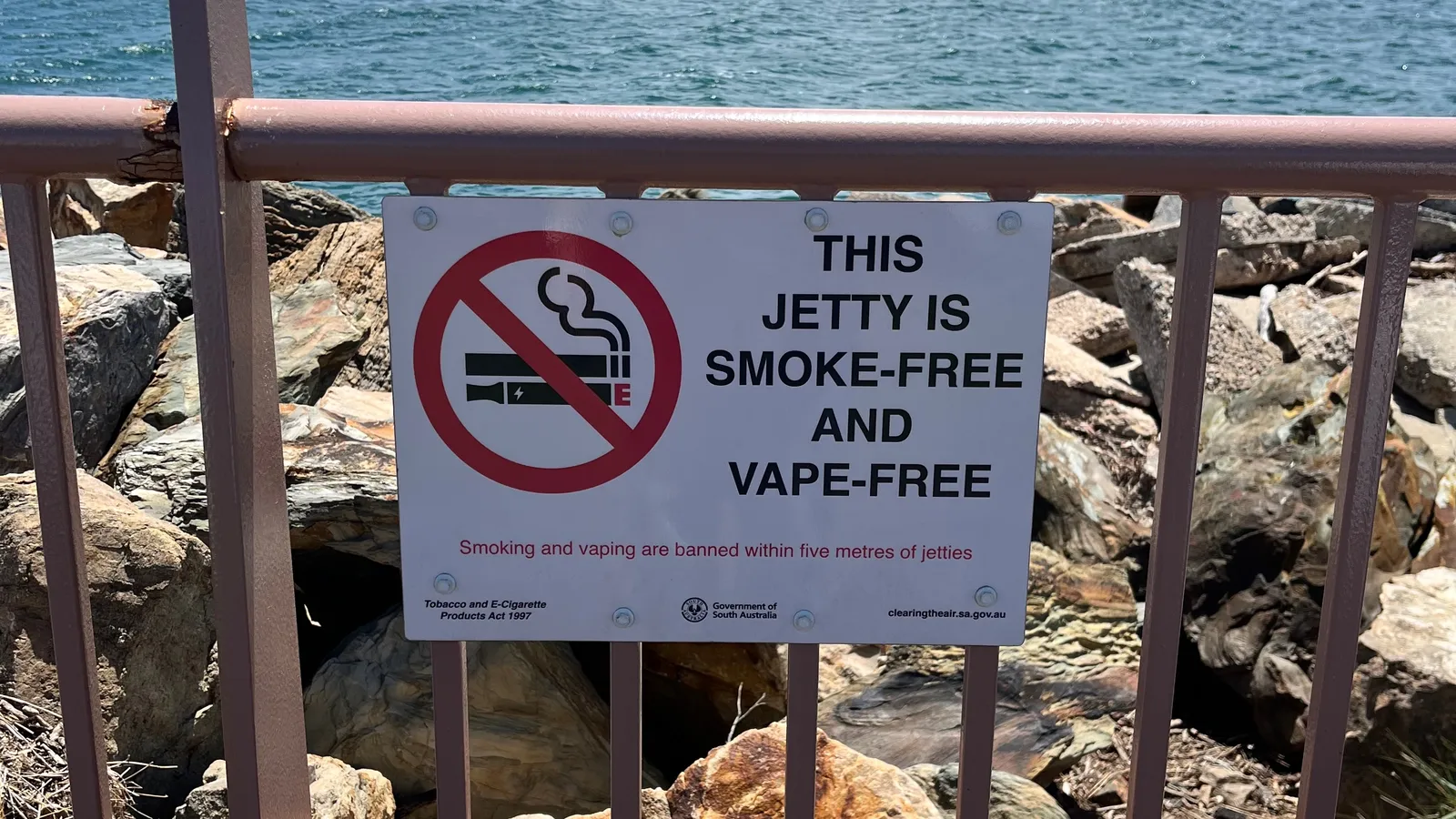
Smoke-free laws are set by each state and territory, and vaping is treated like smoking in smoke-free places. The table lists the places campers meet most often. Many councils add their own rules for local beaches, parks and town centres, so look for signs.
National parks, beaches and campgrounds have rules of their own. Queensland bans smoking within 10 m of national park campsites and facilities, several states ban it between the flags on patrolled beaches, and many caravan parks ban it in cabins, amenities blocks and camp kitchens. When a fire ban is on, park rangers treat a lit cigarette in the open like any other flame.
Fines are set in penalty units or fixed amounts that change each year, so the table gives a guide rather than an exact figure.
| State | Outdoor smoke-free places worth knowing | Typical on-the-spot fine |
|---|---|---|
| New South Wales | Commercial outdoor dining, within 4 m of public building entrances, public transport stops and platforms; many councils add beaches and parks | $300 |
| Victoria | Outdoor dining, within 10 m of playgrounds and skate parks, at under-18 sport events, and at food fairs | About a penalty unit or two, a few hundred dollars |
| Queensland | Between the flags on patrolled beaches, within 10 m of national park campsites and facilities, 5 m of public transport stops and 10 m of playgrounds | Two penalty units |
| South Australia | Outdoor dining, playgrounds and public transport shelters, plus newer outdoor zones since March 2024 | $105 |
| Western Australia | Outdoor eating areas, within 10 m of playground equipment, and between the flags on patrolled beaches | $300 for outdoor dining |
| Tasmania | Outdoor dining, within 3 m of entrances, within 10 m of playgrounds, patrolled beaches, and outdoor events | Roughly $350 to $400 |
| Northern Territory | Outdoor dining without a licence, public events and their surrounds, and children's play areas | Set in penalty units |
| Australian Capital Territory | Outdoor eating and drinking areas, and within 10 m of play equipment | Set in penalty units |
- Vaping counts too
- Look for local signs
- Fines change each year
Smoking in cars with children
Every state and territory bans smoking in a car with a child in it, even if the windows are down or the car is parked. The child's age that counts is under 16 in New South Wales, Queensland, South Australia, the Northern Territory and the ACT, under 17 in Western Australia, and under 18 in Victoria and Tasmania. Vaping is covered too.
In a hire car or campervan the rule is the same, and a hire company may also charge a cleaning fee for smoke smell. If you smoke, step away from the vehicle and let passengers out first.
- Illegal in every state
- Windows down is no excuse
- Hire cars charge cleaning fees
Fire bans, butts and fines
On a total fire ban day, anything that can start a fire in the open is a worry, and discarding a lit cigarette is an offence in every state. In New South Wales, a lit butt can bring an on-the-spot fine from about $660, doubling to about $1,320 on a total fire ban day. In court the maximum is $5,500, or $11,000 on a total fire ban day. Drivers also get demerit points, 5 normally and 10 on a total fire ban day.
Throwing a butt from a car is treated as dangerous littering in Victoria and Queensland, with fines that run to several hundred dollars on the spot and far more in court. Even a butt on the ground is litter. In the bush it can start a fire that reaches a campground or a town.
Carry a butt tin or portable ashtray, and never stub a cigarette out in dry grass or leaf litter. Some states let you report people who throw lit butts: in New South Wales you can call the Bush Fire Information Line on 1800 679 737.
- Butt tin in the car
- Never in dry grass
- Report lit butts from cars
Fines at a glance, and a camper's plan
Putting it together: tobacco over the limit costs duty on all of it or loses it, smoking in a smoke-free place costs from about $100 to a few hundred dollars, a lit butt thrown from a vehicle costs hundreds on the spot and thousands in court.
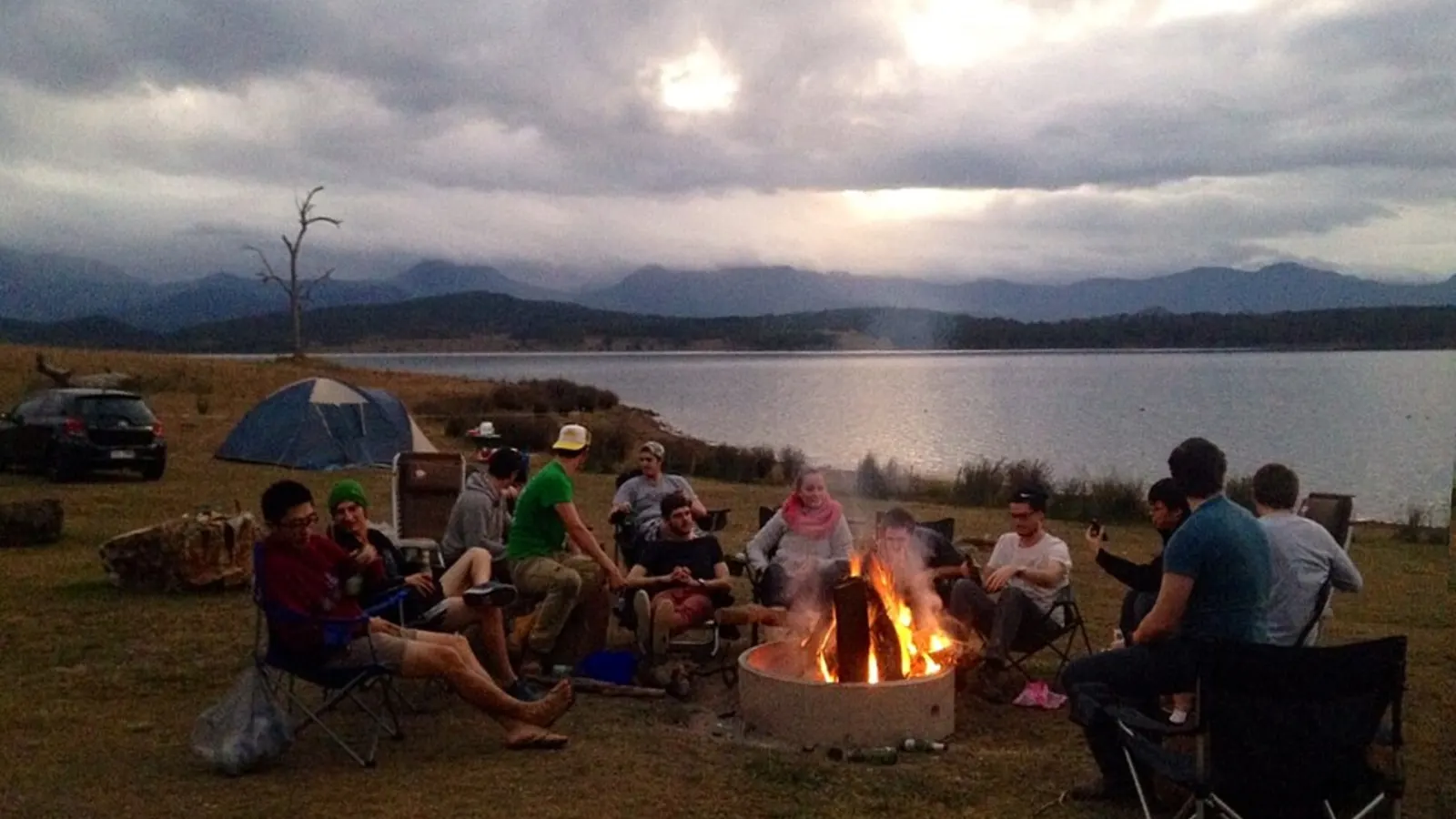
For a camping trip, pick a site with space away from tents and dry grass, check the fire danger rating every morning, and keep your butt tin zipped when you are done. Park agency pages and signs at the campground say where smoking is not allowed. Heading to New Zealand too? KiwiCamping covers the smoking and vaping rules in New Zealand.
- Check fire danger daily
- Check park smoke-free areas
- Never stub out in grass
Plan around the rules in AussieCamps
AussieCamps shows the campgrounds the park agencies publish, with the "Popular features" filter for toilets, drinking water, showers and campfires. Use the "Cost" filter to compare free and paid sites, and add stops to a trip with dates, notes, weather and a "To-do list" so you remember the butt tin and your ID.
Place details, search and filters work with no signal, because the directory is inside the app. The map, routing and weather need a connection, and AussieCamps runs on iPhone.
- Filter by campfires and features
- Add a butt tin to the to-do list
- iPhone only
Places along the way
Check before you go
Rules and conditions change. Recheck the official source and the page for your exact park or campground before departure.
- Australian Border Force: duty free concessions
- Office of Drug Control: vapes and the traveller exemption
- TGA: vapes information for patients and consumers
- Queensland Government: smoking laws in Queensland
- NSW Health: smoke-free commercial outdoor dining laws
- Victorian Government: smoking and vaping advice for parents
- NSW Rural Fire Service: new and increased fines
Common questions
How many cigarettes can I bring into Australia?+
Travellers aged 18 or over can bring 25 cigarettes or 25 g of tobacco products, plus one open packet, without paying duty. With packs holding 20, that is in practice one sealed pack and the one you are smoking. If you bring more and do not declare it, you can be made to pay duty on all of it or give it up, and you can face penalties or prosecution. Declare anything over the limit at the border.
Can I bring a vape into Australia?+
Only in small amounts and only for your own treatment or that of someone you are caring for who is travelling with you. The limit is 2 vapes, 20 accessories such as pods or cartridges, and 200 mL of vape liquid. Vapes cannot be posted to you, and you cannot buy them from a shop in Australia.
What is the smoking age in Australia?+
You must be 18 to buy tobacco or vapes anywhere in Australia, and shops can ask for photo ID. Tourists are asked the same as locals, so carry your passport or a licence.
Can I smoke at a campground in Australia?+
Usually yes at your own site, but not everywhere. In Queensland national parks, smoking and vaping are banned within 10 m of campsites and facilities like toilets and picnic tables. On a total fire ban day, or in dry bush, the safest answer is not to smoke in the open at all.
Take it on the road
Save the stops. Plan the whole trip.
Build an ordered route from saved places, calculate the distance and keep dates, notes and to-dos attached.