A hut is a roof, a floor and a place out of the wind, and after a wet day in the mountains it is hard to beat. Australia has three quite different kinds: public walkers' huts that anyone can use, booked cabins on a few paid walks, and historic cattlemen's huts kept alive by volunteers in the high country. The rules are not the same for each, and on most tracks you cannot reserve a bunk, so it pays to know which kind you are walking to before you leave.
The three kinds of hut
Public walkers' huts are the simplest: a shared building with bunks or sleeping platforms, a rainwater tank and sometimes a toilet nearby. You turn up, you sleep where there is room and you leave it clean. They are common on the Overland Track and along the Bibbulmun Track in Western Australia.
Booked huts and cabins are more like a hostel on a trail. You reserve a bed, the numbers are limited and you pay a fee. Historic huts, such as the cattlemen's huts of the Victorian and New South Wales alps, are heritage buildings that stay open as free shelter. Park cottages and lodges can be booked online like a cabin.
| Kind | Example | Booking | Cost |
|---|---|---|---|
| Public walkers' hut | Overland Track huts | No, first come, first served | Covered by the track fee and parks pass |
| Booked cabin | Three Capes Track | Yes, as part of the walk booking | Part of the walk fee |
| Historic high country hut | Kosciuszko and the Victorian alps | No | Free |
| Park cottage or hut | Bookable park accommodation | Yes, with the park agency | Nightly fee |
- Know which kind before you go
- Huts are shelter, not a guarantee
- Carry a tent on every track
Tasmanian walkers' huts and the Overland Track
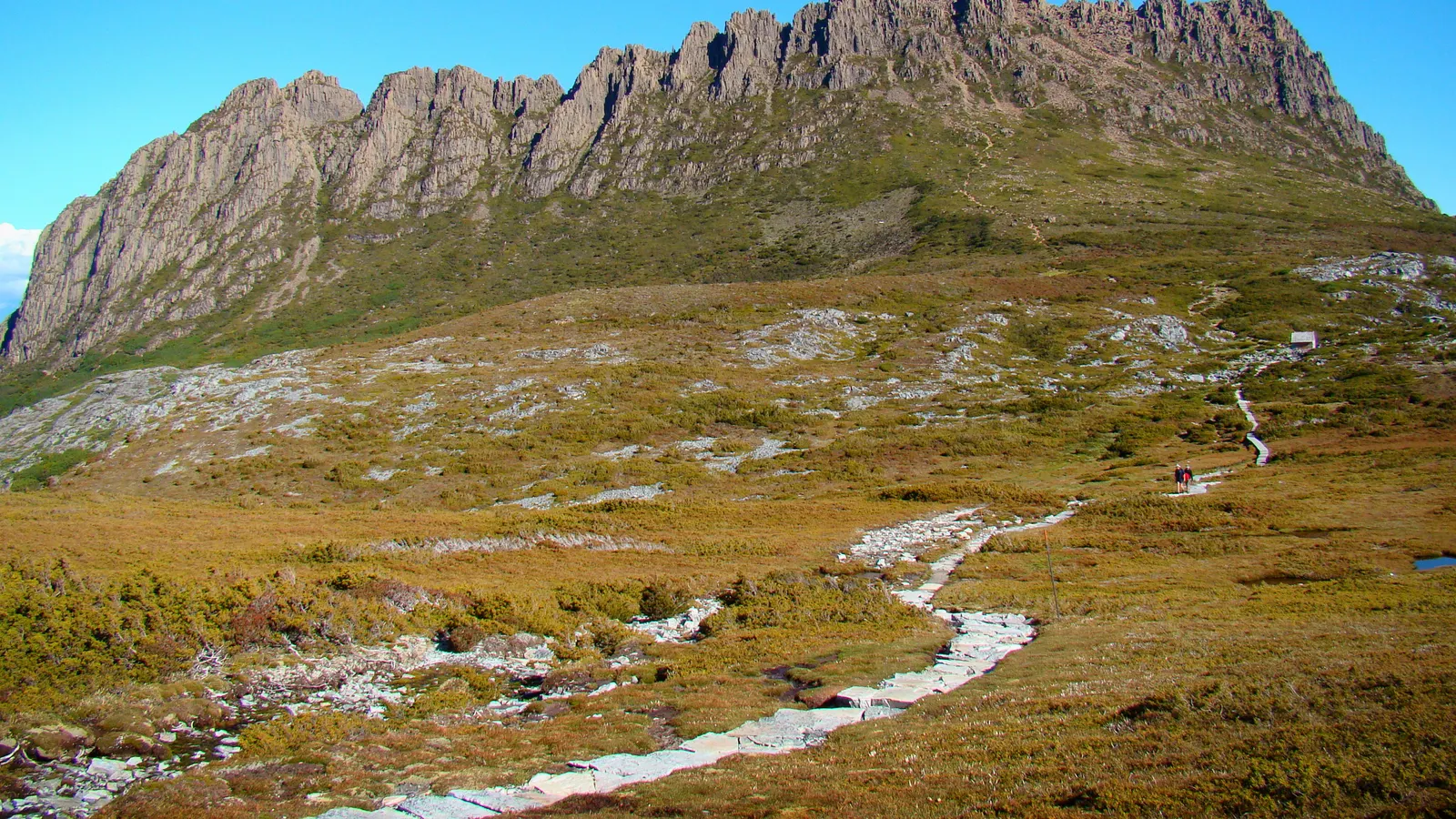
The Overland Track has public huts roughly a day apart between Cradle Mountain and Lake St Clair, with names such as Waterfall Valley, Windermere, Pelion and Kia Ora. In the booking season, roughly 1 October to 31 May, every walker needs an Overland Track booking and pays the track fee on top of a parks pass. Bookings for the 2026-27 season opened in July 2026, and the peak dates sold out within hours.
The booking secures your start date, not a bed. The huts cannot be reserved and they fill on busy nights, so carry a tent and expect to use it. Each hut has a tank, bunk spaces and a nearby toilet, and a hut is only for sleeping, not for pitching a tent inside. Fuel stoves are the only cooking allowed in the World Heritage Area, and campfires are not.
- Bookings are for the date, not the bed
- Tent platforms beside the huts
- Fuel stove only
Booked cabins on the Three Capes Track
The Three Capes Track on the Tasman Peninsula is the one Tasmanian walk where the beds are guaranteed. Walkers book a package that includes the boat trip from Port Arthur, and each night is in a cabin with mattresses, a gas cooktop, water and a toilet. There is no need to carry a tent, a stove or a mat.
The price covers the whole four-day walk, so there is nothing to pay at each hut, but the track sells out well ahead. Bookings are made through the Parks and Wildlife Service booking system, and cancellations free up places closer to the date. Our Three Capes guide has the dates and the fee.
- Mattresses and gas cooktops
- Booked as one package
- Cancellations free up places
High country huts in Victoria and New South Wales
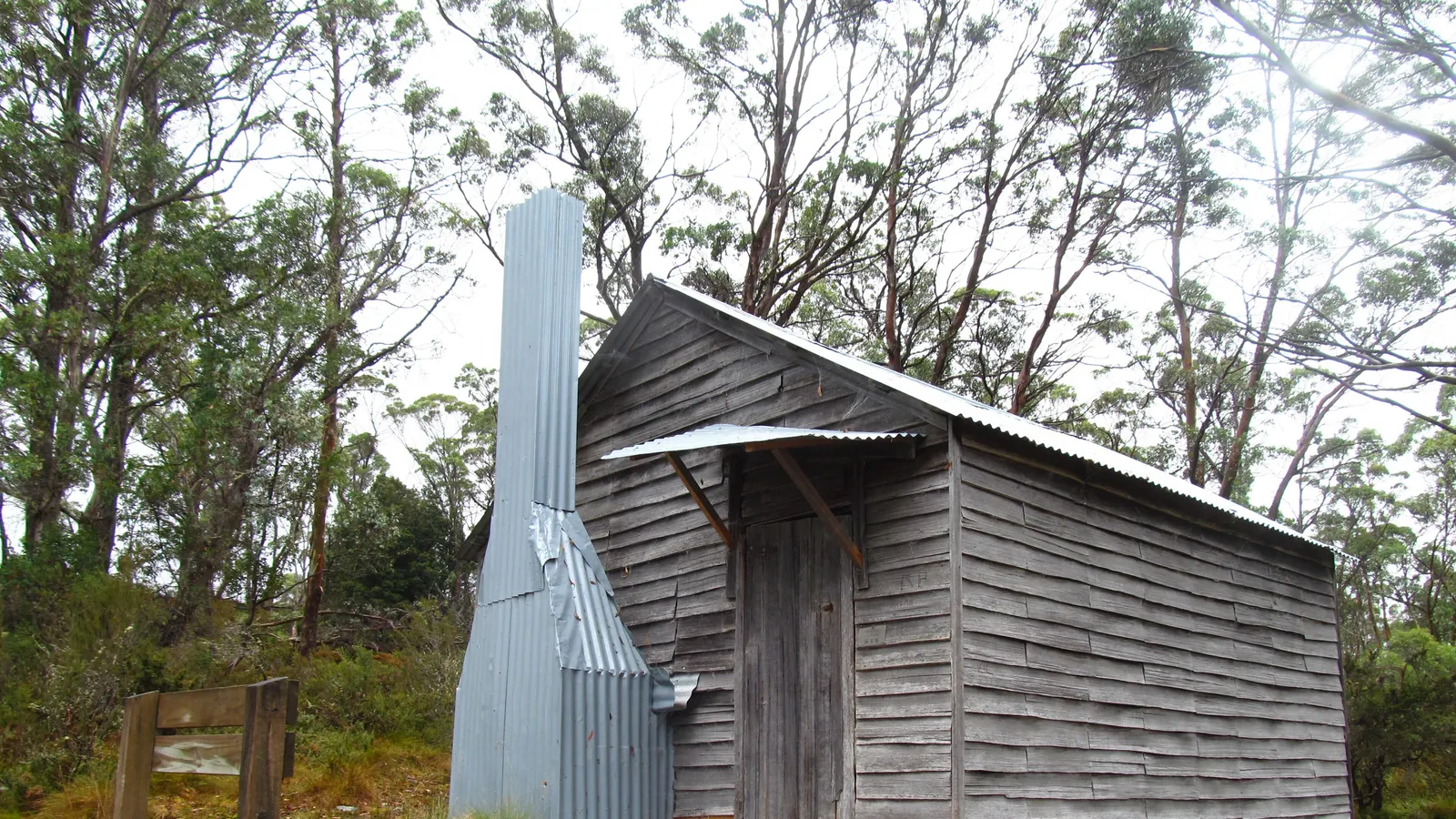
The Australian Alps are dotted with old huts built for cattlemen, and the Kosciuszko Huts Association, a volunteer group formed in 1971, helps look after them in Kosciuszko National Park and Namadgi National Park. Bushfires have taken many of them, and a number have been rebuilt since the 2019-20 fires. In Victoria the alpine national park has its own historic huts, many of them free and open to all.
These huts are not for booking and you cannot count on a bunk. They are an emergency shelter first and a bed second, so they can be full, damp or cold. Walkers carry a tent and use the hut when the weather turns. If you do stay, sign the book, burn nothing, take out every scrap of rubbish and leave any firewood and food alone.
- First come, first served
- Emergency shelter first
- Sign the hut book
Bookable cottages and park huts
If you want a bed without a long walk, some national parks let you book a hut, cottage or lodge through the park agency. These are bookable like any cabin: choose your dates, pay the nightly fee and collect the key or the code. They suit families, groups and walkers who want to base themselves in the one place for day walks.
National Parks and Wildlife Service in New South Wales and Parks Victoria both list this kind of accommodation on each park page, along with the rules on pets, fires and group size. Some are in the remote parts of the park, so check the road conditions and whether you need a 4WD before you book.
- Book through the park agency
- Check pets and fire rules
- Check road access and 4WD
What to carry and hut manners
Even when you are heading for a hut, carry a tent or at least a bivvy bag, a sleeping bag and mat, a fuel stove and enough food for an extra day. Huts on popular tracks can be full by the afternoon, and bad weather can keep you at the next one longer than planned.
Hut manners are simple. Arrive early if you can, keep the floor clear and your pack off the bunks, cook outside or at the kitchen bench, be quiet from dusk and leave the hut cleaner than you found it. Make room for a walker who arrives wet and cold, and follow leave no trace habits: carry out everything you carry in.
- Tent as the backup
- Quiet from dusk
- Leave it cleaner
Safety in and around huts
The alps and the Tasmanian highlands can see snow in any month, and a hut may be a long way from help. Carry a satellite messenger or a personal locator beacon, because there is no phone signal on most of these tracks, and tell someone your route and when you expect to be back.
Never treat a hut as a campsite for a long stay, because in an emergency it is for people in trouble. Move on in the morning and write your name and plans in the log. Fires are banned in the huts and around most of them, so cook on a fuel stove away from the building.
- Satellite messenger or locator beacon
- Leave your route with someone
- Cook on a stove, never inside
Plan the huts and camps in AussieCamps
AussieCamps lists campgrounds, national parks and holiday parks near the trailheads, with each place's facilities, fees and rules as the agency publishes them. Save the night before and the night after your walk to a trip, with the weather for each stop.
Walk bookings and cottage reservations are made with the park agency. AussieCamps runs on iPhone and is free to download, with in-app purchases.
- Camps near the trailhead
- Weather for each stop
- Book huts with the agency
Places along the way
Check before you go
Rules and conditions change. Recheck the official source and the page for your exact park or campground before departure.
Common questions
Can you book huts on Australian walking tracks?+
Usually not. The public huts on the Overland Track are first come, first served and cannot be reserved, so every walker should carry a tent. The exceptions are booked cabins such as those on the Three Capes Track, and some park cottages and huts that you book like any other accommodation.
Are the high country huts in Victoria and New South Wales free to use?+
Yes. The historic cattlemen's huts in the alpine national parks are free and open to anyone, with no booking. They are first come, first served, and they are meant as shelter in bad weather, so carry a tent and leave the hut for people who need it.
Do I need a parks pass for the Tasmanian huts?+
Yes. You need a valid parks pass to enter Tasmania's national parks, and the Overland Track also has its own booking and fee in the booking season. Check the Parks and Wildlife Service page for the current prices.
Who looks after the Kosciuszko huts?+
The Kosciuszko Huts Association, a volunteer group formed in 1971, helps conserve and rebuild the historic huts in Kosciuszko National Park and Namadgi National Park, working with the park managers. Many huts lost in the 2019-20 bushfires have been rebuilt.
Take it on the road
Save the stops. Plan the whole trip.
Build an ordered route from saved places, calculate the distance and keep dates, notes and to-dos attached.