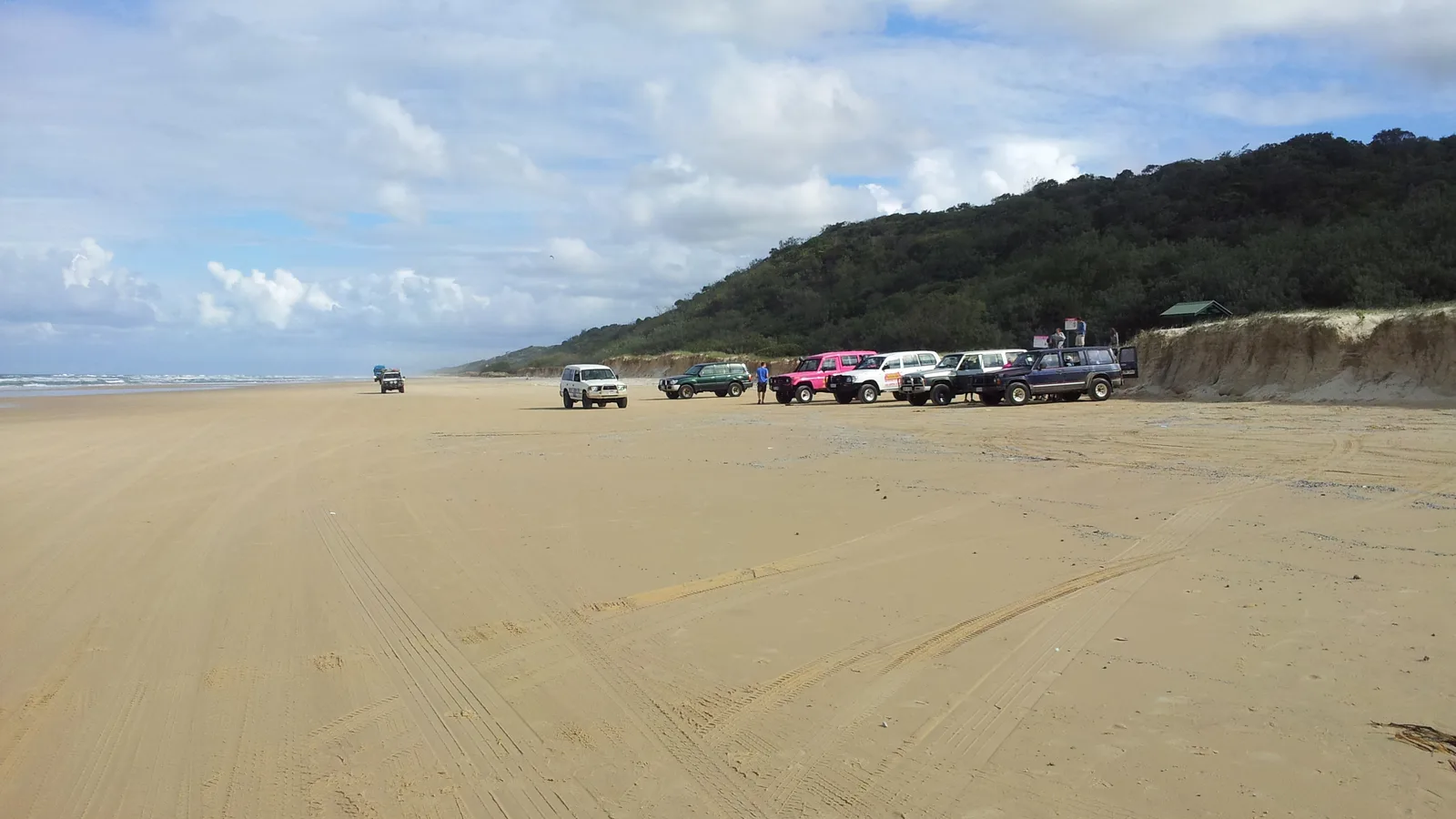
It depends on the beach: you can drive on some beaches in Queensland, NSW, South Australia, Western Australia and Tasmania, but only where the land manager allows it, often with a vehicle access permit and a 4WD. Victoria prohibits private vehicles on beaches except where an exemption applies, and where driving is allowed you keep to the permitted beach, tracks and areas.
The short answer by state
Beach driving is a permit and 4WD question in most states, and a no in Victoria. Queensland and South Australia both say normal road rules apply on beaches, so the vehicle must be registered and the driver licensed. Camping on the beach has separate rules, covered in the beach camping guide.
| State or territory | Can you drive on the beach? | Permit or condition | Source |
|---|---|---|---|
| Queensland | Yes, on beaches in recreation areas such as K'gari and Cooloola | A vehicle access permit; K'gari needs a high-clearance 4WD; Queensland road rules apply | Queensland Parks and Wildlife Service |
| New South Wales | Yes, on some beaches: Worimi Conservation Lands and council beaches such as MidCoast | A Worimi beach vehicle permit or a council beach permit; park passes are not valid | Worimi Conservation Lands, MidCoast Council |
| Victoria | No, private vehicles are prohibited on beaches except where an exemption applies | Prosecutions have followed beach driving at Discovery Bay | Parks Victoria |
| South Australia | Yes on many beaches, but not all | 40 km/h unless signed; some beaches ban vehicles or need a permit | Department for Environment and Water |
| Western Australia | Yes on some beaches, set by the land manager or council | Cable Beach: 15 km/h, with turtle season closures | Shire of Broome, Explore Parks WA |
| Tasmania | Yes where the land manager allows it, such as designated tracks and beaches in the Arthur-Pieman area | An Arthur-Pieman Recreational Driver Pass for off-road 4WD there | Parks and Wildlife Service Tasmania |
| Northern Territory | No statewide rule confirmed for this page | Ask the park or council before you drive | None confirmed |
- Permit before you drive
- 4WD where required
- Checked 2026-10-21
Queensland: permit, high-clearance 4WD and the tide
Queensland Parks and Wildlife Service says every vehicle entering K'gari needs a vehicle access permit, and you must show a copy, printed or digital, to an authorised officer on request. K'gari's beaches and sandy inland roads suit high-clearance 4WD vehicles with low-range gearing, and QPWS says SUVs and all-wheel-drive vehicles are not suitable in its sand parks. All Queensland road rules apply on the beach.
On K'gari the limit is 80 km/h at most on the eastern beach and 30 km/h on inland roads, and QPWS says a safe speed can be lower than the signed limit. QPWS advises planning beach driving around low tide and avoiding the two hours either side of high tide.
- Vehicle access permit needed
- Low tide, not high tide
- SUV and AWD not suitable
New South Wales and Victoria
On Stockton Bight, the Worimi Conservation Lands need a 4WD and a Worimi beach vehicle permit for every vehicle, and annual NSW National Parks passes do not apply. Drive only on the waterfront, and do not drive or park on the frontal dune, grass or vegetation. Do not drive over shell accumulations either, as this may damage Aboriginal cultural sites. Entry is free for walkers, cyclists and horse riders. MidCoast Council runs its own beach permit, displayed on the windscreen, with a 40 km/h limit, 15 km/h within 100 metres of other vehicles and people, and driving only between the tide marks.
Victoria is the exception. Parks Victoria says off-road access to marine and coastal Crown land and beaches by private vehicles is prohibited, except where specified exemptions apply. Six commercial fishers were prosecuted over driving on the beach at Discovery Bay, and one was fined $3,000 plus $6,450 in costs after being found guilty of 22 charges, including operating a motor vehicle in an area of public land.
- Worimi permit, 4WD only
- MidCoast: 40 km/h
- Victoria: private vehicles banned
South Australia and Western Australia
South Australia's Coastal Driving Code of Practice says some beaches do not allow vehicles, some ban camping or camping vehicles, and others allow boat launching only or need a permit. The default beach speed limit is 40 km/h, and 25 km/h when passing pedestrians. On Yorke Peninsula, large camping vehicles are not permitted on Wauraltee Beach, though daytime access for other vehicles remains, and Thidna Beach is limited to a small area near Gleeson's Landing.
At Cable Beach in Broome, the Shire of Broome sets a 15 km/h limit, and asks drivers to stay off soft sand and avoid driving on the beach at night. Turtle season brings limits: from 1 to 30 November the ramp is closed to all but essential and approved vehicles from 8pm to 6am and on days when high tides exceed nine metres, and from 1 December to 28 February it is closed to all but essential and approved vehicles. The Shire's page said the ramp was closed for foreshore works until mid to late 2026, so check it has reopened. Explore Parks WA says vehicles must stay on designated roads and tracks, off-road vehicles must be registered with the Department of Transport, and special considerations apply on beaches and in coastal national parks.
- SA default: 40 km/h
- Cable Beach: 15 km/h
- Turtle season closures
Tasmania and the Northern Territory
In the Arthur-Pieman Conservation Area, Parks and Wildlife Service Tasmania says drivers taking a 4WD off-road need an Arthur-Pieman Recreational Driver Pass. Vehicles must be registered and drivers licensed, and driving is limited to the tracks, beaches and areas shown in the recreational driving guide.
We did not find a statewide beach driving rule for the Northern Territory, so ask the park or council for the beach you plan to use. We also could not confirm the beach driving rules at Eighty Mile Beach in Western Australia.
- Arthur-Pieman: pass needed
- Registered and licensed
- NT: ask the park or council
Tides, tyres and recovery
Tides decide whether a beach is drivable. South Australia's code says that when tides are very high there may be no hard sand to drive on, and that it is best not to be on the beach in those conditions. MidCoast Council puts it plainly: high tides leave no room for error.
QPWS says you can lower tyre pressure on soft sand and South Australia's code says to drop it to suit the surface. Stay within your manufacturer's limits and re-inflate before you reach harder surfaces or sealed roads. South Australia's code says to carry a tyre pressure gauge, a compressor and recovery gear, to tell someone where you are going, and warns that emergency rescue may be far away and costly.
- Check tide times
- Lower tyre pressure
- Carry recovery gear
Hire vehicles: check the agreement
Sixt's Australian rental insurance guide says driving across beaches, and through streams, rivers and floods, can exclude you from protection. QPWS says SUVs and all-wheel-drive vehicles are not suitable in its sand parks, so a standard hire car or SUV is not the right vehicle for K'gari's beaches.
Check the rental agreement for any beach, sand or off-road clause before you book, and ask the hire company in writing if you are unsure.
- Read the rental terms
- Ask before you drive on sand
- Get the answer in writing
What to do instead
If you do not have a permitted 4WD, walk. Entry to the Worimi Conservation Lands is free for walkers. The Worimi Conservation Lands site also lists guided tours. A guided trip is an option where you have no suitable 4WD.
Where driving is banned, park at the access point and walk to the sand, as the rule requires on Victorian beaches, where private vehicles are prohibited except under an exemption.
- Walk in on foot
- Take a guided tour
- Park at the access point
Check this rule at the place in AussieCamps
Place pages in AussieCamps give the facilities, fees, rules and access notes the park agency publishes, and a filter for vehicle access narrows the list to sites that suit your vehicle. There are 1,838 campgrounds and 745 national parks in the app. Stored details open without coverage, while map tiles, routing, weather and photos need a connection. It is for iPhone only.
It does not replace the official rule or the tide table. Confirm the permit, the closures and the conditions with the land manager before you drive onto a beach.
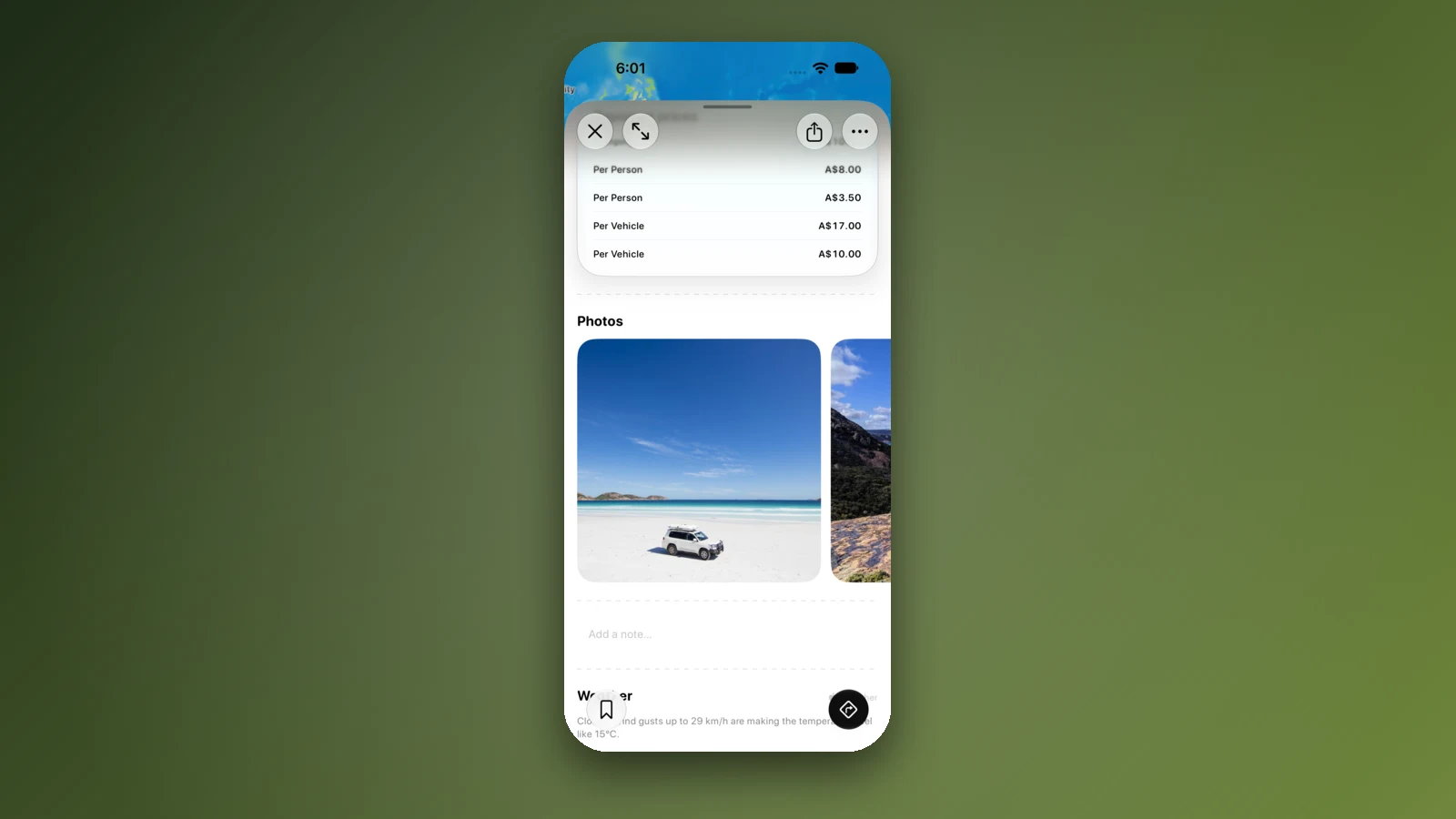
- iPhone only
- Access notes from the park agency
- Confirm with the land manager
Places along the way
Check before you go
Rules and conditions change. Recheck the official source and the page for your exact park or campground before departure.
- Queensland Parks: K'gari camping permits and requirements
- Queensland Parks: driving on sand
- Worimi Conservation Lands: beach driving and permits
- MidCoast Council: driving on beaches
- Parks Victoria: fishers prosecuted for driving on beaches
- South Australia Department for Environment and Water: beach driving
- South Australia: Coastal Driving Code of Practice
- Shire of Broome: Cable Beach Access (North)
- Explore Parks WA: four wheel driving
- Parks and Wildlife Service Tasmania: Arthur-Pieman Recreational Driver Pass
- Sixt: car rental insurance in Australia
- Queensland Parks: K'gari staying safe
Common questions
Do I need a permit to drive on Stockton Beach?+
Yes. Every vehicle entering the Worimi Conservation Lands needs a Worimi beach vehicle permit, and NSW National Parks annual passes are not valid there. A 4WD is required, and fines apply to vehicles without a valid permit.
Can I drive on any beach in Victoria?+
No. Parks Victoria says off-road access to marine and coastal Crown land and beaches by private vehicles is prohibited under the Land Conservation (Vehicle Control) Act 1972 and its 2013 Regulations, unless a specific exemption applies.
Is it safe to drive on the beach at high tide?+
Queensland Parks and Wildlife Service advises avoiding beach driving for two hours either side of high tide, and South Australia's Coastal Driving Code says there may be no hard sand to drive on when tides are very high. Plan the drive around low tide.
Can I take a hire car on the beach?+
Not without checking the rental agreement first. Sixt's Australian rental guide says driving across beaches can exclude you from insurance protection, and a hire vehicle that is not a 4WD is not suitable on sand parks such as K'gari.
Take it on the road
Save the stops. Plan the whole trip.
Build an ordered route from saved places, calculate the distance and keep dates, notes and to-dos attached.