Queensland has some of the best swimming in Australia and some of the biggest hazards: saltwater crocodiles in the north, stingers in the warm months and rips and surf along the whole coast. You can still swim, but you need to pick the place. Below is where the risks are, when they apply and where campers can swim with confidence.
Crocodiles in the north
Saltwater crocodiles live in the rivers, creeks, estuaries and mangroves of tropical Queensland, from roughly the central coast up to Cape York, and they move between the sea and the rivers. A waterway with no sign can still hold a crocodile, and a calm creek is not a safe one.
Do not swim in rivers, creeks or the sea in crocodile country unless a sign says swimming is allowed, camp well back from the water's edge and never clean fish or leave food near the water. Never feed or approach a crocodile.
- Treat all tropical waterways as crocodile habitat
- No signs does not mean no crocodiles
- Camp back from the water
Stingers: box jellyfish and Irukandji
Marine stingers are in the warm tropical waters of the north coast and islands, most often from about November to May, and they can be present at other times. Beaches in the area put up stinger nets and signs, and a lifesaver or a council sign will tell you whether it is stinger season.
Swim inside the net, wear a full-body stinger suit, and get out of the water if you feel a sting. Pour vinegar on the sting and call 000 for a serious reaction.
- November to May is the main season
- Swim in a net, wear a suit
- Vinegar for the sting, call 000
Where campers can swim safely in the north
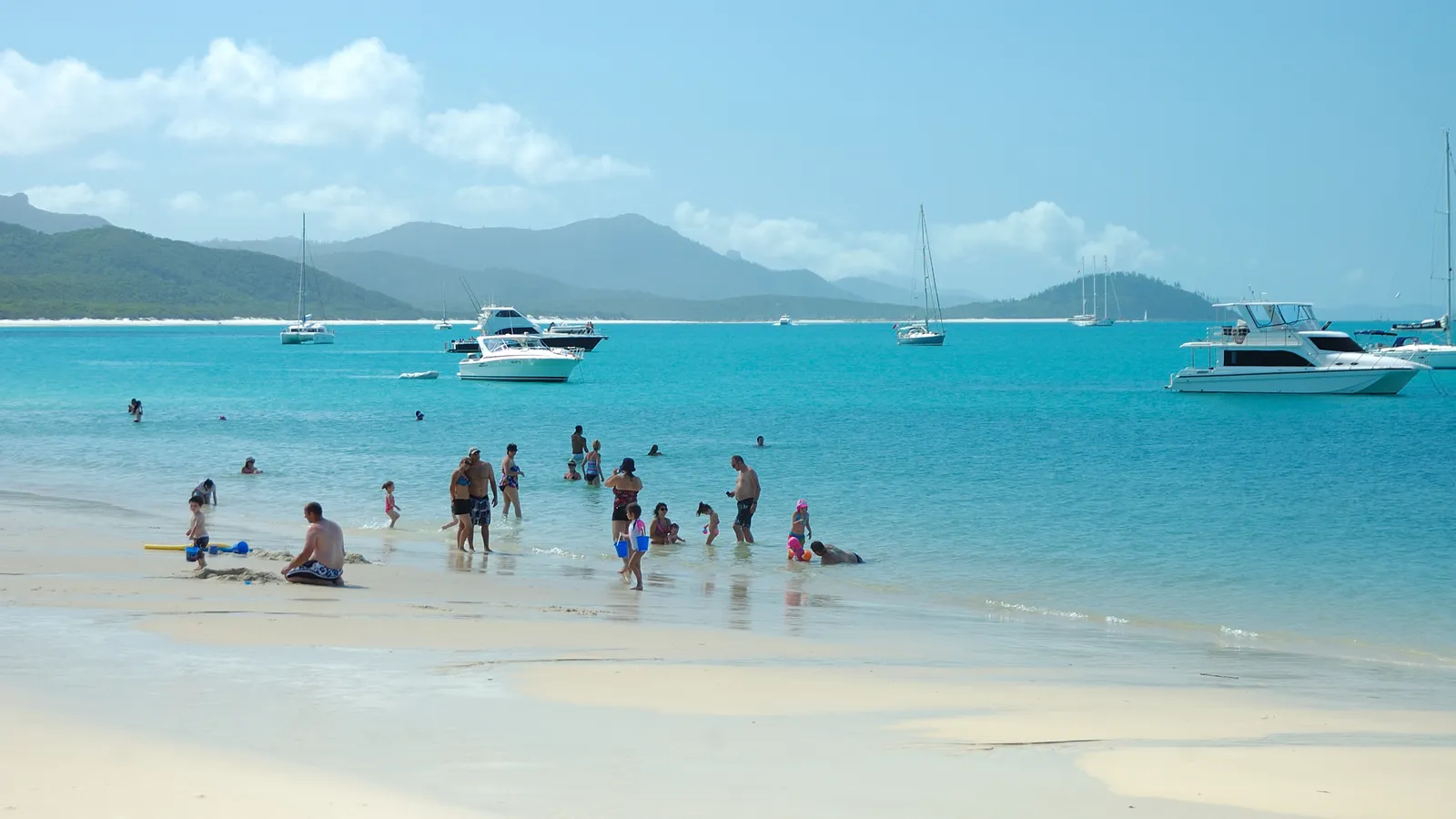
Patrolled beaches with a stinger net, such as Palm Cove, Mission Beach and Port Douglas, are the safest places to swim in the sea in summer. Lagoons are even safer, including the Cairns Esplanade Lagoon and the Airlie Beach Lagoon, which are free and have no crocodiles or stingers.
Freshwater swimming holes in the rainforest, in places such as the Atherton Tablelands, are popular, and crater lakes such as Lake Eacham are well known. Swim only where a sign allows it, because some creeks and gorges have strong currents or crocodiles.
- Netted beaches in summer
- Free lagoons at Cairns and Airlie Beach
- Tablelands crater lakes
Southern Queensland and K'gari
South of the crocodile range, the risks are rips, surf and bluebottles. Swim between the red and yellow flags at a patrolled beach, ask the lifeguards where it is safe and avoid swimming alone. On the Sunshine Coast, the Gold Coast and in the hinterland, many creeks and rock pools are safe for a swim in the warmer months.
On K'gari (Fraser Island) the ocean has strong currents and sharks and swimming in it is not recommended, so swim in the freshwater lakes such as Lake McKenzie instead.
- Swim between the flags
- Rips and surf are the risk
- K'gari: swim in the lakes
Camping tips for water safety
Choose a campground with a pool, a lagoon or a patrolled beach in north Queensland, and read the signs at the beach and the boat ramp. Do not leave children unsupervised near the water, and do not swim at dusk, at night or after rain, when rivers and creeks run higher and murkier.
Carry a first aid kit with vinegar, and know where the nearest help is. The Queensland camping rules guide covers national parks and the wet season, and the weather safety guide covers floods and storms.
- Pick a camp with a pool or lagoon
- Not at dusk or after rain
- Carry vinegar
Plan the trip in AussieCamps
AussieCamps lists 1,838 campgrounds and 745 national parks from the state park agencies, and each place page shows the facilities and fees those sources publish. Look for camps with a beach or a pool, save the places you want to stay and build the trip as ordered stops with the distance and drive time for each leg.
The iPhone app is free to download, with in-app purchases.
- Find camps near safe swimming
- Save places to a trip
- Free to download
Places along the way
Check before you go
Rules and conditions change. Recheck the official source and the page for your exact park or campground before departure.
Common questions
Where are there crocodiles in Queensland?+
Saltwater crocodiles live in rivers, creeks, estuaries and some beaches from roughly the central coast north to Cape York, and they can turn up in any waterway in that range, including places with no warning sign. Treat all tropical north Queensland waterways as crocodile habitat unless a sign says otherwise.
When is stinger season in Queensland?+
Box jellyfish and Irukandji are most common in the tropical north from about November to May, and they can be there at other times. Swim inside a stinger net where there is one, wear a full-body stinger suit, and get out of the water if you feel a sting.
Is it safe to swim at Queensland beaches?+
It is safest at patrolled beaches, between the red and yellow flags, and in the south, where there are no saltwater crocodiles. Rips, surf and bluebottles are the main risks there, so read the signs and ask the lifeguards.
Where can you swim safely in north Queensland?+
In stinger nets at beaches such as Palm Cove, Mission Beach and Port Douglas, in lagoons such as the Cairns Esplanade and Airlie Beach lagoons, in pools at campgrounds and in freshwater swimming holes with signs that say swimming is allowed. Always read the local signs first.
Places to camp in Queensland


Take it on the road
Save the stops. Plan the whole trip.
Build an ordered route from saved places, calculate the distance and keep dates, notes and to-dos attached.